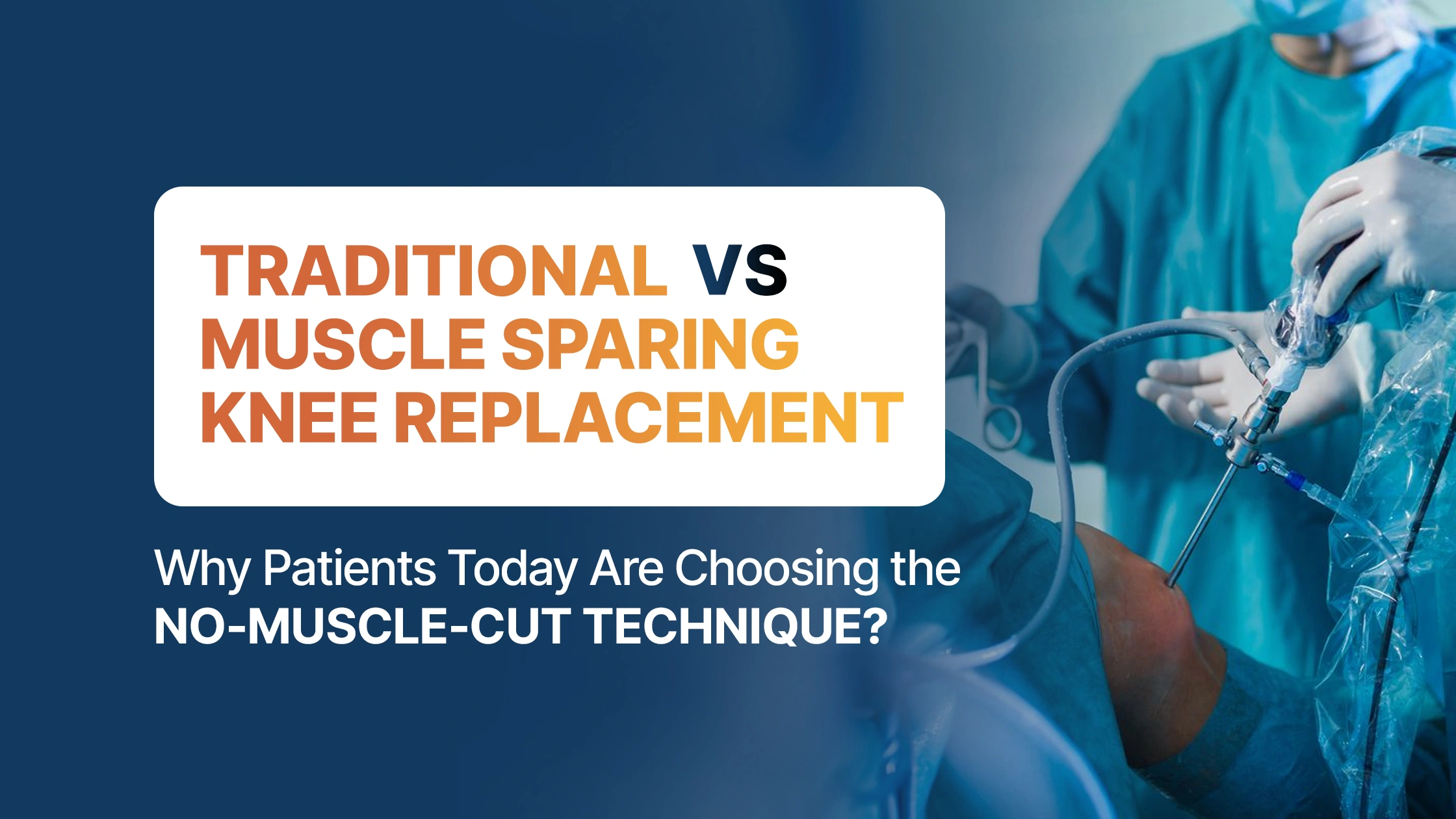
Knee replacement surgery has evolved dramatically over the past decade. What was once considered a major surgery with long recovery, heavy muscle trauma, and extended bed rest has now transformed into a precise, planned, and patient-friendly procedure — thanks to the advent of Muscle Sparing Knee Replacement.
Patients today are more informed, ask better questions, and demand faster recovery with minimal pain. As a result, the no-muscle-cut approach is gaining preference over the traditional method, especially among active individuals and senior citizens who want their independence back quickly.
This shift is not just about technology — it’s about better outcomes, smarter recovery, and preserving the body’s natural strength.
Parameter | Traditional Technique | Muscle Sparing Technique |
Muscle Cutting | Yes | No |
Post-Op Pain | Higher | Much Lower |
Walking Ability | Usually after 2–4 days | Within 24 hours, sometimes same day |
Muscle Strength After Surgery | Temporary weakness | Better preserved |
Recovery Speed | 6–12 weeks | 3–6 weeks for daily function |
Need for Support (Walker/Stick) | Longer duration | Shorter duration |
Tissue Damage | Moderate to high | Minimal |
Patient Confidence | Gradual | Faster, stronger, earlier |
Here are the most common reasons behind the shift:
Since muscles are not cut, there is less internal trauma, which directly results in reduced pain and swelling after surgery.
Muscles play a major role in balance, walking, and standing. Preserving them ensures that patients feel stable and stronger much earlier post-operation.
Patients often begin:
Traditional surgery demands longer physiotherapy because the muscles must heal first, then strengthen again. In muscle sparing surgery, physiotherapy focuses on mobility, not muscle recovery, making the process shorter.
Patients consistently report:
This technique is ideal for:
Myth | Fact |
Knee replacement always requires muscle cutting | Not anymore — muscle sparing avoids it completely |
Rehab takes months | Functional recovery can begin within weeks |
Elderly patients recover slowly anyway | They recover faster when muscles are preserved |
More pain means better long-term results | Less pain means faster movement and better outcomes |
The goal of modern knee replacement is no longer just joint correction, but:
✔ Preserving natural anatomy
✔ Minimizing trauma
✔ Accelerating return to normal life
✔ Improving overall surgical experience
Muscle Sparing Knee Replacement delivers on all four.
Patients today are no longer just opting for a new knee — they want a better knee, faster recovery, and less disruption to life.
And that is exactly why the no-muscle-cut technique is becoming the new standard in advanced knee care.
Revolutionizing Joint Replacement with Robotic Precision
*This website is for providing general information only and should not be considered as medical advice or soliciting patients.
**An in-person consultation with the Doctor is adviced before practicing any remedies / recommendations mentioned on this website