

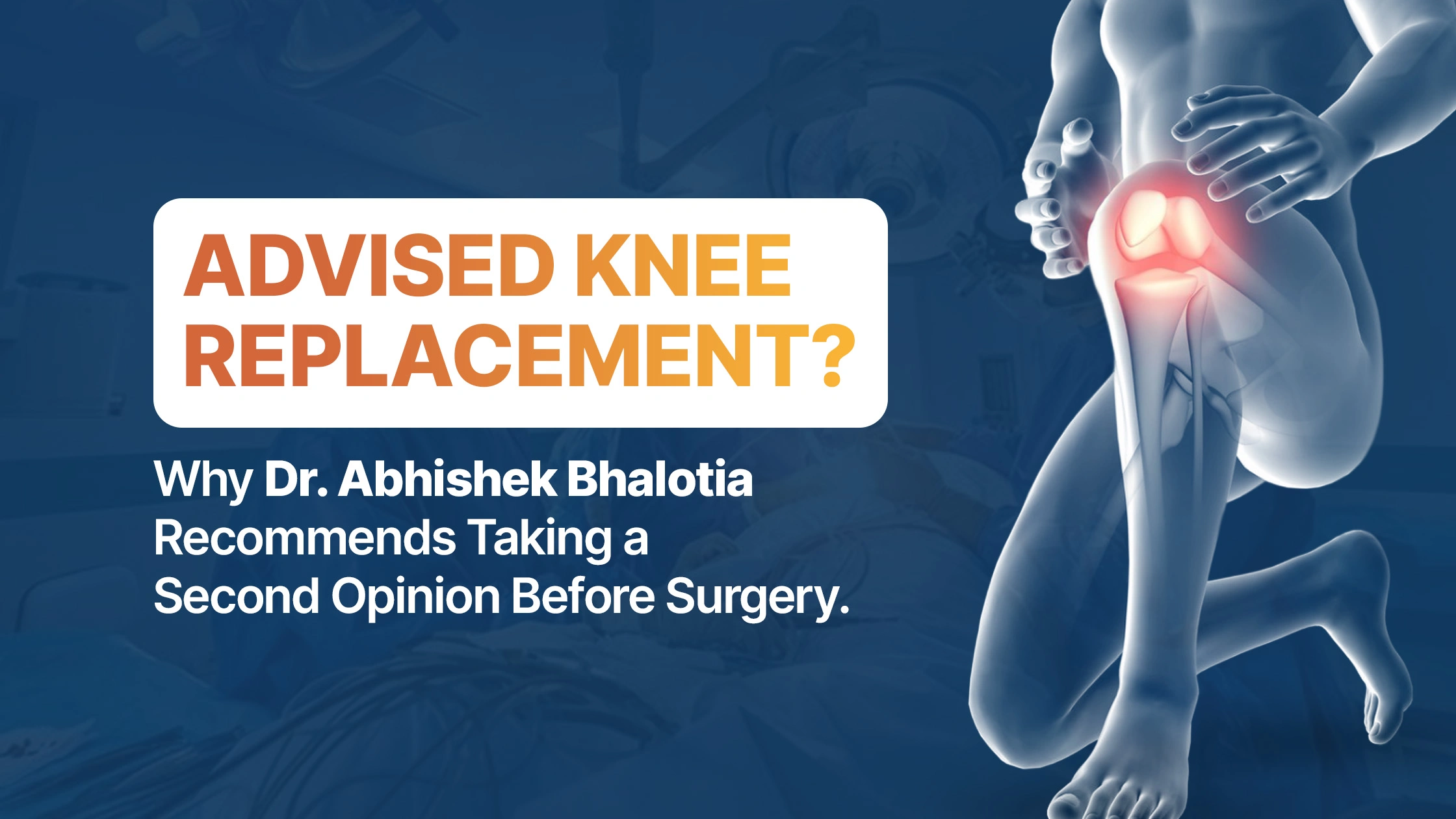
Being told that you need a knee replacement can immediately trigger two reactions: relief that a solution exists — and anxiety about undergoing major surgery.
In many cases, patients accept the first recommendation they receive. However, according to Dr. Abhishek Bhalotia, taking a second opinion before knee replacement surgery is not a sign of distrust — it is a step toward informed decision-making.
Knee replacement surgery is highly successful when properly indicated. But its success depends heavily on choosing the right procedure, at the right time, for the right patient.
Patients are often surprised when two surgeons offer different opinions. This happens because knee replacement decisions are influenced by multiple factors:
Two doctors may weigh these factors differently. A second opinion helps clarify which recommendation aligns best with your specific situation.

Dr. Abhishek Bhalotia often advises patients to seek clarification when:
In many cases, better explanation alone helps patients feel more confident.
A 62-year-old patient may be advised total knee replacement due to persistent knee pain. However, detailed evaluation may reveal that arthritis is limited to a single compartment.
In such cases:
Without reassessment, the patient may undergo a more extensive procedure than required.
Sometimes X-rays show arthritis, but the patient’s symptoms remain manageable.
If the patient:
Immediate surgery may not always be mandatory. In such cases, non-surgical management or delayed surgery could be reasonable.
Dr. Bhalotia believes that surgery should be based on functional limitation and quality of life, not just imaging findings.
A structured second opinion typically includes:
This comprehensive review ensures that the decision is tailored to the patient, not just the diagnosis.
Not at all.
A second opinion:
In many cases, Dr. Bhalotia confirms the need for total knee replacement. The difference is that patients proceed with clarity and reassurance.
Research and experience both suggest that patients who feel confident about their surgical decision often:
Confidence is not created by speed — it is created by clarity.
Knee replacement surgery can significantly improve quality of life when correctly indicated. However, because it is a major decision, it deserves careful consideration.
Dr. Abhishek Bhalotia recommends taking a second opinion not to delay treatment, but to ensure:
When patients understand why surgery is being recommended — and why a specific technique is chosen — outcomes are often smoother, both physically and emotionally.
Revolutionizing Joint Replacement with Robotic Precision
*This website is for providing general information only and should not be considered as medical advice or soliciting patients.
**An in-person consultation with the Doctor is adviced before practicing any remedies / recommendations mentioned on this website