

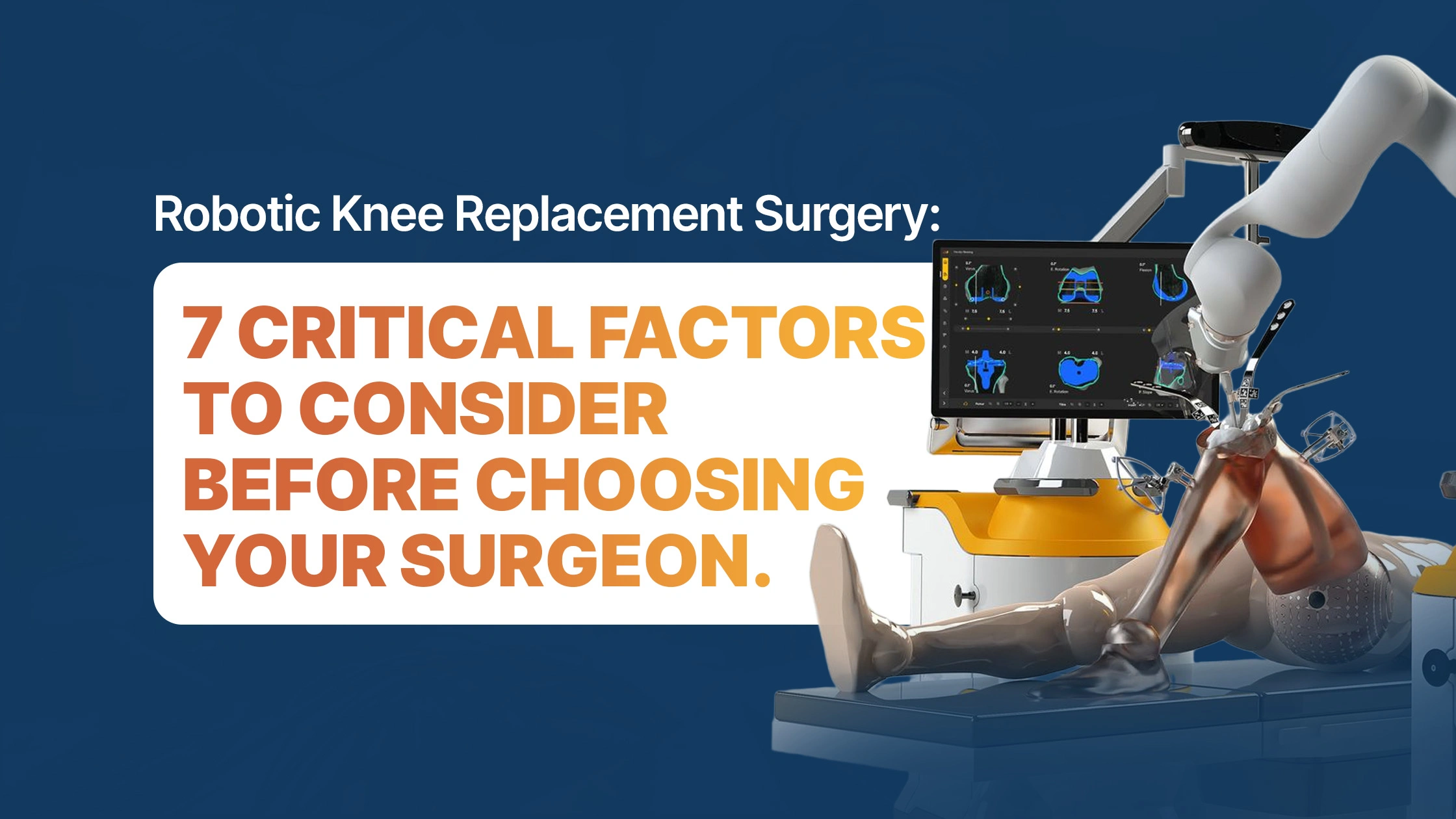
Robotic Knee Replacement Surgery has transformed the field of orthopaedics. With improved precision, better implant alignment, and enhanced surgical planning, robotic assistance has made knee replacement more predictable than ever.
However, according to Dr. Abhishek Bhalotia, robotic technology alone does not guarantee success.
He often explains that “Robotics is a powerful tool — but the outcome still depends on who is using it.”
For patients considering robotic knee replacement, choosing the right surgeon is as important as choosing the technology itself. Here are seven critical factors patients should evaluate before making their decision.
Robotic systems assist, but they do not replace surgical judgment.
Patients should consider:
Experience ensures that if technology requires adjustment, the surgeon can respond effectively.

Robotics improves precision, but alignment decisions still depend on the surgeon.
Proper alignment affects:
A surgeon who understands alignment deeply will use robotics to enhance outcomes — not simply follow default settings.
Not every patient automatically requires robotic surgery.
A responsible surgeon evaluates:
Dr. Bhalotia emphasises that robotic surgery should be recommended when it adds value — not as a marketing feature.
Technology focuses on bone preparation, but recovery often depends on soft tissue handling.
Patients should ask:
Less tissue trauma can significantly influence early mobility.
Robotic surgery reduces certain technical errors, but it does not eliminate all risks.
Patients should receive clear explanations about:
Surgeons who openly discuss limitations often build greater trust.
Robotic precision improves implant placement, but long-term success depends on rehabilitation.
Patients should understand:
A structured recovery plan ensures that surgical precision translates into functional improvement.
Confidence in expertise often reflects in openness.
Surgeons who:
demonstrate patient-centered decision-making.
Dr. Bhalotia believes that robotic surgery should be chosen for its clinical value, not because it sounds advanced.
Two surgeons may use the same robotic platform. Yet outcomes can differ because of:
Robotics enhances accuracy — but surgical judgment defines quality.
Robotic Knee Replacement Surgery represents a significant advancement in orthopaedic care. However, patients should remember that technology is a tool, not a substitute for expertise.
Before choosing a surgeon, patients should evaluate:
According to Dr. Abhishek Bhalotia, the best robotic knee replacement outcomes occur when precision technology meets thoughtful surgical planning.
Choosing wisely ensures that robotic assistance truly translates into better movement, stability, and long-term satisfaction.
Revolutionizing Joint Replacement with Robotic Precision
*This website is for providing general information only and should not be considered as medical advice or soliciting patients.
**An in-person consultation with the Doctor is adviced before practicing any remedies / recommendations mentioned on this website