

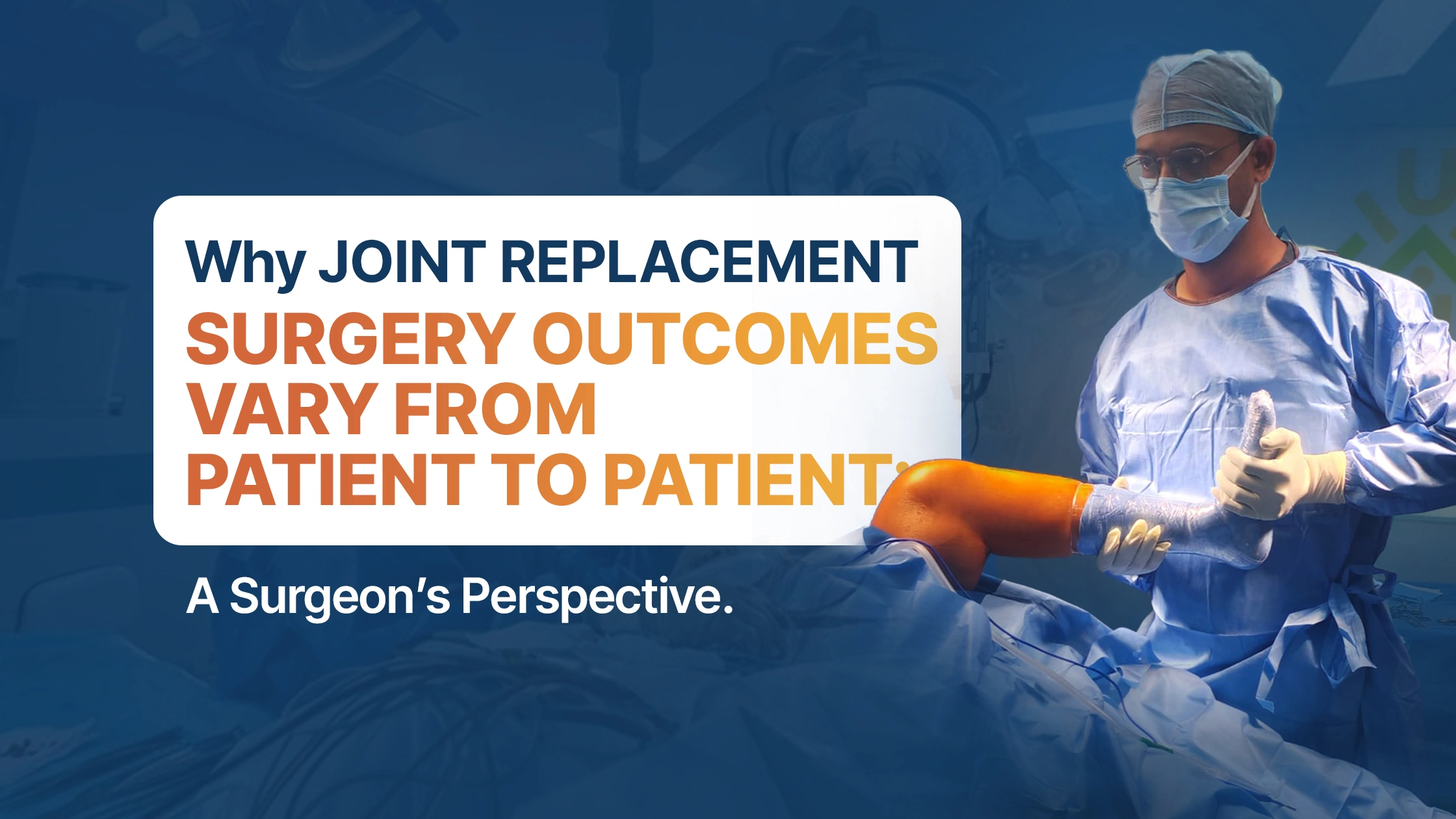
Joint replacement surgery—whether knee or hip—is considered one of the most successful procedures in orthopaedics. Thousands of patients undergo these surgeries every year and experience significant improvement in mobility, pain relief, and overall quality of life.
However, one common question many patients ask is:
“If two people undergo the same joint replacement surgery, why are their results sometimes different?”
According to Dr. Abhishek Bhalotia, the outcome of a joint replacement surgery depends on several factors that go beyond the surgical procedure itself. Even when the same implant and technique are used, individual patient characteristics can influence recovery and long-term results.
Understanding these factors helps patients set realistic expectations and actively participate in their recovery process.
Every patient presenting for knee or hip replacement has a unique combination of:
Because of these variations, surgeons often customise surgical planning and rehabilitation strategies for each patient.
Even with similar surgeries, recovery experiences may differ depending on how the body responds to treatment.
Patients undergoing surgery at different stages of arthritis may experience varying outcomes.
For example:
Earlier intervention in selected cases can sometimes help preserve joint function and improve recovery.
Muscles around the knee or hip play a crucial role in stabilising the joint.
Patients who maintain good muscle strength before surgery often experience:
Conversely, weak muscles may require longer physiotherapy to rebuild strength after surgery.
Certain medical conditions can affect healing and recovery speed.
Examples include:
Optimising overall health before surgery often improves surgical outcomes.
Successful joint replacement involves more than simply replacing the joint surfaces.
Important elements include:
Careful pre-operative planning allows surgeons to tailor the procedure to the patient’s anatomy.
Rehabilitation is a critical part of joint replacement recovery.
Patients who follow a structured physiotherapy program usually experience:
Skipping physiotherapy sessions or delaying exercises can slow recovery.
Psychological factors also influence recovery.
Patients who are well-informed and motivated often:
Positive engagement with the recovery process can significantly improve outcomes.
Consider two patients undergoing knee replacement:
Even if the surgery itself is technically identical, Patient A may regain mobility more quickly due to stronger pre-operative conditioning.
While patient factors play a role, surgical expertise remains crucial.
An experienced surgeon focuses on:
These elements help maximise the chances of a smooth recovery.
Joint replacement surgery can dramatically improve quality of life, but it is important for patients to understand that outcomes may vary.
Factors such as joint condition, overall health, muscle strength, rehabilitation commitment, and surgical planning all contribute to recovery and long-term success.
As Dr. Abhishek Bhalotia emphasises, joint replacement is a partnership between the surgeon and the patient. When both sides work together—with proper preparation and realistic expectations—the results are often highly rewarding.
Revolutionizing Joint Replacement with Robotic Precision
*This website is for providing general information only and should not be considered as medical advice or soliciting patients.
**An in-person consultation with the Doctor is adviced before practicing any remedies / recommendations mentioned on this website