
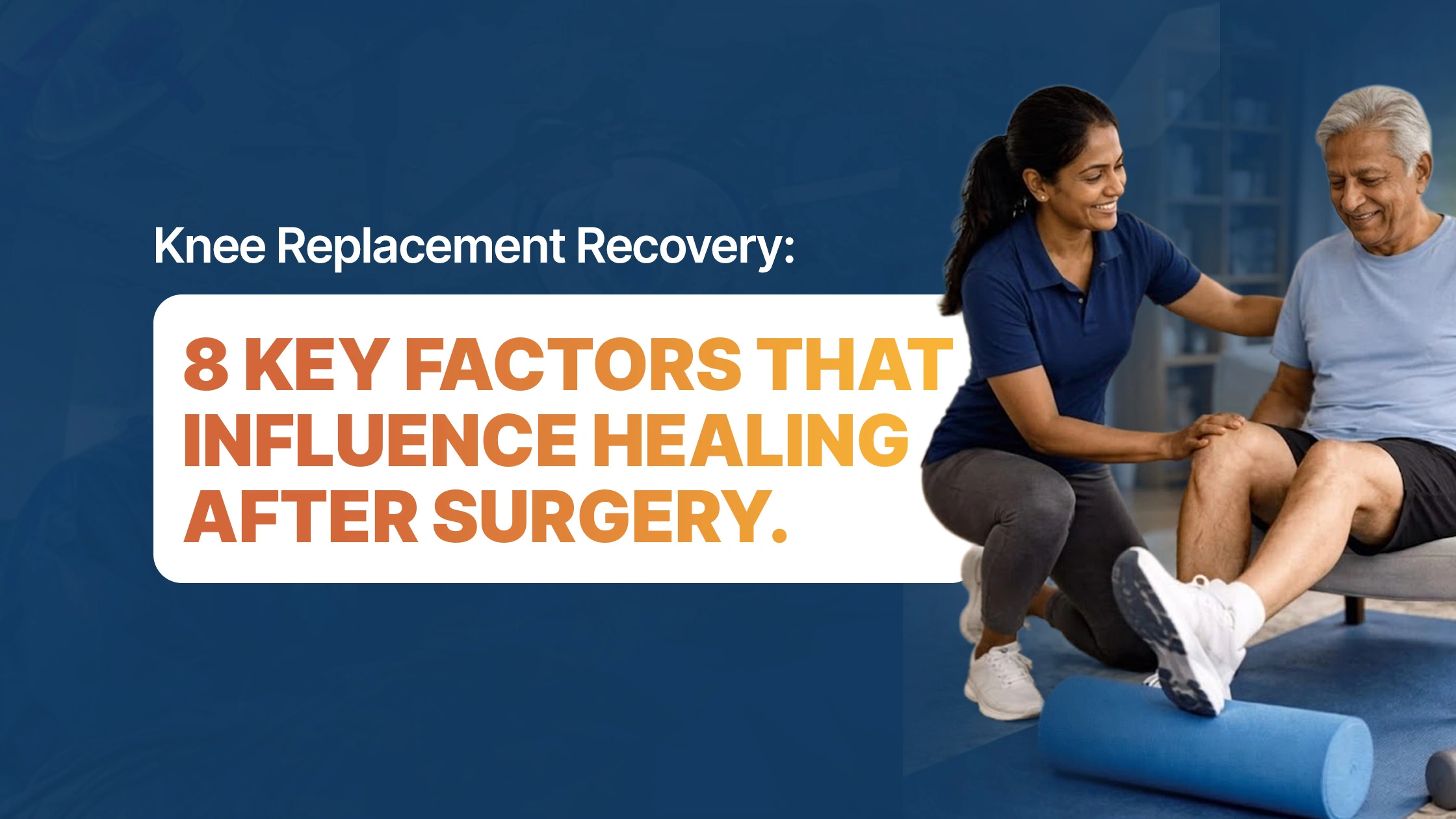
Knee replacement surgery has helped millions of patients regain mobility and live without the constant pain of arthritis. Advances in surgical techniques, implants, and rehabilitation protocols have significantly improved recovery timelines and long-term outcomes.
However, one important aspect patients should understand is that recovery after knee replacement surgery does not follow the exact same timeline for everyone.
According to Dr. Abhishek Bhalotia, recovery after knee replacement depends on a combination of surgical, physical, and lifestyle factors. Understanding these factors helps patients prepare better and actively participate in their rehabilitation journey.
Below are eight key factors that commonly influence healing and recovery after knee replacement surgery.
Age can influence recovery speed, although it does not determine the success of surgery.
For example:
However, many patients in their seventies and eighties still achieve excellent results when rehabilitation is followed consistently.
The condition of the muscles surrounding the knee plays a major role in recovery.
Patients with stronger quadriceps and hamstring muscles before surgery often experience:
Pre-operative physiotherapy or strengthening exercises can help improve muscle conditioning before surgery.
The extent of joint damage prior to surgery can affect recovery.
Patients with:
may require longer rehabilitation to regain full range of motion.
Early intervention in suitable cases can sometimes make recovery smoother.
Certain health conditions may influence the healing process.
These include:
Proper medical management before surgery helps reduce complications and improves recovery outcomes.
The precision of the surgical procedure plays an important role in post-operative recovery.
Careful surgical planning helps ensure:
These factors contribute to better knee stability and smoother rehabilitation.
Physiotherapy is one of the most important components of knee replacement recovery.
Structured rehabilitation helps patients:
Patients who actively participate in physiotherapy programs generally experience better outcomes.
Recovery requires active participation from the patient.
Patients who remain motivated and disciplined are more likely to:
Consistent effort often leads to steady improvement over time.
Recovery is often easier when patients receive support from family members or caregivers.
Support may include:
A supportive environment allows patients to focus fully on rehabilitation.
Consider two patients who undergo knee replacement surgery.
Even if both surgeries are technically successful, Patient A is likely to recover faster because of active participation in rehabilitation.
Knee replacement surgery can dramatically improve mobility and quality of life. However, recovery is influenced by several factors including age, muscle strength, overall health, surgical planning, physiotherapy, and patient motivation.
As Dr. Abhishek Bhalotia often explains, the surgery itself is only the first step. Long-term success depends on collaboration between the surgeon, physiotherapist, and the patient’s commitment to recovery.
When patients understand these factors and prepare accordingly, they are more likely to experience a smooth and rewarding recovery after knee replacement surgery.
Revolutionizing Joint Replacement with Robotic Precision
*This website is for providing general information only and should not be considered as medical advice or soliciting patients.
**An in-person consultation with the Doctor is adviced before practicing any remedies / recommendations mentioned on this website