

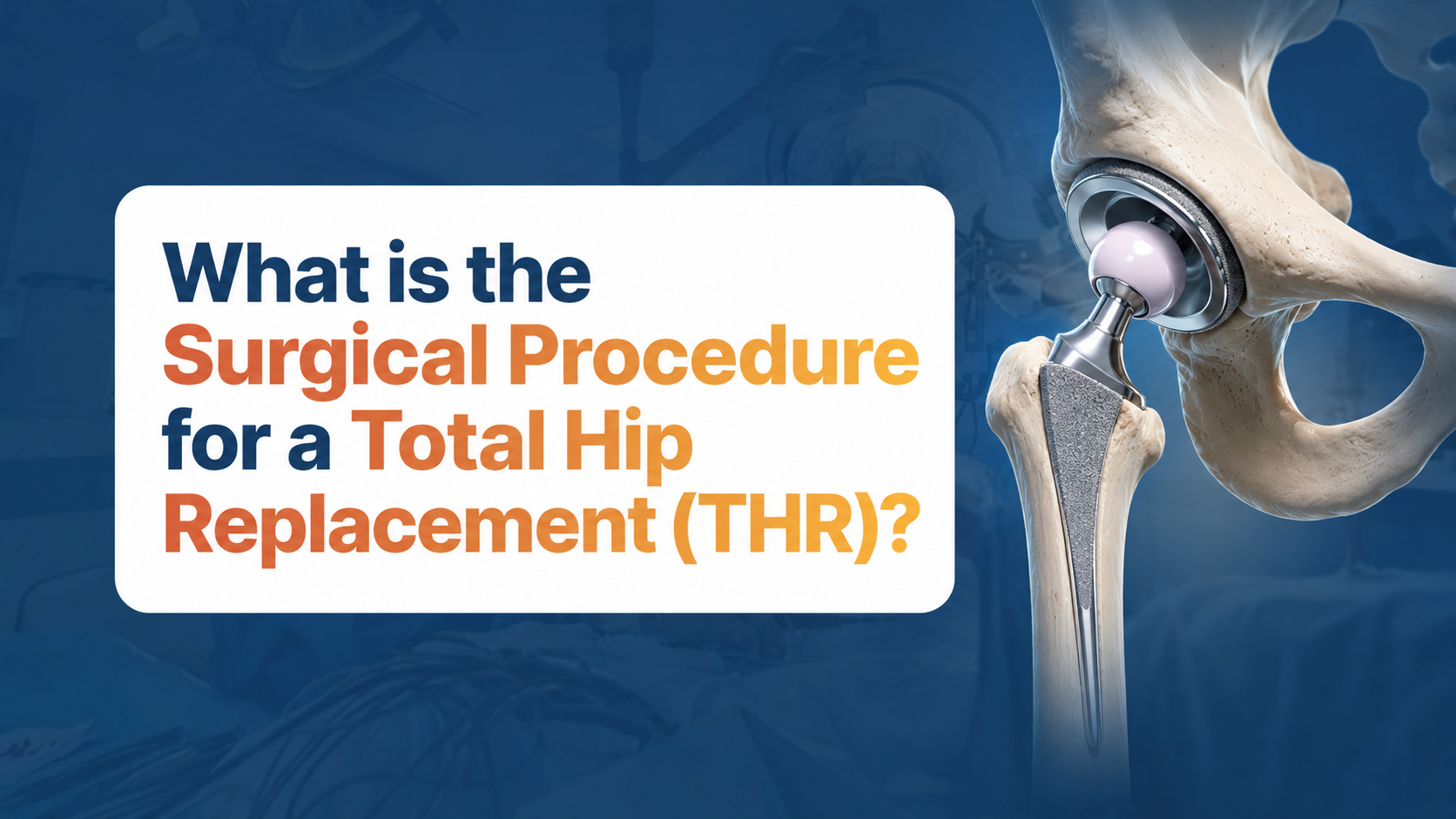
Hip pain can significantly affect mobility, independence, and overall quality of life. Activities such as walking, climbing stairs, sitting cross-legged, or even getting out of bed may become painful in patients suffering from severe hip arthritis or hip joint damage.
In such cases, Total Hip Replacement Surgery (THR) is considered one of the most effective and successful orthopaedic procedures.
According to Dr. Abhishek Bhalotia, understanding the actual surgical procedure for Total Hip Replacement helps patients feel more confident, informed, and mentally prepared before surgery.
This guide explains the step-by-step procedure of Hip Replacement Surgery, recovery expectations, and important aspects patients should know before undergoing a Total Hip Replacement (THR).
Total Hip Replacement Surgery, also known as THR Surgery or Hip Arthroplasty, is a procedure in which the damaged portions of the hip joint are replaced with artificial implants.
The surgery is commonly recommended for:
The primary goals of Hip Replacement Surgery are:
✔ Pain relief
✔ Improved mobility
✔ Better joint function
✔ Restoration of quality of life
The hip is a ball-and-socket joint.
In arthritis or AVN, the smooth cartilage covering these surfaces gets damaged, leading to:
During Total Hip Replacement Surgery, these damaged surfaces are replaced with artificial components called implants.
Successful Hip Replacement Surgery begins before entering the operation theatre.
Dr. Abhishek Bhalotia emphasises detailed:
Pre-operative planning helps improve implant positioning and surgical precision.
The patient is usually given:
The anaesthesia team continuously monitors:
throughout the procedure.
The surgeon carefully approaches the hip joint using a selected surgical technique.
In many modern cases, surgeons may use muscle-sparing approaches such as the:
These approaches aim to minimise soft tissue damage and support faster recovery in selected patients.
The damaged portions of the hip joint are removed carefully.
This includes:
✔ Damaged femoral head
✔ Arthritic cartilage
✔ Diseased bone surfaces
The goal is to prepare the joint accurately for implant placement.
Artificial hip implants are then positioned precisely.
The implants generally include:
Modern Hip Replacement Implants are designed for:
Precise implant alignment is critical for successful outcomes after Total Hip Replacement Surgery.
Before completing surgery, the surgeon checks:
This step helps ensure proper functional movement after surgery.
After confirming stability and alignment:
The patient is then shifted to recovery monitoring.
Recovery starts early after surgery.
Most patients begin:
✔ Standing
✔ Walking with support
✔ Physiotherapy exercises
within a short period after surgery, depending on medical condition and surgical protocol.
Patients undergoing Hip Replacement Surgery may experience:
Modern Total Hip Replacement procedures are designed to help patients return to functional daily activities safely.
The duration varies depending on:
In most cases, the surgery typically takes a few hours including preparation and recovery monitoring.
Total Hip Replacement Surgery (THR) is one of the most reliable and successful procedures for patients suffering from severe hip pain and arthritis.
As Dr. Abhishek Bhalotia explains, successful outcomes depend on:
Patients who understand the procedure and actively participate in recovery often experience significant improvement in mobility and quality of life after Hip Replacement Surgery.

Revolutionizing Joint Replacement with Robotic Precision
*This website is for providing general information only and should not be considered as medical advice or soliciting patients.
**An in-person consultation with the Doctor is adviced before practicing any remedies / recommendations mentioned on this website