
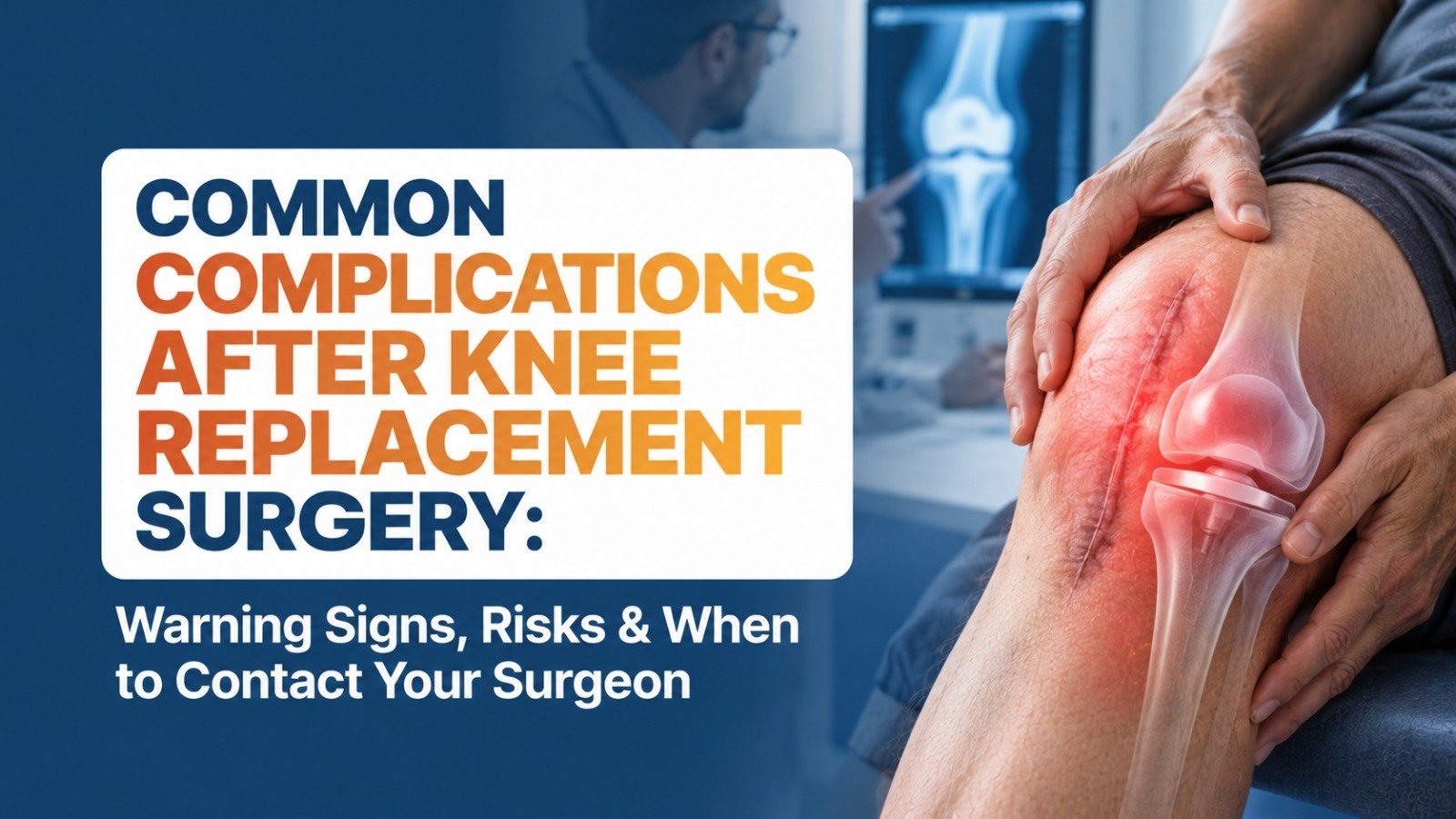
Total Knee Replacement is a commonly performed procedure for patients with advanced knee arthritis. While most patients progress through recovery without major problems, every surgery carries potential risks.
Understanding the possible complications after knee replacement surgery does not mean patients should be frightened of the procedure. Instead, it helps them recognise what may be part of normal recovery and what deserves medical attention.
Here are some important complications and warning signs patients should know about.
Infection is one of the complications surgeons take particularly seriously after knee replacement.
An infection may involve the surgical wound or, less commonly, deeper tissues surrounding the artificial joint.
Warning signs can include:
Some redness and swelling can occur during recovery, so patients should avoid self-diagnosis and contact their surgical team if they are concerned.
Reduced mobility following surgery can increase the risk of blood clots developing in the leg, known as Deep Vein Thrombosis (DVT).
Possible warning signs include:
If a clot travels to the lungs, it may cause a pulmonary embolism. Sudden breathlessness or chest pain requires urgent medical attention.
Surgeons may use medication, early mobilisation and other measures to reduce this risk depending on the patient’s individual situation.
Some stiffness is expected during the early stages of knee replacement recovery.
However, significant or persistent stiffness can affect the patient’s ability to bend or straighten the knee.
Structured physiotherapy, pain control and appropriate exercises are therefore important components of rehabilitation.
Patients should follow the rehabilitation programme recommended by their surgeon and physiotherapist rather than forcing the knee beyond advised limits.
Pain does not disappear immediately after surgery.
Surgical healing itself causes temporary discomfort. Pain should generally change as recovery progresses.
Persistent or unexplained pain may have several possible causes and requires proper clinical evaluation.
Patients should not assume that every episode of pain means that the implant has failed.
Swelling around the knee and lower leg is commonly experienced during recovery.
The amount and duration vary considerably between patients.
However, sudden or progressively increasing swelling — particularly when associated with calf pain, redness, fever or breathlessness — should not simply be ignored.
Modern knee implants are designed for long-term use, but problems can occasionally occur over time.
These may include:
Long-term follow-up can help the surgeon assess the replaced joint.
Nerves and blood vessels surround the knee joint. Injury to these structures is uncommon but is a recognised surgical risk.
Patients should discuss individual risks with their surgeon before surgery.
Patients frequently become concerned about:
Some of these may occur as part of postoperative healing.
The important distinction is whether symptoms are gradually improving or becoming more severe.
Patients should seek medical advice if they experience concerning symptoms such as:
Not every complication is preventable.
However, risk reduction begins with:
According to Dr. Abhishek Bhalotia’s approach to Joint Replacement, patients should understand both the benefits and potential risks before undergoing surgery. An informed patient is better prepared to participate actively in recovery.
Most postoperative symptoms do not automatically indicate a complication. At the same time, unusual or worsening symptoms should never be ignored.
The safest approach is simple: when in doubt, communicate with the treating surgical team rather than trying to diagnose the problem through the internet.
Medical Disclaimer: This article is intended for general educational purposes only and does not constitute medical advice. Patients experiencing new, severe or worsening symptoms after knee replacement should contact their treating healthcare professional promptly.
Revolutionizing Joint Replacement with Robotic Precision
*This website is for providing general information only and should not be considered as medical advice or soliciting patients.
**An in-person consultation with the Doctor is adviced before practicing any remedies / recommendations mentioned on this website