
For someone considering hip replacement surgery, the questions often extend beyond the operation itself.
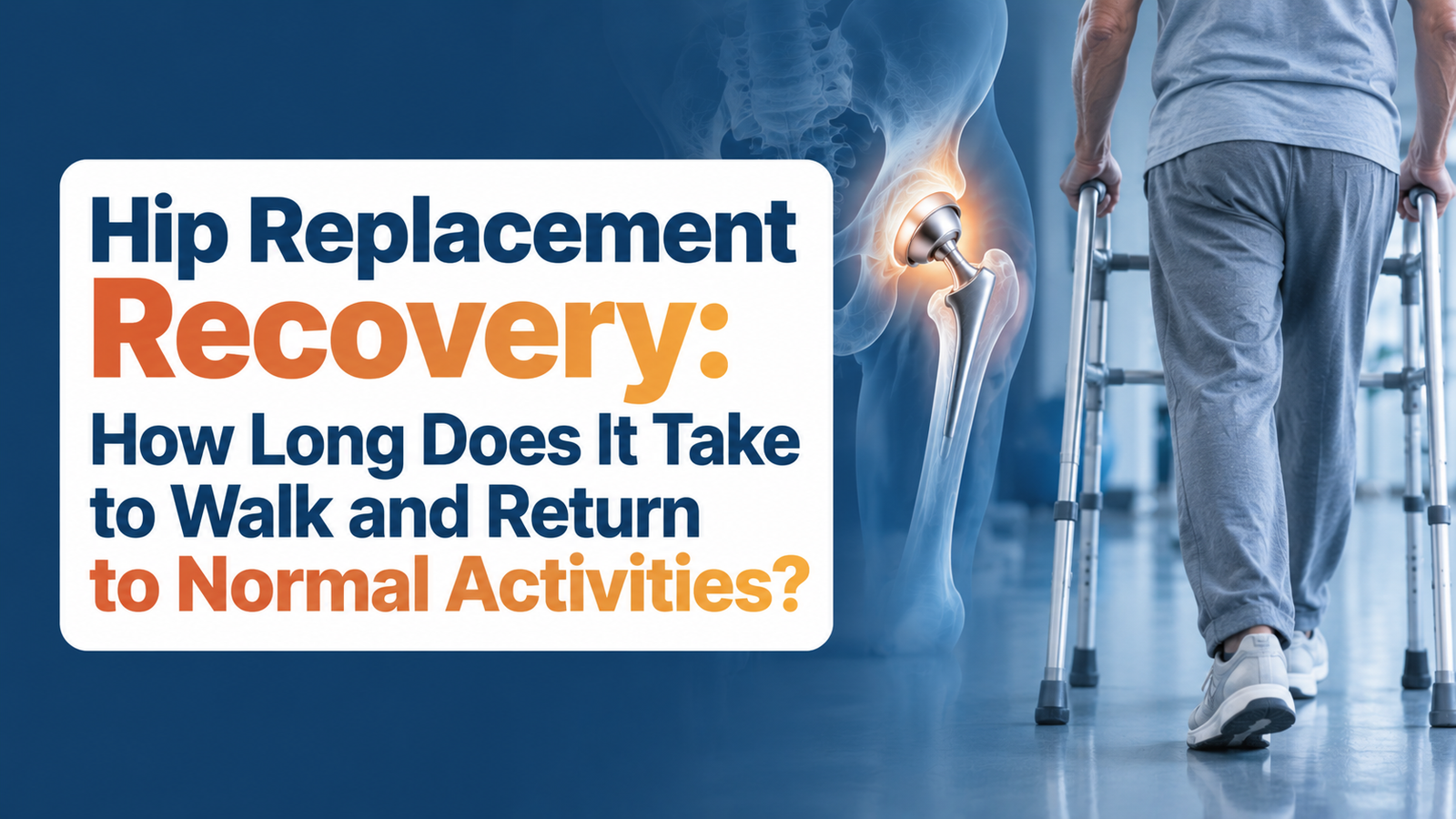
When can I start walking after hip replacement? How long does hip replacement recovery take? When can I return to normal activities?
These are important questions, but recovery does not follow an identical timetable for every patient.
Age, general health, muscle strength, severity of hip disease, surgical approach and rehabilitation can all influence hip replacement recovery time.
Here is a practical overview of what patients may expect.
Depending on the patient’s condition and the treating team’s advice, mobilisation may begin relatively early after surgery.
Initially, walking may involve assistance from healthcare professionals and the use of a walker or another recommended walking aid.
Early rehabilitation generally focuses on:
The goal is not to walk as much as possible immediately. The goal is to progress safely.
During the early weeks, patients usually work towards becoming increasingly independent.
Physiotherapy may focus on:
Patients should follow any movement precautions recommended by their surgeon. Advice may differ depending on the surgical approach and individual clinical situation.
This is one of the most searched questions about recovery after hip replacement surgery, but there is no fixed answer.
Some patients may reduce their dependence on walking aids earlier than others. The decision should depend on factors such as:
Walking aids should not be abandoned simply because a particular number of days or weeks has passed.
The treating physiotherapist or surgeon can determine when progression is appropriate.
Returning to normal activities after hip replacement is usually gradual.
Depending on recovery and medical advice, patients may progressively return to:
Activities involving greater physical demand may require additional recovery and medical clearance.
Driving should also be resumed only when the surgeon considers it safe and the patient can adequately control the vehicle.
Several factors influence the pace of recovery:
Patients with better general fitness and muscle strength may have a different rehabilitation experience from those with significant weakness or multiple medical conditions.
Long-standing arthritis may lead to reduced mobility and muscle weakness before surgery.
Different approaches to total hip replacement may have different rehabilitation considerations.
Structured rehabilitation helps patients work on strength, balance, walking and functional movement.
Recovery continues outside physiotherapy sessions. Following the prescribed exercise and activity programme is important.
Some discomfort, stiffness and swelling can occur after surgery. The pattern and intensity vary between individuals.
Patients should follow their prescribed pain-management plan and contact their treating team if symptoms are unusual, severe, worsening or associated with other concerning signs.
The objective should never be to ignore pain simply to meet a recovery milestone.
For many patients, the larger objective of hip replacement is not simply replacing a damaged joint.
It is helping them work towards returning to activities that hip pain may have gradually taken away — walking comfortably, participating in everyday life and maintaining independence.
That is why hip replacement recovery should be viewed as a complete journey involving surgery, rehabilitation, gradual strengthening and appropriate follow-up.
There is no universal answer to “How long does it take to recover from hip replacement?”
Recovery progresses at an individual pace. Patients should focus on safe walking, rehabilitation, strength and gradual return to normal activities rather than comparing themselves with another patient’s timeline.
Medical Disclaimer: This information is provided for general educational purposes and does not replace personalised medical advice. Patients should consult their orthopaedic surgeon and rehabilitation team regarding their individual hip replacement recovery.

Revolutionizing Joint Replacement with Robotic Precision
*This website is for providing general information only and should not be considered as medical advice or soliciting patients.
**An in-person consultation with the Doctor is adviced before practicing any remedies / recommendations mentioned on this website