

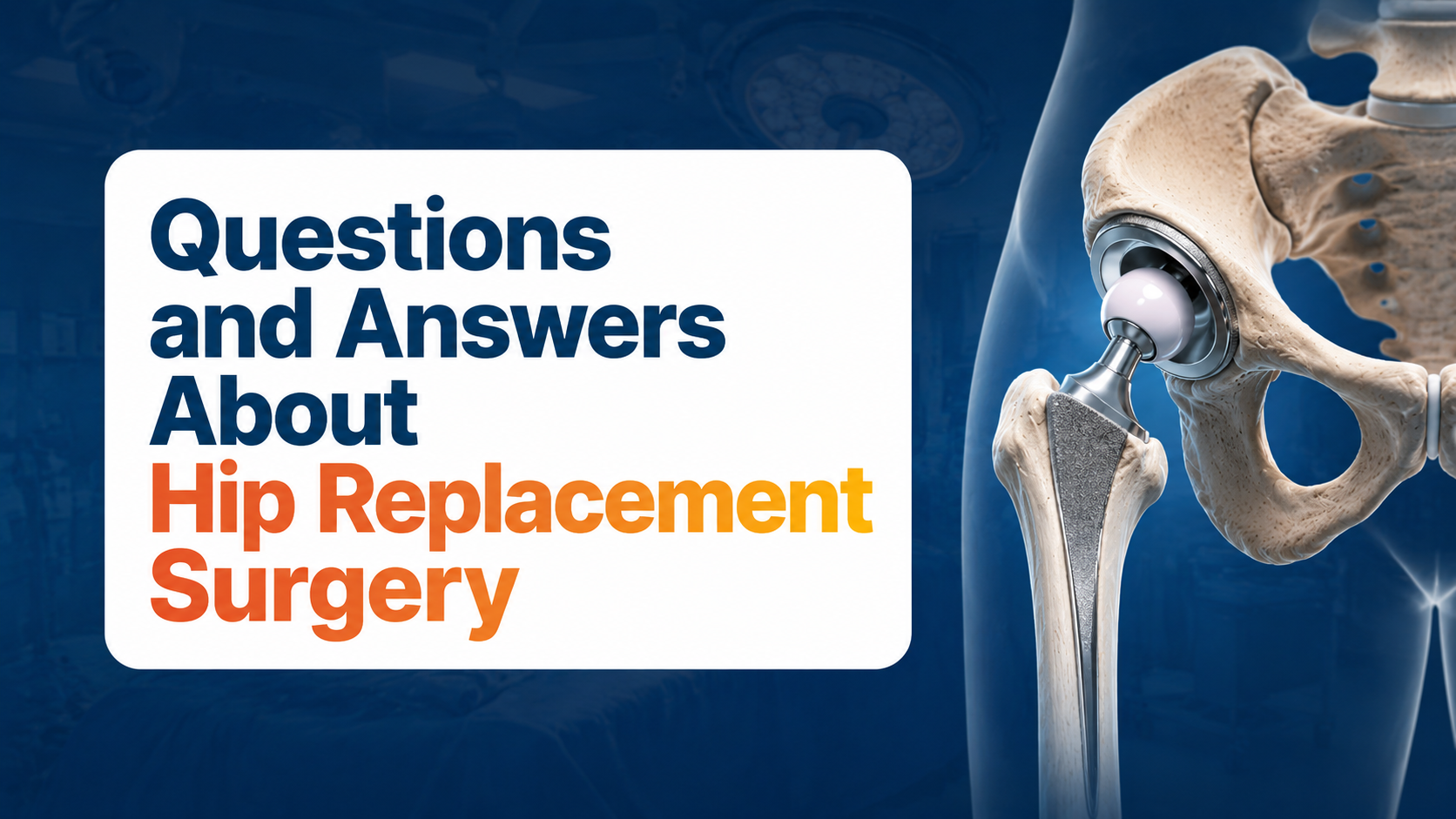
Patients considering Hip Replacement Surgery often have several questions about pain, recovery, implants, walking ability, risks, and long-term outcomes.
According to Dr. Abhishek Bhalotia, one of the biggest reasons patients delay treatment is confusion and fear caused by incomplete or incorrect information.
This detailed Q&A guide answers some of the most common questions patients ask about Total Hip Replacement Surgery (THR) and helps them understand the procedure more clearly.
Hip Replacement Surgery, also called Total Hip Replacement Surgery (THR) or Hip Arthroplasty, is a procedure in which the damaged portions of the hip joint are replaced with artificial implants.
The surgery is commonly performed for:
The main goals are:
✔ Pain relief
✔ Better mobility
✔ Improved quality of life
A patient may require Total Hip Replacement Surgery if:
Patients who cannot comfortably:
should consult a Hip Replacement Surgeon for evaluation.
Patients are often surprised to learn that modern Hip Replacement Surgery is designed with structured pain management protocols.
During surgery:
After surgery:
help improve comfort during recovery.
Most patients describe arthritic pain before surgery as more frustrating than post-operative recovery discomfort.
The exact duration depends on:
In most cases, THR Surgery takes a few hours including preparation and recovery monitoring.
Modern Hip Replacement Recovery protocols encourage early mobilisation.
Many patients may begin:
✔ Standing
✔ Walking with support
✔ Basic physiotherapy exercises
within a short period after surgery depending on their condition and surgical plan.
Early movement helps:
Recovery timelines vary from patient to patient.
Factors influencing recovery include:
Most patients gradually return to routine activities over the following weeks and months with guided physiotherapy.
Modern Hip Replacement Implants are made using durable medical-grade materials such as:
These implants are designed for:
✔ Smooth movement
✔ Long-term durability
✔ Better joint function
Modern Hip Replacement Surgery implants are designed for long-term performance.
Implant longevity depends on:
With proper care and follow-up, many implants function successfully for many years.
The Direct Anterior Approach Hip Replacement is a modern muscle-sparing surgical technique used in selected patients.
Potential advantages may include:
✔ Reduced soft tissue disruption
✔ Faster early mobility
✔ Better functional recovery in selected cases
The choice of approach depends on:
Like all major surgeries, Total Hip Replacement Surgery carries some risks.
These may include:
Careful surgical planning, infection control protocols, and structured rehabilitation help reduce these risks significantly.
Yes. Patients with severe arthritis in both hips may require:
The treatment plan depends on:
For many patients suffering from chronic hip pain, Hip Replacement Surgery can dramatically improve:
✔ Walking ability
✔ Independence
✔ Sleep quality
✔ Daily comfort
✔ Overall mobility
Many patients return to routine daily activities with significantly improved function after recovery.
Modern Total Hip Replacement Surgery (THR) has become one of the most reliable and successful orthopaedic procedures for patients suffering from severe hip pain and arthritis.
According to Dr. Abhishek Bhalotia, the key to successful outcomes lies in:
Patients who understand the procedure clearly often approach surgery with greater confidence and realistic expectations.
Revolutionizing Joint Replacement with Robotic Precision
*This website is for providing general information only and should not be considered as medical advice or soliciting patients.
**An in-person consultation with the Doctor is adviced before practicing any remedies / recommendations mentioned on this website