

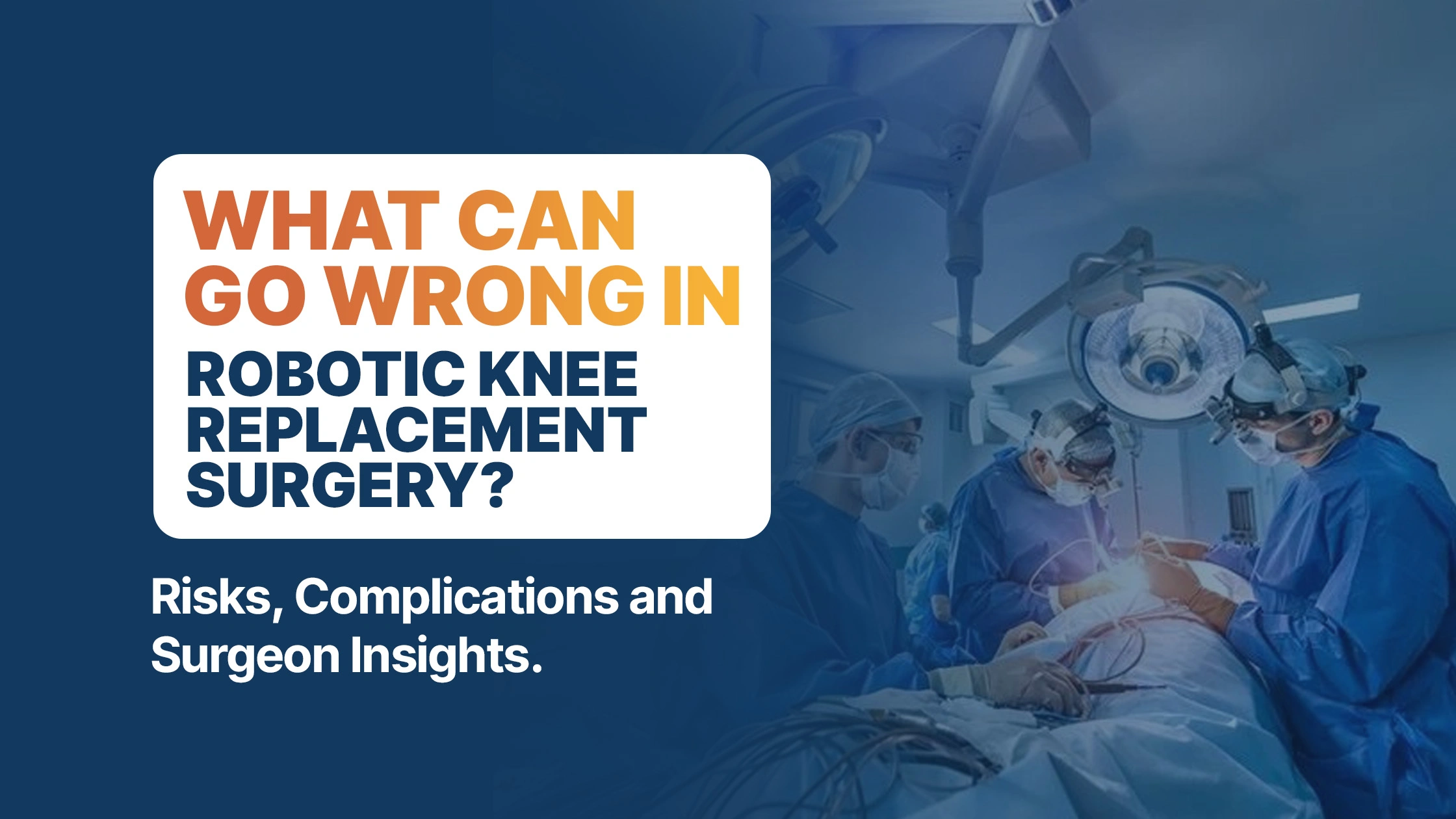
Robotic Knee Replacement Surgery is often described as one of the most advanced developments in modern orthopaedics. With improved precision and implant positioning, it has significantly enhanced surgical accuracy.
However, according to Dr. Abhishek Bhalotia, no surgery — robotic or conventional — is completely risk-free.
He believes that informed patients recover better. Understanding what can go wrong, and how those risks are minimised, helps patients approach surgery with clarity rather than fear.
While success rates for knee replacement are very high, complications can occur. Robotic assistance improves precision, but it does not eliminate all variables.
Potential issues may include:
Most of these risks are uncommon but important to understand.

Infection is one of the most discussed complications in any joint replacement surgery.
It may occur due to:
Modern protocols such as:
have significantly reduced infection rates.
One of the advantages of robotic knee replacement is accurate implant positioning. However, robotic systems still depend on:
If alignment is not ideal, it may lead to:
This is why surgeon expertise remains critical even with robotics.
Some patients may experience stiffness post-surgery.
Common contributing factors include:
Early mobilisation and structured rehabilitation help minimise this risk.
Blood clot formation is a known risk in lower limb surgeries.
Preventive strategies typically include:
With proper precautions, serious complications are rare.
While most patients experience significant pain relief, a small percentage may continue to have discomfort.
Possible reasons include:
Robotic precision reduces mechanical causes, but pain perception varies among individuals.
Knee implants are designed to last many years. However, long-term wear may occur due to:
Robotic assistance improves alignment accuracy, which can support implant longevity.
Two surgeries may use the same robotic system, but outcomes differ depending on:
Dr. Bhalotia often explains that robotics enhances precision, but it does not replace surgical decision-making.
To reduce complications, responsible surgeons focus on:
Complication prevention begins well before entering the operating room.
Some patients hesitate to ask about risks, assuming it may indicate lack of confidence. In reality, transparent discussions:
Dr. Bhalotia believes that informed consent is not just a formality — it is part of ethical practice.
Robotic Knee Replacement Surgery offers improved precision and reliable outcomes. However, like all surgeries, it carries potential risks.
The key is not to fear complications — but to:
With proper planning and execution, robotic knee replacement remains one of the most successful procedures in modern orthopaedics.
When patients combine advanced technology with informed decision-making, outcomes are generally predictable, safe, and life-enhancing.
Revolutionizing Joint Replacement with Robotic Precision
*This website is for providing general information only and should not be considered as medical advice or soliciting patients.
**An in-person consultation with the Doctor is adviced before practicing any remedies / recommendations mentioned on this website