

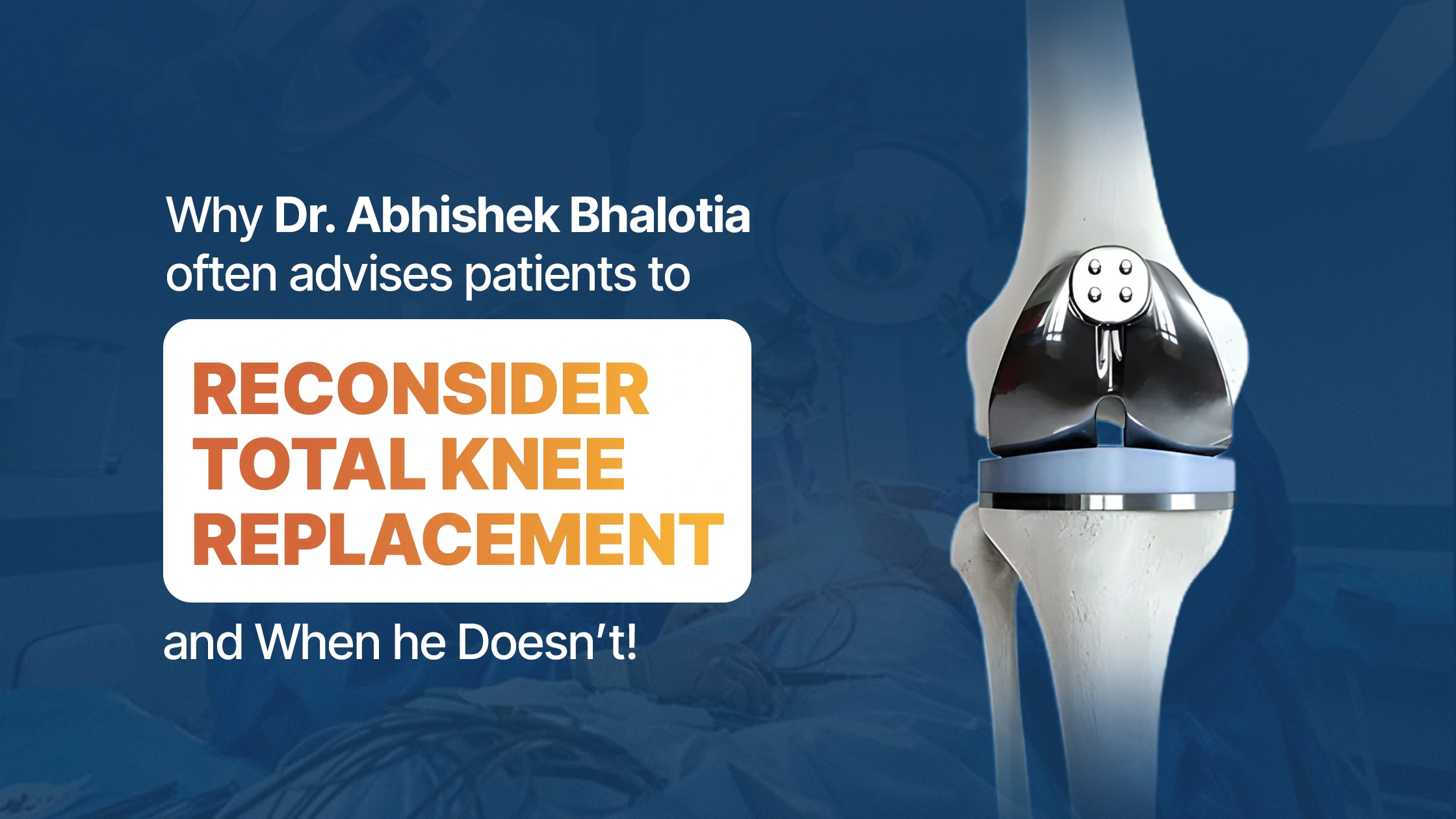
Total Knee Replacement (TKR) has long been considered the definitive solution for chronic knee arthritis. For many patients, it truly is life-changing. However, according to Dr. Abhishek Bhalotia, one of the most important parts of modern orthopaedic practice is knowing when to pause, reassess, and sometimes reconsider total knee replacement.
This opinion is not about avoiding surgery. It is about avoiding unnecessary surgery.
Dr. Bhalotia’s approach has helped many patients who were advised immediate total knee replacement elsewhere, but who actually benefited from a more tailored or staged treatment plan.
Patients commonly arrive with:
In such situations, Total Knee Replacement is frequently recommended as a standard next step. While this is appropriate in many cases, Dr. Bhalotia believes that pain alone should not dictate the extent of surgery.

Dr. Abhishek Bhalotia often reassesses the need for total knee replacement when:
In such cases, replacing the entire knee joint may mean:
This is where partial knee replacement or alternative treatment strategies may offer equally good pain relief with better recovery outcomes.
One of Dr. Bhalotia’s strongest opinions is that the extent of surgery must match the extent of damage.
His evaluation focuses on:
He believes that performing a total knee replacement on a knee that does not truly need it may compromise long-term satisfaction.
One of the core principles Dr. Bhalotia follows is proportionate intervention.
His decision-making is guided by:
This ensures that surgery is customised, not standardised.
Dr. Bhalotia often advises patients to reconsider immediate total knee replacement when:
In such scenarios, partial knee replacement or a more conservative surgical approach may be more appropriate.
Equally important is knowing when not to delay or downgrade surgery.
Dr. Bhalotia does not hesitate to recommend total knee replacement when:
In these cases, partial procedures may not provide durable relief, and total knee replacement offers more predictable and lasting outcomes.
Many patients consult Dr. Bhalotia after receiving conflicting advice from different doctors. This confusion often arises because:
Dr. Bhalotia’s approach helps patients understand why a particular surgery is being recommended or why it may be reconsidered.
Another key reason Dr. Bhalotia reassesses total knee replacement is recovery impact.
Larger surgeries often involve:
If a smaller, well-indicated procedure can achieve pain relief with faster recovery, he believes it deserves serious consideration.
This approach helps patients:
Patients feel reassured knowing that surgery is being recommended only when truly necessary.
Total Knee Replacement remains one of the most successful surgeries in orthopaedics.
But success lies not just in performing it — it lies in performing it for the right knee, at the right time.
Dr. Abhishek Bhalotia’s opinion reflects a modern, patient-centric mindset:
For patients confused by multiple opinions, this balanced perspective provides clarity, confidence, and direction.

Revolutionizing Joint Replacement with Robotic Precision
*This website is for providing general information only and should not be considered as medical advice or soliciting patients.
**An in-person consultation with the Doctor is adviced before practicing any remedies / recommendations mentioned on this website