

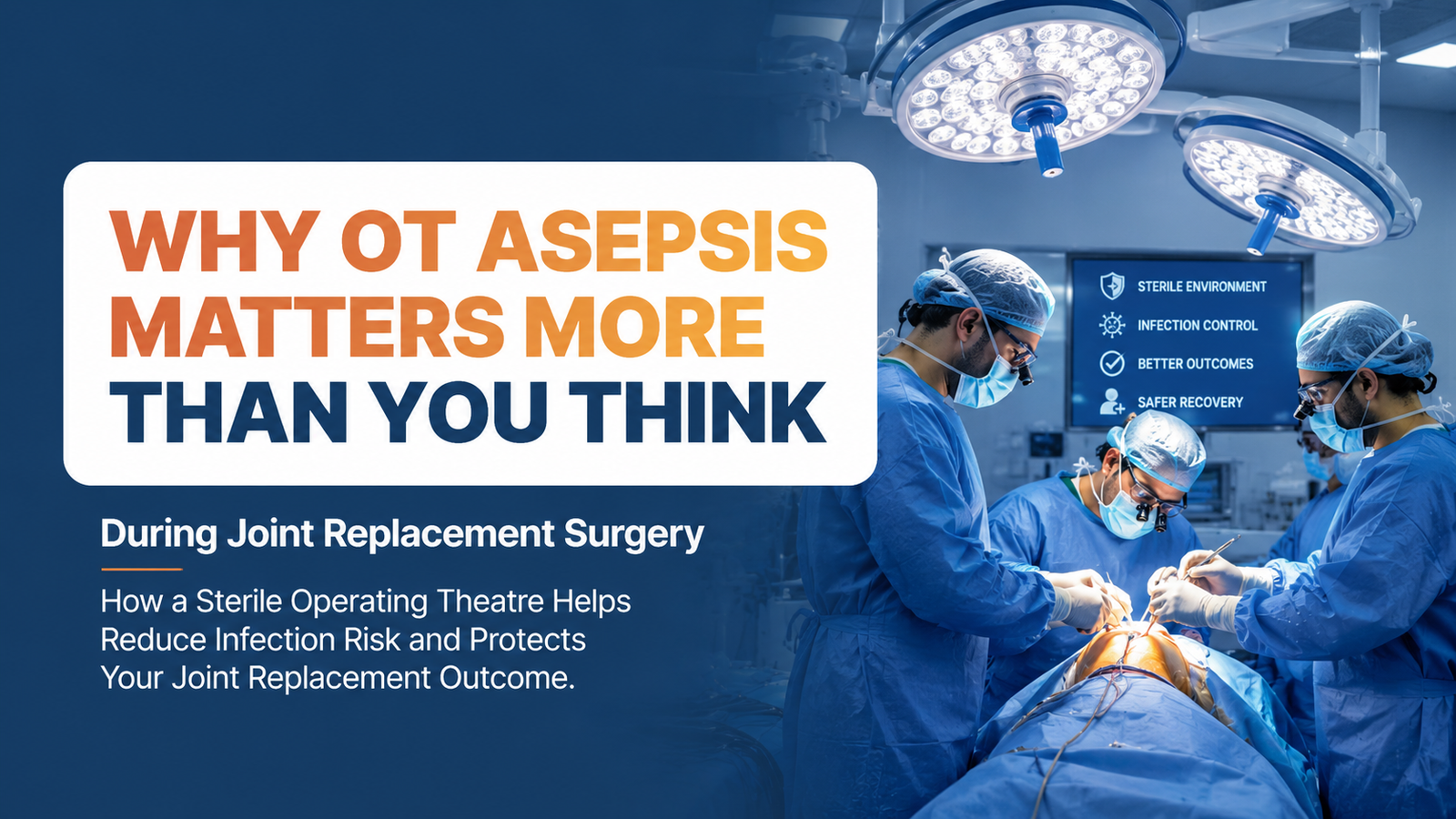
When patients think about a successful knee or hip replacement surgery, they usually focus on the surgeon, the implant, or the technology being used. While all of these are important, there is another factor that quietly plays a major role in determining surgical outcomes: Operating Theatre (OT) asepsis.
In joint replacement surgery, infection is one of the most serious complications that can occur. Even though modern joint replacement procedures have become remarkably safe and predictable, preventing infection remains a top priority for every orthopedic surgeon.
This is where OT asepsis becomes critical.
OT asepsis refers to the strict protocols followed inside the operating theatre to maintain a sterile environment and minimize the risk of infection.
Since knee and hip replacement surgeries involve placing an artificial implant inside the body, even a small contamination can potentially lead to significant complications.
A highly controlled sterile environment helps ensure that bacteria, viruses, and other microorganisms are prevented from entering the surgical field.
Unlike many other surgeries, joint replacement procedures involve permanent implants. If an infection develops around the implant, treatment can become complex and may require:
Although modern infection rates are very low, preventing infection is always better than treating it later.
Patients are often surprised to learn how many precautions are taken before a surgery even begins.
These may include:
Modern joint replacement operating theatres often use specialized air filtration systems designed to reduce airborne contamination.
Clean air circulation helps maintain a sterile surgical environment throughout the procedure. 2. Strict Sterilization Protocols
Every surgical instrument undergoes meticulous sterilization before use. Special protocols are followed for:
The operating team follows extensive sterilization practices, including:
Every team member plays a role in maintaining the sterile field.
One often overlooked aspect of infection prevention is limiting unnecessary movement in and out of the operating theatre.
A disciplined OT team helps maintain environmental control throughout the procedure.
Robotic technology itself is not designed specifically to prevent infection.
However, robotic-assisted surgery can contribute to more precise surgical execution and efficient planning, which may help reduce unnecessary tissue handling during surgery.
Ultimately, infection prevention still depends heavily on:
Technology works best when combined with rigorous aseptic practices.
Many patients focus on the implant brand or surgical technique but forget to ask about infection prevention measures.
Important questions include:
An informed patient is often a more confident patient.
The success of a knee or hip replacement surgery is not determined only by the surgeon’s skill or the implant used. It is also influenced by everything happening behind the scenes inside the operating theatre.
From air quality and instrument sterilization to team discipline and infection-control protocols, OT asepsis forms the foundation of safe joint replacement surgery.
At the highest standards of orthopedic care, sterility is not simply a protocol—it is a commitment to patient safety, smoother recovery, and long-term surgical success.
Revolutionizing Joint Replacement with Robotic Precision
*This website is for providing general information only and should not be considered as medical advice or soliciting patients.
**An in-person consultation with the Doctor is adviced before practicing any remedies / recommendations mentioned on this website