
Blogs - Dr. Abhishek Bhalotia | India’s Leading Robotic Joint Replacement Surgeon

Blogs

The Best Surgery Is the One That Helps You Recover Faster: Dr. Abhishek Bhalotia’s Perspective on Modern Knee Replacement Choices
Blogs

The Best Surgery Is the One That Helps You Recover Faster: Dr. Abhishek Bhalotia’s Perspective on Modern Knee Replacement Choices

The Best Surgery Is the One That Helps You Recover Faster: Dr. Abhishek Bhalotia’s Perspective on Modern Knee Replacement Choices For most patients considering knee replacement surgery, the biggest concern is not the operation itself — it is life after surgery.How soon will walking begin?How painful will recovery be?How dependent will one be on family members? According to Dr. Abhishek Bhalotia, these are exactly the questions that should guide the choice of surgery. His opinion is clear and consistent:“The best knee replacement surgery is not the biggest or the most aggressive one — it is the one that helps the patient recover faster and return to normal life sooner.” This recovery-first mindset defines how modern knee replacement decisions should be made. Why Recovery Speed Matters More Than Ever Today’s patients are different from those of previous decades. They are: More informed More active More independent Less willing to accept prolonged dependency Focused on quality of life, not just pain relief Dr. Bhalotia believes that knee replacement surgery should be planned not only around joint correction, but also around how the patient will live, move, and function after surgery. The Shift from “Fixing the Knee” to “Restoring Life” Traditional thinking around knee replacement focused on: Removing damaged joint surfaces Replacing them with implants Gradually rebuilding strength over time Modern knee replacement, according to Dr. Bhalotia, focuses on: Preserving healthy structures Minimising surgical trauma Supporting early movement Reducing rehabilitation burden Restoring confidence quickly This shift has led to the adoption of recovery-oriented surgical choices, including partial knee replacement and muscle-sparing techniques where appropriate. Why Bigger Surgery Can Slow Recovery Dr. Bhalotia often explains to patients that larger surgery means more healing. Total Knee Replacement, while highly effective, involves: Removal of more bone Alteration of natural ligaments Greater soft tissue disturbance Longer rehabilitation timelines In patients where arthritis is limited or localised, this level of surgery may: Delay walking confidence Increase stiffness Prolong physiotherapy Extend dependency on caregivers In such cases, recovery may take longer than necessary. How Modern Techniques Improve Recovery Dr. Bhalotia’s approach to knee replacement focuses on choosing techniques that support early functional recovery. These include: Partial Knee Replacement for localised arthritis Muscle-sparing approaches where feasible Patient-specific surgical planning Structured rehabilitation protocols Early mobilisation strategies The objective is not speed for the sake of speed —it is safe, confident, and sustainable recovery. What Faster Recovery Actually Means for Patients According to Dr. Bhalotia, faster recovery is not just about timelines. It is about outcomes that matter in daily life. Faster recovery translates into: Earlier walking with confidence Reduced pain and stiffness Less dependence on walkers or support Shorter physiotherapy duration Quicker return to daily activities Better emotional and psychological well-being Patients who recover faster often feel more in control of their healing journey. Choosing Surgery Based on Recovery Potential Dr. Bhalotia believes that every knee replacement decision should answer one key question: “Which option will help this patient recover better?” This involves evaluating: Extent of arthritis Stability of ligaments Knee alignment Range of motion Patient age and activity level Home support and lifestyle needs A surgery that looks perfect on X-ray but delays functional recovery may not be the best choice for that patient. When Slower Recovery Is Still Acceptable Dr. Bhalotia is clear that recovery speed should not override medical necessity. He prioritises total knee replacement when: Arthritis is widespread Deformity is significant Stability is compromised Pain severely affects quality of life In these cases, a longer recovery is justified because it delivers durable, long-term relief. The key is honesty — explaining to patients why recovery may take longer and why it is still the right decision. Why This Perspective Helps Confused Patients Patients often receive conflicting advice: One doctor recommends total replacement immediately Another suggests waiting Online information creates more confusion Dr. Bhalotia’s recovery-focused opinion gives patients clarity by shifting the conversation from:“Which surgery is bigger?”to“Which surgery helps me get back to life sooner?” Final Thoughts Knee replacement surgery has evolved — and so should the way decisions are made. Dr. Abhishek Bhalotia’s perspective reflects modern orthopaedics: Preserve what is healthy Replace only what is damaged Respect recovery as much as surgery Prioritise patient independence Because in the end, the success of knee replacement is not measured in implants or incisions — it is measured in how quickly and confidently a patient returns to living their life.

Here’s Why Dr. Abhishek Bhalotia Believes Partial Knee Replacement Is the Better Option in Select Knee Arthritis Cases
Blogs

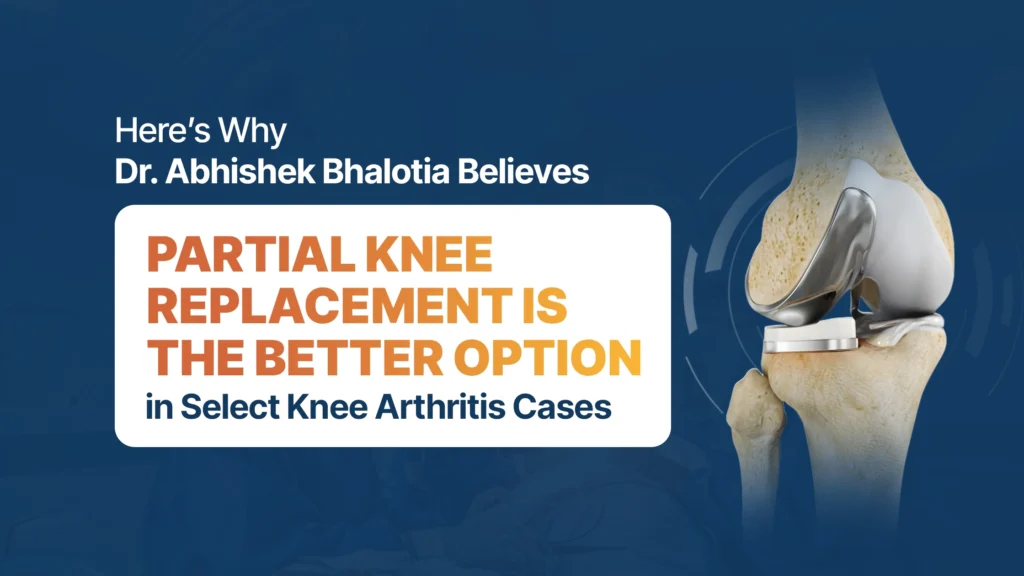
Here’s Why Dr. Abhishek Bhalotia Believes Partial Knee Replacement Is the Better Option in Select Knee Arthritis Cases

Here’s Why Dr. Abhishek Bhalotia Believes Partial Knee Replacement Is the Better Option in Select Knee Arthritis Cases When patients hear the words knee replacement, most immediately assume that the entire knee joint must be replaced. This belief has been shaped over decades, largely because Total Knee Replacement has been the most commonly discussed surgical option. However, modern orthopaedics has evolved, and so has the way knee arthritis is treated.According to Dr. Abhishek Bhalotia, Partial Knee Replacement is often a better, smarter, and more patient-friendly option in carefully selected cases of knee arthritis.This perspective is not about promoting a particular surgery, but about matching the extent of surgery with the extent of disease. Not All Knee Arthritis Is the Same One of the most important points Dr. Bhalotia highlights is that knee arthritis does not affect every knee in the same way. The knee has three compartments: Medial (inner side) Lateral (outer side) Patellofemoral (front, behind the kneecap) In many patients, arthritis is limited to just one compartment, most commonly the inner side of the knee. In such situations, replacing the entire knee joint may not always be necessary. This is where Partial Knee Replacement (PKR) becomes a strong and logical option. Why Dr. Bhalotia Prefers Partial Knee Replacement in Select Cases Dr. Abhishek Bhalotia believes that doing more surgery than required does not automatically lead to better results. His reasoning is simple: If only one part of the knee is damaged, treat only that part Preserve healthy bone, cartilage, and ligaments Maintain the knee’s natural movement as much as possible Partial Knee Replacement allows surgeons to replace only the diseased compartment, while leaving the rest of the knee untouched. Key Advantages of Partial Knee Replacement (When Appropriately Chosen) When recommended for the right patient, Partial Knee Replacement offers several advantages: Smaller surgical area Less bone removal Preservation of natural ligaments More natural knee movement Faster recovery compared to total knee replacement Less post-operative pain in many patients Better confidence while walking early after surgery Patients often describe the knee as feeling less artificial and more like their own. Who According to Dr. Bhalotia Is a Good Candidate? Dr. Bhalotia is very clear that Partial Knee Replacement is not suitable for everyone. He typically considers it when: Arthritis is limited to a single compartment Knee pain is localized rather than widespread Ligaments are intact and stable Knee alignment is reasonably maintained Knee bending is preserved Non-surgical treatments have stopped working A thorough clinical examination and imaging assessment are essential before making this decision. Why Partial Knee Replacement Is Not “Cutting Corners” One common misconception Dr. Bhalotia often addresses is that partial knee replacement is a lesser or temporary solution. In reality: It is a precision-based surgery It requires accurate patient selection Surgical technique and alignment are critical When done correctly, outcomes are long-lasting Partial knee replacement is not about avoiding surgery —it is about avoiding unnecessary surgery. Why Total Knee Replacement Is Still Necessary in Many Cases Dr. Bhalotia also strongly believes in being balanced and honest. He does not recommend partial knee replacement when: Arthritis affects multiple compartments Knee deformity is significant Ligaments are damaged Knee stiffness is severe Pain is generalized across the knee In such cases, Total Knee Replacement provides better long-term relief and predictability. This balanced approach is why many patients seek him for second opinions, especially when confused between different surgical recommendations. A Patient-Centric Philosophy Dr. Abhishek Bhalotia’s opinion is rooted in a simple philosophy: “The goal of knee replacement is not to replace the knee —it is to restore function, confidence, and quality of life.” By preserving healthy structures whenever possible, Partial Knee Replacement aligns well with this philosophy. Why This Opinion Matters for Patients Patients today often consult multiple doctors, search online, and hear conflicting advice. This can lead to confusion, anxiety, and delayed decision-making. Dr. Bhalotia’s approach helps patients: Understand whether full replacement is truly needed Avoid overtreatment Choose a surgery aligned with their condition and lifestyle Recover faster when eligible for partial replacement Final Thoughts Partial Knee Replacement is not a universal solution —but in select knee arthritis cases, it can be the better option. By carefully evaluating the knee and recommending surgery only when appropriate, Dr. Abhishek Bhalotia ensures that: Patients receive the right level of intervention Healthy knee structures are preserved Recovery is smoother and more natural For patients with localized knee arthritis, partial knee replacement can offer excellent outcomes without unnecessary surgical trauma.

Is Partial Knee Replacement a Better Option for You? Surgeon-Backed Insights, Benefits & Limitations
Blogs

Is Partial Knee Replacement a Better Option for You? Surgeon-Backed Insights, Benefits & Limitations

Is Partial Knee Replacement a Better Option for You? Surgeon-Backed Insights, Benefits & Limitations When knee pain starts affecting daily life, many patients immediately assume that Total Knee Replacement is the only surgical solution. However, modern knee surgery has evolved significantly. For a specific group of patients, Partial Knee Replacement (PKR) can offer excellent pain relief with faster recovery and more natural movement. According to Dr. Abhishek Bhalotia, who regularly evaluates patients for both partial and total knee replacements, “Partial knee replacement works beautifully — but only when used for the right knee and the right patient.” This blog explores when partial knee replacement is a better option, what its benefits are, and equally important, its limitations, so patients can make informed decisions rather than assumptions. What Makes Partial Knee Replacement Different? Partial knee replacement focuses on treating only the damaged part of the knee, instead of replacing the entire joint. The knee consists of three compartments: Inner (medial) compartment Outer (lateral) compartment Front (patellofemoral) compartment If arthritis affects only one compartment, partial knee replacement may be sufficient. In simple words: Partial knee replacement = targeted treatment Total knee replacement = complete joint replacement The goal is to preserve healthy structures and avoid unnecessary removal of bone and tissue. When Is Partial Knee Replacement a Better Option? Partial knee replacement is not about doing “less surgery.”It is about doing precisely the right amount of surgery. Patients may benefit more from partial knee replacement if: Arthritis is limited to a single compartment Pain is localized, often on the inner side of the knee Knee ligaments are strong and stable Knee alignment is reasonably normal Knee bending is well preserved Non-surgical treatments have failed In such cases, replacing the entire knee may be unnecessary. Key Benefits of Partial Knee Replacement When performed for the right indication, partial knee replacement offers several advantages. Common benefits include: Smaller surgical area Less bone removal Preservation of ligaments Faster recovery compared to total knee replacement More natural knee movement Less post-operative pain in many patients Shorter hospital stay in suitable cases Patients often describe the knee as feeling “more normal” during walking and daily activities. Why Recovery Feels Faster Recovery after partial knee replacement is often smoother because: Less tissue is disturbed during surgery Healthy joint structures remain intact Muscles experience less surgical stress Knee mechanics stay closer to natural anatomy Many patients experience: Early walking after surgery Reduced dependence on walkers Faster return to daily routines Shorter rehabilitation duration This makes partial knee replacement appealing for patients who value early mobility and independence. But Is Partial Knee Replacement Right for Everyone? This is where honest discussion becomes important. Partial knee replacement may NOT be suitable if: Arthritis affects more than one compartment Knee deformity is significant Ligaments are damaged or unstable Knee stiffness is severe Pain is widespread across the knee Inflammatory arthritis affects the entire joint In such cases, partial replacement may not provide lasting relief, and total knee replacement becomes the better long-term option. Understanding the Limitations of Partial Knee Replacement While partial knee replacement has many benefits, it also has limitations that patients should understand. Key limitations include: Not suitable for all knee arthritis cases Requires precise patient selection Disease progression in other compartments may occur over time Surgical accuracy is critical for success This is why surgeon experience and judgment play a major role in outcomes. Why Surgeon Evaluation Is More Important Than the Surgery Type Choosing between partial and total knee replacement is not based on: Age alone X-ray reports alone Internet research alone Dr. Abhishek Bhalotia follows a structured evaluation process that includes: Detailed clinical examination Imaging analysis Ligament stability assessment Understanding patient activity level Discussing long-term expectations Recommending partial knee replacement when it is unsuitable can compromise results.Recommending total knee replacement when partial would suffice can be unnecessary. The right choice lies in individualised assessment. Common Myths Around Partial Knee Replacement “Partial knee replacement is temporary”→ When done correctly, it can last many years. “Total knee replacement is always safer”→ Safety depends on proper indication, not procedure size. “Partial replacement is only for younger patients”→ Suitability depends on knee condition, not age. Final Thoughts Partial Knee Replacement is neither a shortcut nor a compromise.It is a precision-based solution designed for specific knee problems.For the right patient, it can offer: Excellent pain relief Faster recovery Better knee confidence More natural movement For others, total knee replacement remains the better choice.As Dr. Abhishek Bhalotia often highlights, “The best surgery is the one that respects the knee’s condition — not the one that replaces more than necessary.”Patients considering knee surgery should seek expert evaluation, clear explanations, and honest guidance before deciding.

Faster Recovery, Natural Movement: Life After Partial Knee Replacement Surgery
Blogs

Faster Recovery, Natural Movement: Life After Partial Knee Replacement Surgery

Faster Recovery, Natural Movement: Life After Partial Knee Replacement Surgery One of the biggest fears patients have before knee surgery is not the operation itself, but life after surgery.Questions like “How long will recovery take?”, “Will I walk normally again?”, and “Will my knee feel artificial?” are extremely common. For patients who qualify, Partial Knee Replacement Surgery often answers these concerns far better than expected. According to Dr. Abhishek Bhalotia, who specialises in advanced knee replacement techniques, “Partial knee replacement focuses on preserving what is healthy in the knee. That is why recovery feels faster and movement feels more natural for the right patient.” This blog takes a closer look at what life is like after partial knee replacement, how recovery typically progresses, and why many patients experience a smoother return to daily activities. Why Recovery After Partial Knee Replacement Is Different Partial knee replacement is fundamentally different from total knee replacement because less of the knee is disturbed during surgery. Key reasons recovery is faster: Only the damaged compartment is replaced Healthy bone and cartilage are preserved Ligaments remain intact Muscles experience less trauma Knee mechanics stay closer to natural movement Because the body has less to heal, patients often regain confidence earlier. What Patients Usually Experience After Surgery Recovery varies from person to person, but most patients follow a similar pattern. Early Phase (First Few Days) Walking begins early, often with minimal support Post-operative pain is usually manageable Swelling is present but less compared to total knee replacement Patients feel more stable while standing Many patients are surprised by how quickly they are able to move. Short-Term Recovery (First 2–3 Weeks) This is where partial knee replacement truly stands out. Most patients experience: Increasing walking distance each day Reduced dependency on walkers or sticks Improved knee bending Better balance and control Ability to manage basic daily tasks independently Physiotherapy during this phase focuses more on mobility and confidence, rather than rebuilding muscle strength. Mid-Term Recovery (4–6 Weeks) By this stage: Pain continues to reduce significantly Swelling gradually subsides Walking feels smoother and more natural Climbing stairs becomes easier Many patients return to light work or routine activities Patients often report that the knee feels “less operated” and more like their own. Long-Term Outcome (Beyond 6 Weeks) With consistent rehabilitation and guidance: Knee strength improves steadily Movement becomes more fluid Confidence while walking outdoors increases Participation in low-impact activities becomes possible Overall quality of life improves The preserved ligaments and natural knee mechanics contribute to long-term comfort. Why Movement Feels More Natural After Partial Knee Replacement One of the biggest advantages of partial knee replacement is how the knee feels during movement. Reasons for more natural movement: Cruciate ligaments remain intact Knee alignment stays closer to original anatomy Less stiffness during walking Better coordination between muscles and joint More controlled knee bending Patients often say they “forget” about the knee during daily activities — a feeling that matters greatly in long-term satisfaction Activities Patients Commonly Return To Most patients can safely resume: Walking longer distances Household activities Driving (after medical clearance) Climbing stairs Light recreational activities High-impact sports may still be restricted, but daily life becomes significantly easier. Why Patient Selection Matters for Good Recovery Not every knee is suitable for partial replacement. Recovery outcomes depend heavily on choosing the right patient. Dr. Abhishek Bhalotia follows a structured assessment that includes: Clinical examination Imaging studies Ligament stability assessment Understanding patient lifestyle and expectations When partial knee replacement is done for the right indication, recovery is smoother and outcomes are more predictable. Common Recovery Myths “Recovery is the same as total knee replacement”→ Partial knee replacement typically recovers faster. “The knee will feel weak”→ Preserved structures often lead to better strength early on. “Physiotherapy will be very painful”→ Rehab is usually more comfortable and functional. Final Thoughts Life after partial knee replacement is often described as lighter, easier, and more natural by patients who qualify for the procedure. The surgery works not because it does more —but because it respects what is still healthy. As Dr. Abhishek Bhalotia often explains, “Preserving normal anatomy is the key to faster recovery and natural movement.” For patients with localized knee arthritis, partial knee replacement can be a life-changing step toward pain-free movement and faster independence.

Partial vs Total Knee Replacement: Which One Is Right for Your Knee Pain?
Blogs

Partial vs Total Knee Replacement: Which One Is Right for Your Knee Pain?

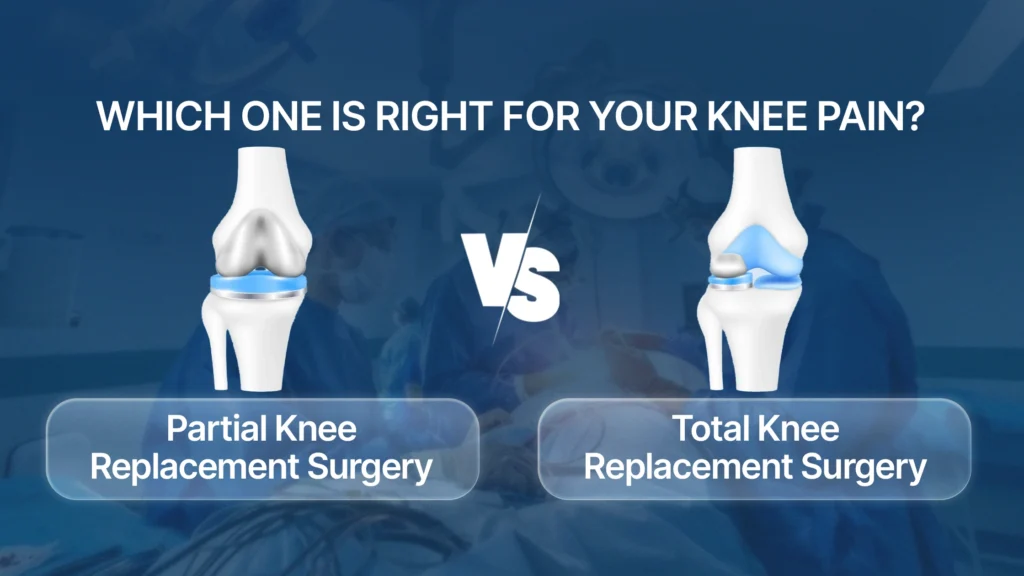
Partial vs Total Knee Replacement: Which One Is Right for Your Knee Pain? Knee pain can be confusing. Some patients are told they need surgery, others are advised to wait, and many hear different opinions about partial knee replacement versus total knee replacement. The truth is — there is no one-size-fits-all answer.According to Dr. Abhishek Bhalotia, an expert in advanced knee replacement procedures, “The right surgery is not about replacing more — it’s about replacing only what is damaged.”This blog explains the key differences between Partial Knee Replacement (PKR) and Total Knee Replacement (TKR), helping patients understand which option may be more suitable for their knee pain. Understanding the Knee Joint (In Simple Words) The knee is not a single solid joint. It is divided into three compartments: Medial compartment (inner side) Lateral compartment (outer side) Patellofemoral compartment (behind the kneecap) Arthritis may affect just one compartment or all three. The extent of damage largely determines whether a partial or total knee replacement is required. What Is Partial Knee Replacement? Partial Knee Replacement involves replacing only the damaged compartment of the knee while preserving healthy bone, cartilage, and ligaments. Key characteristics: Only one part of the knee is replaced Healthy portions are left untouched Ligaments are preserved Knee mechanics remain closer to natural movement This option works best when arthritis is localized, not widespread. What Is Total Knee Replacement? Total Knee Replacement replaces the entire knee joint, including all damaged compartments. Key characteristics: All joint surfaces are replaced Used in advanced or widespread arthritis Provides predictable pain relief Suitable for severe deformities or stiffness Total knee replacement is often recommended when the damage is extensive and affects overall knee stability. Partial vs Total Knee Replacement: Key Differences Factor Partial Knee Replacement Total Knee Replacement Area replaced Only damaged compartment Entire knee joint Bone removal Minimal More extensive Ligaments Preserved Often sacrificed Recovery time Faster Relatively longer Knee movement More natural Stable but artificial Hospital stay Usually shorter Slightly longer Best suited for Localized arthritis Advanced arthritis Who Is a Good Candidate for Partial Knee Replacement? Partial knee replacement is highly selective. Patients may qualify if: Arthritis is limited to one compartment Knee pain is localized (often inner side) Ligaments are strong and stable Knee alignment is acceptable Knee bending is reasonably preserved Non-surgical treatments have failed When done in the right patient, partial knee replacement can offer excellent long-term outcomes. Who Should Consider Total Knee Replacement Instead? Total knee replacement may be a better option if: Arthritis affects multiple compartments Knee deformity is significant Knee is very stiff or unstable Ligaments are damaged Pain is widespread across the knee In such cases, partial replacement may not provide lasting relief. Recovery: What Patients Usually Experience After Partial Knee Replacement: Earlier walking Less post-operative pain Faster return to daily activities Shorter rehabilitation phase Knee often feels “more natural” After Total Knee Replacement: Slightly longer recovery Gradual improvement in strength More structured physiotherapy Reliable pain relief in advanced arthritis Both surgeries are effective — the difference lies in extent of surgery and recovery speed. Why the Surgeon’s Judgment Matters Most Choosing between partial and total knee replacement is not based on age alone, nor on X-rays alone. Dr. Abhishek Bhalotia follows a detailed evaluation process that includes: Clinical examination Imaging studies Assessment of ligament stability Understanding patient lifestyle and expectations Recommending partial knee replacement when it’s not suitable — or total replacement when partial would suffice — can impact long-term results. Common Misconceptions “Partial knee replacement is temporary”→ When done correctly, it can last many years. “Total knee replacement is always better”→ Not if the damage is limited. “Age decides the surgery”→ Knee condition matters more than age. Final Thoughts Partial and Total Knee Replacement are both effective surgeries, but for different knee conditions. The goal is not to replace more —The goal is to replace what is necessary and preserve what is healthy. As Dr. Abhishek Bhalotia often explains, “The best outcome comes from choosing the right surgery for the right knee — not the most aggressive one.” Patients experiencing knee pain should seek expert evaluation, not assumptions, before deciding on surgery.

What Is Partial Knee Replacement Surgery? Who Needs It and Who Doesn’t?
Blogs

What Is Partial Knee Replacement Surgery? Who Needs It and Who Doesn’t?

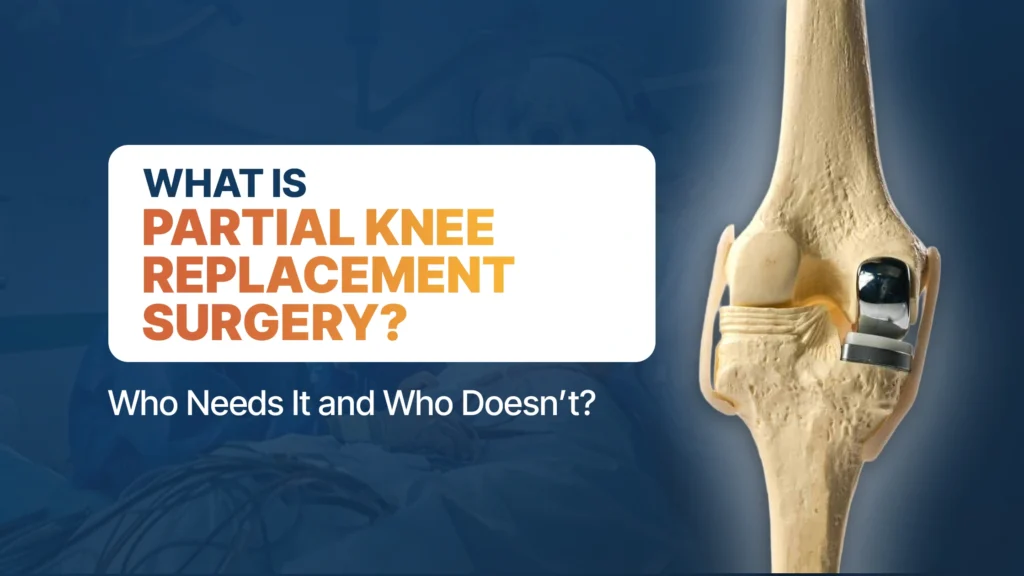
What Is Partial Knee Replacement Surgery? Who Needs It and Who Doesn’t? Knee pain does not always mean that the entire knee joint is damaged. In many patients, arthritis affects only a specific portion of the knee, not the whole joint. Yet, due to lack of awareness, many people assume that Total Knee Replacement is the only surgical solution.This is where Partial Knee Replacement Surgery becomes an important and often overlooked option.According to Dr. Abhishek Bhalotia, a specialist in advanced knee replacement procedures, “Not every painful knee needs a full replacement. In the right patient, partial knee replacement can deliver excellent pain relief with faster recovery and more natural movement.” This blog explains what Partial Knee Replacement is, who is an ideal candidate, and who may not benefit from it — helping patients make informed decisions about their knee health. What Is Partial Knee Replacement Surgery? Partial Knee Replacement (PKR) is a surgical procedure in which only the damaged compartment of the knee joint is replaced, while the healthy parts of the knee are preserved. The knee has three compartments: Medial (inner side) Lateral (outer side) Patellofemoral (front portion under the kneecap) If arthritis is limited to just one compartment, a partial knee replacement may be sufficient. In simple terms: Total Knee Replacement = Entire knee joint replaced Partial Knee Replacement = Only the damaged part replaced This approach helps retain much of the knee’s natural structure, ligaments, and movement. Why Partial Knee Replacement Is Gaining Popularity Partial knee replacement is becoming increasingly popular because it offers several advantages when used in the right patient. Key benefits include: Smaller surgical area Less bone removal Preservation of healthy ligaments More natural knee movement Faster recovery compared to total knee replacement Reduced hospital stay in many cases Patients often report that the knee feels more “normal” after a partial replacement. Who Is an Ideal Candidate for Partial Knee Replacement? Partial knee replacement is not suitable for everyone, but it can be an excellent option for carefully selected patients. You may be a good candidate if: Arthritis is limited to one compartment of the knee Knee pain is localized (usually inner side pain) Knee ligaments are intact Knee alignment is relatively stable There is good range of motion in the knee Pain persists despite medications or physiotherapy Dr. Abhishek Bhalotia emphasizes that proper diagnosis and imaging are crucial before recommending partial knee replacement. Who May NOT Be Suitable for Partial Knee Replacement? While partial knee replacement offers many benefits, it is not the right solution for every knee problem. Partial knee replacement may not be ideal if: Arthritis affects multiple compartments There is severe knee deformity Ligaments are damaged or unstable The knee is very stiff with limited motion There is inflammatory arthritis involving the whole joint In such cases, Total Knee Replacement may provide more predictable and long-term relief. Partial vs Total Knee Replacement: A Quick Comparison Aspect Partial Knee Replacement Total Knee Replacement Area replaced Only damaged part Entire knee joint Bone removal Minimal More extensive Recovery Faster Relatively longer Knee feel More natural Artificial but stable Best for Localized arthritis Advanced arthritis Recovery After Partial Knee Replacement One of the biggest advantages of partial knee replacement is the speed of recovery. Most patients can expect: Early walking after surgery Less post-operative pain Quicker return to daily activities Shorter rehabilitation period Better knee confidence in early weeks Because muscles and healthy joint structures are preserved, patients often feel stronger and more stable during recovery. Why Surgeon Experience Matters Partial knee replacement requires high surgical precision. Since only a portion of the joint is replaced, implant positioning, alignment, and ligament balance become extremely important. Dr. Abhishek Bhalotia follows a patient-specific evaluation approach, ensuring that: Only suitable patients are selected The procedure is tailored to the knee anatomy Long-term knee function is preserved Choosing the right surgeon is just as important as choosing the right procedure. Final Thought Partial Knee Replacement is a powerful but selective solution. It is not a shortcut, nor is it suitable for everyone. But in the right patient, it can offer: Excellent pain relief Faster recovery Better knee movement A more natural-feeling joint The key lies in correct diagnosis, honest assessment, and expert surgical judgment. As Dr. Abhishek Bhalotia often highlights, “The best knee replacement is the one that replaces only what is damaged — and preserves everything else.”

Blogs

Is Muscle Sparing Knee Replacement the Future of Joint Surgery? Surgeon-Backed Insights, Benefits & Who Qualifies for It

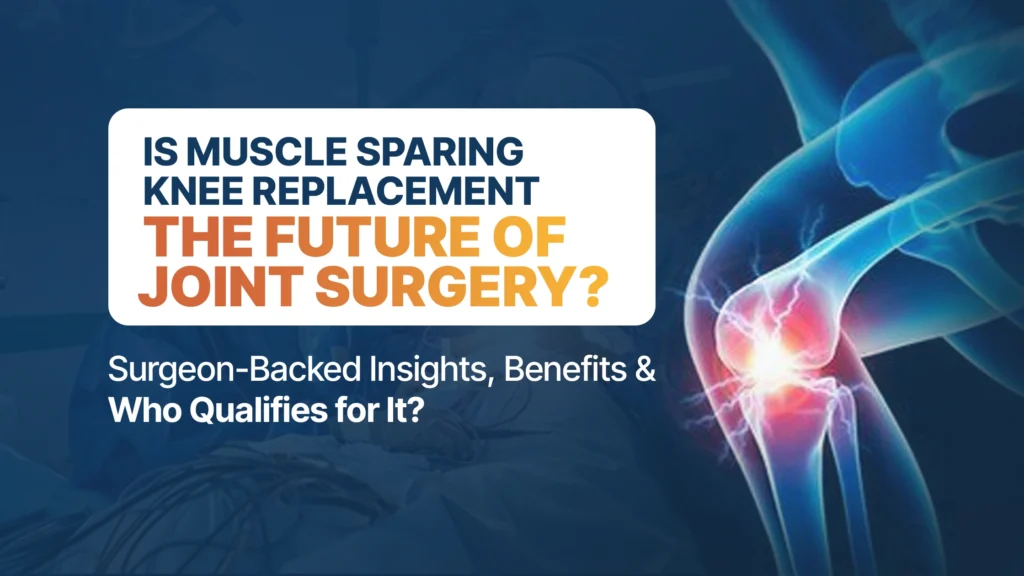
Is Muscle Sparing Knee Replacement the Future of Joint Surgery? Surgeon-Backed Insights, Benefits & Who Qualifies for It Knee replacement surgeries have seen remarkable evolution over the past decade. Once perceived as a painful, long-recovery, muscle-damaging procedure, modern orthopaedic science has introduced a smarter, gentler, and far more patient-friendly solution — Muscle Sparing Knee Replacement Surgery. This surgical advancement has shifted focus from joint replacement alone to joint replacement with rapid recovery, minimal trauma, and preserved muscle function. And today, more surgeons and patients alike are calling it the future of knee replacement surgeries. But what makes it so progressive? Who qualifies for it? And why are recovery outcomes so dramatically different? Let’s break it down from a surgeon-backed perspective. What Defines the “Future” in Knee Replacement Surgery? Modern knee surgery is no longer just about replacing a damaged joint — it is about: ✅ Minimal tissue trauma✅ Preserving natural muscle strength✅ Faster post-surgery mobility✅ Reduced pain dependence✅ Shorter rehabilitation timelines✅ Long-term joint stability✅ Enhanced quality of life Muscle Sparing Knee Replacement delivers on every one of these goals, which is why it is being widely recognized as the next generation in joint replacement surgery. What Makes Muscle Sparing Surgery Different? Unlike conventional knee replacement where major muscles (especially the quadriceps) are cut to reach the joint, Muscle Sparing Knee Replacement preserves the muscle entirely by operating through natural anatomical gaps. The result? Muscles remain untouched Natural body support system stays intact Joint movement becomes easier very early The body heals with strength, not rebuilding strength In simple terms:Traditional surgery: muscles have to heal first, then help you walkMuscle Sparing surgery: muscles help you walk while you heal That is the game-changing difference. Key Benefits That Make It the Future of Knee Surgery Advantage Why It Matters No muscle cutting Preserves strength and reduces surgical trauma Less pain Patients require fewer pain medications Early walking Many stand and walk within 6–24 hours Faster recovery Daily routines resume in weeks, not months Less dependency Reduced need for prolonged caregiver support Better balance & stability Lower fall risk post-surgery Shorter physiotherapy phase Focus remains on mobility, not rebuilding muscle Higher patient confidence Better psychological and emotional recovery Who Is an Ideal Candidate? Muscle Sparing Knee Replacement is suitable for: Patients with: Severe knee arthritis (osteoarthritis, rheumatoid arthritis) Difficulty walking or constant knee pain Stiff knees or limited joint movement X-ray/MRI confirmed joint degeneration Especially beneficial for: Senior citizens prioritizing fast mobility Active adults wanting shorter recovery timelines Patients afraid of surgical trauma or muscle damage Individuals with caregiver limitations at home However, the final eligibility always depends on a clinical examination, imaging evaluation, and surgeon assessment. How Does It Improve Long-Term Outcomes? Preserving muscle integrity has lasting benefits: More natural walking pattern post-surgery Improved implant alignment support Lower chances of instability or gait imbalance Better participation in rehabilitation Higher long-term patient satisfaction This shifts the surgical success metric from “Was the joint replaced safely?” to“How quickly and confidently can the patient return to life?” Busting Common Myths Myth Reality Muscle cutting is unavoidable in knee replacement Not anymore — modern techniques preserve muscles Knee surgery means long bedridden recovery Patients can walk within hours Elderly patients recover slowly by default They recover faster when muscle strength is preserved Pain is a necessary part of recovery Pain reduces significantly with muscle sparing approach Surgeon’s Perspective on the Future of Knee Surgery The objective of modern orthopaedics is: ✔ Less invasive✔ More precise✔ Recovery-driven✔ Function-focused Muscle Sparing Knee Replacement embodies this entire philosophy. It is not just a surgical upgrade — it is a complete shift in how recovery is prioritized and delivered. Final Thought The future of knee replacement isn’t about bigger incisions, heavier rehab, or surviving recovery.It’s about standing early, walking sooner, and living better, faster.And that is exactly why Muscle Sparing Knee Replacement is no longer the alternative — it is the evolution.

Blogs

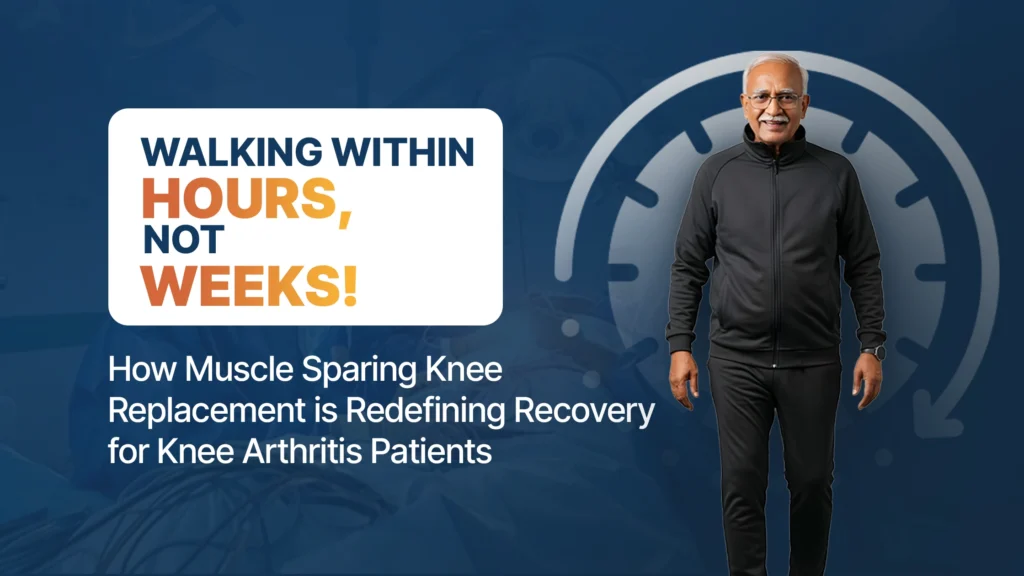
Walking Within Hours, Not Weeks! How Muscle Sparing Knee Replacement is Redefining Recovery for Knee Arthritis Patients

Walking Within Hours, Not Weeks! How Muscle Sparing Knee Replacement is Redefining Recovery for Knee Arthritis Patients For decades, knee replacement surgery was feared not because of the procedure itself, but because of long recovery timelines, painful rehabilitation, muscle weakness, and delayed mobility. Many patients lived with years of knee pain believing that recovery would be harder than the disease. But modern orthopaedics has rewritten the rules. Today, Muscle Sparing Knee Replacement is changing the recovery narrative — from weeks of bed rest to walking within hours, from dependency to early independence, and from fear of surgery to confidence in recovery. This evolution is especially empowering for elderly patients, families supporting them, and anyone unwilling to compromise on their mobility and lifestyle. What’s the Biggest Change? In traditional knee surgery, muscles are cut to access the joint. This leads to: Longer healing time More pain Weakness while standing or walking Delayed physiotherapy progress Higher dependency post-surgery In Muscle Sparing Knee Replacement, no muscle is cut. The surgeon works between natural tissue planes, keeping the muscle structure intact. This one difference changes everything — especially recovery. What Does Faster Recovery Really Mean? It means: Standing within a few hours after surgery Walking the same day or the next Less pain and swelling Fewer days dependent on walkers More confidence with movement Faster return to routine activities Shorter physiotherapy duration For many patients, the experience is no longer “When will I walk again?” but “I didn’t expect to walk so soon!” Why Preserving the Muscle is the Key to Rapid Recovery Muscles are responsible for: Stability while standing Balance while walking Controlled motion Absorbing load during movement When muscles are not cut, the body is physically stronger right after surgery. This leads to: ✅ Natural movement patterns✅ Immediate stability support✅ Early weight bearing on the new joint✅ Reduced rehabilitation burden That’s why recovery becomes functional, not forced. What Makes Muscle Sparing Recovery Better? Recovery Milestone Traditional Surgery Muscle Sparing Surgery First Standing 2–4 days Within hours Assisted Walking 3–7 days Same day / next day Pain Level Moderate to High Low to Moderate Muscle Strength Reduced for weeks Largely preserved Physiotherapy Focus Muscle rebuilding first Mobility & confidence building Return to Daily Activity 6–12 weeks 3–6 weeks What Patients Can Expect in the First Few Weeks Day 1 Standing & first steps Controlled walking with support Basic knee bending and movement Week 1 Significantly reduced pain Less swelling than conventional surgery More confidence while walking Better sleep and comfort Weeks 2–3 Increased walking distance Reduced dependence on walker More natural walking rhythm Greater participation in rehab Weeks 4–6 Independence in most activities Improved stamina Real-world functional abilities (stairs, walking outdoors, daily chores) Psychological Impact of Faster Recovery One of the most overlooked benefits is emotional recovery.Patients often express: Less anxiety post-surgery Higher self-belief Reduced fear of movement More control over recovery journey Greater satisfaction with surgery outcome When you move earlier, you feel better sooner — physically and mentally. Why Families Prefer Muscle Sparing Recovery Too Shorter recovery means: Less caregiver strain Lower dependency duration Quicker return to normal family dynamics Reduced emotional and physical burden at home It’s not just a patient benefit — it’s a family benefit too. The Big Takeaway Muscle Sparing Knee Replacement is not just another surgical technique  it is a recovery-first approach that focuses on: ✔ Keeping muscles intact✔ Minimizing surgical trauma✔ Maximizing early mobility✔ Restoring independence sooner✔ Giving patients the confidence to move again Because today, a successful knee replacement is not just about implanting a new joint, it is about walking into a better quality of life, sooner than ever.

Blogs

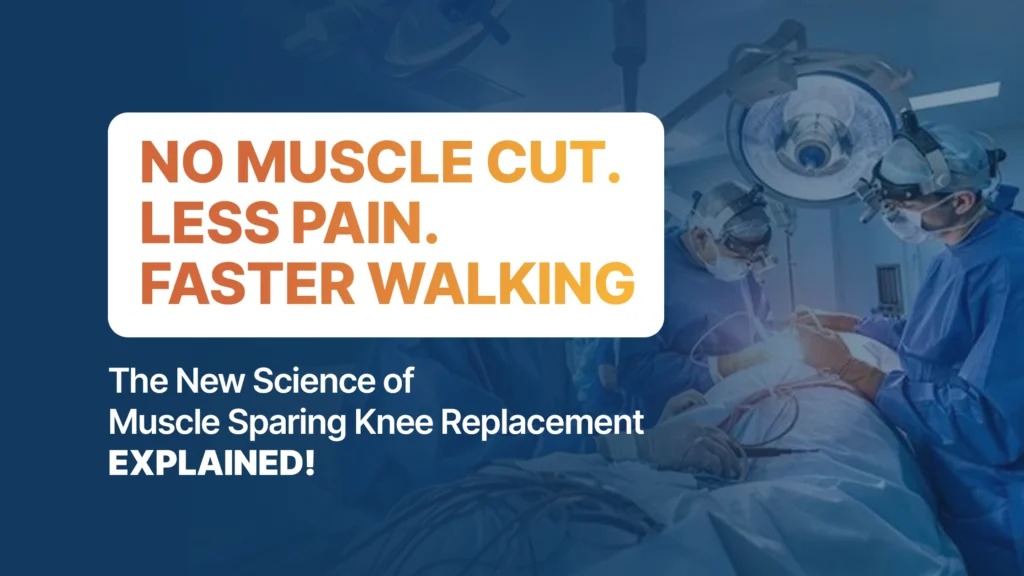
No Muscle Cut. Less Pain. Faster Walking — The New Science of Muscle Sparing Knee Replacement Explained!

No Muscle Cut. Less Pain. Faster Walking — The New Science of Muscle Sparing Knee Replacement Explained! Knee replacement surgery has long been viewed as a painful, long-recovery procedure that involves cutting through muscle and tissue to access the joint. But medical science has evolved. Today, Muscle Sparing Knee Replacement is transforming outcomes for patients with arthritis, offering less pain, faster mobility, and a smoother recovery. This advanced surgical approach, practiced by Dr. Abhishek Bhalotia, a specialist in robotic and muscle-sparing knee replacement, has become a breakthrough technique — especially for patients who wish to regain their lifestyle faster without the trauma of conventional surgical disruption. What Exactly Is Muscle Sparing Knee Replacement? Unlike traditional knee replacement surgery, which involves cutting through key muscles (especially the quadriceps) to expose the joint, muscle sparing surgery works through natural tissue planes without cutting muscle. This means: Muscles stay intact Less surgical trauma Minimal tissue damage Better post-op movement Faster recovery timeline It is a precision-driven method designed to replace the damaged joint while preserving the body’s natural strength and structure. Why Is Preserving Muscle Such a Big Deal? Muscles are the driving engine of motion. When they are cut, even partially, it leads to: Post-surgery weakness Delayed walking and instability Longer dependency on physiotherapy Slower overall recovery Higher post-operative pain But when muscles are not cut, the outcomes change dramatically: Better balance and stability Reduced pain Quicker walking ability Faster return to daily activities Less need for prolonged rehabilitation This difference is why muscle sparing surgery is now emerging as a preferred choice for active families, working professionals, and senior citizens who want independence restored quickly. Key Advantages of Muscle Sparing Knee Replacement Benefit Category What It Means for the Patient Less Pain Reduced muscle trauma = significantly lower post-surgery discomfort Early Walking Most patients can walk the same or next day Faster Recovery Return to normal activities weeks earlier than traditional surgery Less Blood Loss No muscle cutting = reduced internal bleeding More Stability Natural muscle structure remains intact, protecting implant alignment Lower Infection Risk Smaller incision + reduced tissue trauma promotes better healing Better Patient Confidence Patients feel physically stronger right from early recovery Who Can Benefit the Most from Muscle Sparing Knee Replacement? This advanced technique is especially recommended for: Severe knee arthritis patients Senior citizens who prioritize fast mobility Active individuals who want to return to daily function quickly Patients avoiding long rehab timelines Those scared of pain, delayed walking, or muscle weakness Patients seeking minimally invasive and gentle surgical approaches How It’s Done: The Science Behind the Precision The surgery utilizes: ✔ Small, strategic incisions ✔ Natural anatomical pathways ✔ No cutting of key muscles ✔ Implant placement with extreme precision (robotic assistance when needed) ✔ Advanced pain management protocols This ensures accurate implant alignment, long-term joint performance, and respected soft tissue integrity. What Patients Can Expect After Surgery A typical muscle sparing knee replacement recovery looks like: Standing or walking within 6 to 24 hours   Less swelling and stiffness   Ability to bend the knee earlier   Reduced dependency on walkers within days   Confident walking pattern restored sooner   Return to daily chores faster than conventional surgery Many patients also report that their recovery was less painful than expected, a major mindset shift from old beliefs around knee replacement surgery. The Bigger Shift: From Painful Surgery to Smart Surgery Muscle Sparing Knee Replacement represents a new era — one where surgery is no longer synonymous with long hospital stays, painful recovery, and months of dependency.It stands for:Smarter techniquesLess surgical traumaFaster recoveryBetter life qualityAnd most importantly—a quicker return to an independent, pain-free life. Final Takeaway If knee pain is limiting your lifestyle or delaying everyday movement, you no longer need to fear long recovery or muscle damage during surgery.With Muscle Sparing Knee Replacement, the focus is on: Less damage Less pain More movement Faster recovery Better results For anyone considering knee replacement today, this approach is redefining the game — because the goal is not just a new knee, but a faster return to life.

Blogs

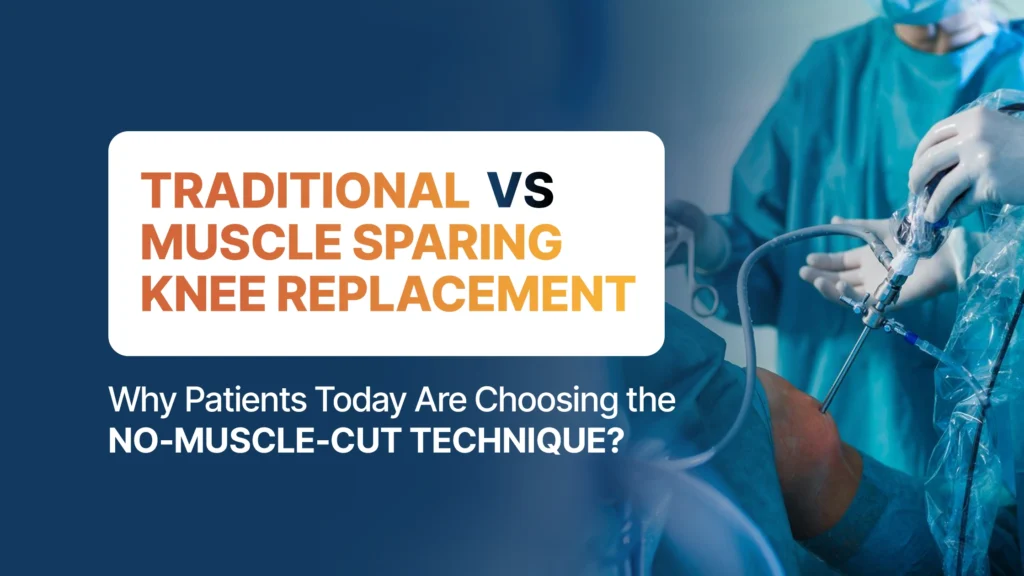
Traditional vs Muscle Sparing Knee Replacement: Why Patients Today Are Choosing the No-Muscle-Cut Technique

Home About Services Robotic Joint Replacement Surgery Hip Replacement Surgery Knee Replacement Surgery Shoulder Arthroscopy Sports Injury Treatment Trauma & Fracture Care Pain Management Physiotherapy & Rehabilitation TUKSplasty Teleconsultation Success Stories Testimonials Patient Stories Contact Us Appointment Traditional vs Muscle Sparing Knee Replacement: Why Patients Today Are Choosing the No-Muscle-Cut Technique Knee replacement surgery has evolved dramatically over the past decade. What was once considered a major surgery with long recovery, heavy muscle trauma, and extended bed rest has now transformed into a precise, planned, and patient-friendly procedure — thanks to the advent of Muscle Sparing Knee Replacement. Patients today are more informed, ask better questions, and demand faster recovery with minimal pain. As a result, the no-muscle-cut approach is gaining preference over the traditional method, especially among active individuals and senior citizens who want their independence back quickly. This shift is not just about technology — it’s about better outcomes, smarter recovery, and preserving the body’s natural strength. Understanding the Two Techniques 1. Traditional Knee Replacement The surgeon cuts through major muscles (primarily the quadriceps) to expose the knee joint. Provides good surgical visibility but disturbs muscle integrity Recovery is longer due to muscle trauma Higher post-operative pain, swelling, and stiffness   2. Muscle Sparing (No Muscle Cut) Knee Replacement The surgeon operates between natural tissue planes without cutting muscle Muscles remain intact, leading to early mobility and less pain Body heals faster as structural support is preserved Patients regain control and confidence sooner Quick Comparison: Traditional vs Muscle Sparing Knee Replacement Parameter Traditional Technique Muscle Sparing Technique Muscle Cutting Yes No Post-Op Pain Higher Much Lower Walking Ability Usually after 2–4 days Within 24 hours, sometimes same day Muscle Strength After Surgery Temporary weakness Better preserved Recovery Speed 6–12 weeks 3–6 weeks for daily function Need for Support (Walker/Stick) Longer duration Shorter duration Tissue Damage Moderate to high Minimal Patient Confidence Gradual Faster, stronger, earlier Why Are Patients Choosing Muscle Sparing Surgery Now? Here are the most common reasons behind the shift: 1. Less Pain = Better Recovery Since muscles are not cut, there is less internal trauma, which directly results in reduced pain and swelling after surgery.  2. No Loss of Muscle Power Muscles play a major role in balance, walking, and standing. Preserving them ensures that patients feel stable and stronger much earlier post-operation.  3. Faster Return to Daily Life Patients often begin: Standing within hours Walking the next day Climbing stairs within days Resuming basic daily activities in 2–3 weeks  4. Lower Rehabilitation Burden Traditional surgery demands longer physiotherapy because the muscles must heal first, then strengthen again. In muscle sparing surgery, physiotherapy focuses on mobility, not muscle recovery, making the process shorter. 5. Higher Patient Satisfaction Patients consistently report: Less fear of movement More confidence while walking Less dependency on caregivers Greater mental peace post-surgery Who Benefits the Most from the Muscle Sparing Approach? This technique is ideal for: Senior citizens who want early mobility Dose-dependent caregivers who can’t manage long rehab Active adults who do not want prolonged downtime Patients with muscle weakness who can’t afford muscle injury Anyone prioritizing less pain & faster recovery Common Myths vs Facts Myth Fact Knee replacement always requires muscle cutting Not anymore — muscle sparing avoids it completely Rehab takes months Functional recovery can begin within weeks Elderly patients recover slowly anyway They recover faster when muscles are preserved More pain means better long-term results Less pain means faster movement and better outcomes The Bigger Picture: A Shift Toward Smarter Surgery The goal of modern knee replacement is no longer just joint correction, but: ✔ Preserving natural anatomy✔ Minimizing trauma✔ Accelerating return to normal life✔ Improving overall surgical experience Muscle Sparing Knee Replacement delivers on all four. Final Thought Patients today are no longer just opting for a new knee — they want a better knee, faster recovery, and less disruption to life.And that is exactly why the no-muscle-cut technique is becoming the new standard in advanced knee care. Revolutionizing Joint Replacement with Robotic Precision Quick Links Privacy Policy Terms & Conditions Cookies Policy Patient Confidentiality Agreement Blogs Treatments Robotic Joint Replacement Hip Replacement Knee Replacement Pain Management Physiotherapy & Rehabilitation Shoulder Arthroscopy Sports Injury Treatment Trauma & Fracture Care TUKSplasty Social Media Facebook Instagram Youtube DISCLAIMER *This website is for providing general information only and should not be considered as medical advice or soliciting patients.**An in-person consultation with the Doctor is adviced before practicing any remedies / recommendations mentioned on this website Website Designed & Developed by

Scroll to Top