Blogs - Dr. Abhishek Bhalotia | India’s Leading Robotic Joint Replacement Surgeon - Page 2

Blogs

Blogs

The Recovery Process After a Muscle Sparing Knee Replacement Surgery and the MyGoodKnees Advantage

The Recovery Process After a Muscle Sparing Knee Replacement Surgery and the MyGoodKnees Advantage Knee pain can be frustrating — it affects mobility, independence, and even confidence. For those suffering from severe arthritis or chronic knee pain, Knee Replacement Surgery can be truly life-changing. But what makes recovery faster, smoother, and more comfortable is the Muscle Sparing Knee Replacement Surgery — especially when performed under the MyGoodKnees Protocols by Dr. Abhishek Bhalotia at United Superspeciality Hospital, Gondia. This blog explains what the recovery process after a Muscle Sparing Knee Replacement looks like, and how Dr. Bhalotia’s MyGoodKnees approach ensures global-standard outcomes with unmatched precision and care. What is Muscle Sparing Knee Replacement? In simple terms, Muscle Sparing Knee Replacement Surgery is a technique where the surgeon replaces the damaged knee joint without cutting the major thigh muscles. Instead, the muscles are gently separated and preserved, which leads to minimal tissue trauma, lesser pain, and faster rehabilitation. When combined with Robotic Assistance, this surgery allows millimeter-level precision, ensuring perfect alignment, balance, and stability of the knee implant. As Dr. Abhishek Bhalotia, one of Central India’s leading robotic joint replacement surgeons, puts it — “Our goal is not just to replace the knee joint but to help patients return to their normal lives faster — pain-free, confident, and active.” The Recovery Timeline After Muscle Sparing Knee Replacement One of the biggest advantages of this advanced technique is how fast the recovery process is compared to conventional knee replacement surgeries. Here’s what a typical recovery journey looks like under Dr. Bhalotia’s MyGoodKnees Protocols: Within 6 Hours After Surgery: Patients start walking with minimal support — yes, that early! Because the muscles are not cut, there’s far less pain and stiffness, allowing for immediate mobilization. Within 24 Hours: Most patients are able to walk independently, visit the restroom, and perform basic movements confidently. The hospital stay is usually short — just about 1–2 days. Within 1–2 Weeks: Swelling reduces significantly, and patients can resume daily household activities. Physiotherapy focuses on improving flexibility, muscle tone, and gait correction. Within 4–6 Weeks: Patients usually regain 80–90% of normal mobility. They can walk outdoors, climb stairs, and even resume low-impact exercises like cycling or yoga. Long-Term (3 Months and Beyond): Full strength and stability return gradually. Most patients report pain-free movement, improved balance, and enhanced quality of life. The MyGoodKnees Advantage The MyGoodKnees Program, designed and implemented by Dr. Abhishek Bhalotia, is a global-standard orthopedic protocol that ensures precision, safety, and holistic healing. It’s not just about performing surgery — it’s about managing the entire journey of the patient. Here’s what sets the MyGoodKnees Advantage apart: Pre-Surgery Planning Each patient undergoes detailed clinical assessment, digital X-rays, and 3D planning to customize the surgical approach. Robotic mapping ensures exact implant positioning and ligament balance even before surgery begins. Muscle Sparing Surgical Technique The surgery is performed using Muscle Sparing and Robotic-Assisted Techniques, ensuring less tissue damage, faster recovery, and better long-term outcomes. Personalized Physiotherapy Protocols Post-operative physiotherapy begins within hours. Every patient receives a tailor-made rehabilitation plan that focuses on safe mobility and muscle strengthening. Continuous Monitoring and Follow-Up Dr. Bhalotia’s team closely tracks each patient’s progress through follow-ups, recovery assessments, and digital consultations if required — ensuring continuity of care even after discharge. Early Return to Normal Life Because of minimal muscle trauma, patients recover significantly faster — walking in hours, climbing stairs in days, and resuming active life in weeks. Why Recovery is Faster and Smoother with Dr. Abhishek Bhalotia At United Superspeciality Hospital, Gondia, every step — from diagnosis to rehabilitation — is designed to ensure patient comfort and confidence. With Robotic Precision, Muscle Sparing Techniques, and the MyGoodKnees Protocol, Dr. Bhalotia and his team have made knee replacement surgery safer, faster, and more predictable than ever before. Patients no longer have to fear long recovery periods or painful post-surgery experiences.Instead, they can look forward to walking pain-free — often within hours of surgery. In Dr. Bhalotia’s Words: “Recovery doesn’t end when the patient walks out of the hospital — it begins there. The real success of a surgery is measured by how confidently the patient returns to everyday life.” Conclusion: A New Era in Knee Replacement Recovery The Muscle Sparing Knee Replacement technique has truly redefined the recovery experience for patients. And when backed by the structured, patient-centric MyGoodKnees Protocol, it becomes a complete healing system that focuses on mobility, strength, and long-term comfort. If chronic knee pain is affecting your daily life, it’s time to take the first step towards a pain-free, confident future.Consult Dr. Abhishek Bhalotia today and experience the MyGoodKnees Advantage — where world-class orthopedic care meets compassion, precision, and lasting results.

Blogs

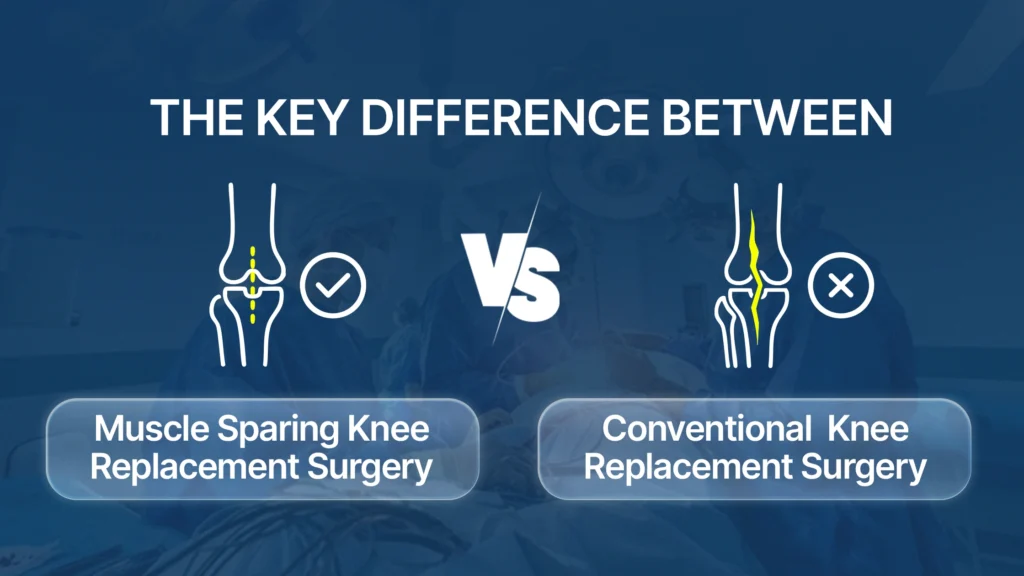
The Key Differences Between Muscle Sparing Knee Replacement Surgery vs Conventional Knee Replacement Surgery

Home About Services Robotic Joint Replacement Surgery Hip Replacement Surgery Knee Replacement Surgery Shoulder Arthroscopy Sports Injury Treatment Trauma & Fracture Care Pain Management Physiotherapy & Rehabilitation TUKSplasty Teleconsultation Success Stories Testimonials Patient Stories Contact Us Appointment The Key Differences Between Muscle Sparing Knee Replacement Surgery vs Conventional Knee Replacement Surgery Knee Replacement Surgery has come a long way in the past two decades. What was once a lengthy, painful, and slow-recovery procedure has now evolved into a precise, minimally invasive, and patient-friendly experience — thanks to advancements like Muscle Sparing Knee Replacement and Robotic-Assisted Surgery. While both conventional and muscle-sparing knee replacements aim to relieve pain and restore mobility, their techniques, recovery patterns, and long-term outcomes differ significantly. In this blog, we’ll understand how these two surgeries differ and why many patients today prefer the Muscle Sparing technique, especially when performed by Dr. Abhishek Bhalotia at United Superspeciality Hospital, Gondia. What Happens in a Conventional Knee Replacement? In a conventional knee replacement surgery, the surgeon replaces the damaged knee joint by making an incision at the front of the knee. To access the joint, some of the thigh muscles (especially the quadriceps) are cut or split. While this technique has been performed successfully for decades, it often leads to: More tissue trauma Greater post-operative pain Higher blood loss Slower recovery and rehabilitation Patients typically require a longer hospital stay and need more time before they can resume walking, climbing stairs, or performing daily activities comfortably. What Makes Muscle Sparing Knee Replacement Different? The Muscle Sparing Knee Replacement Surgery — also known as the Quadriceps-Sparing Technique — takes a completely different approach. Instead of cutting through the muscles, the surgeon carefully separates and works around them. This preserves the natural strength of the thigh muscles and results in: Less pain Minimal blood loss Faster recovery Shorter hospital stay At United Superspeciality Hospital, Dr. Abhishek Bhalotia combines this advanced method with Robotic-Assisted Technology for unmatched precision. This ensures the implant is placed with millimeter-level accuracy, aligning perfectly with each patient’s anatomy. Side-by-Side Comparison: Muscle Sparing vs Conventional Knee Replacement Aspect Conventional Knee Replacement Muscle Sparing Knee Replacement Muscle Involvement Major thigh muscles are cut for access No muscles are cut; only separated gently Surgical Approach Traditional incision through muscle tissue Minimally invasive, muscle-preserving Blood Loss Moderate to high Significantly less Post-operative Pain More pain due to muscle trauma Minimal pain and faster comfort Recovery Time Slower, 4–6 weeks to regain strength Faster, walking within hours of surgery Hospital Stay 3–5 days 1–2 days (in most cases) Rehabilitation Requires longer physiotherapy Early mobility and faster rehab Long-Term Function Good results but slower return of strength Better knee stability and natural movement The Recovery Advantage Patients who undergo Muscle Sparing Knee Replacement often experience a remarkably faster recovery. At United Superspeciality Hospital, Dr. Bhalotia’s patients typically: Start walking within 6 hours of surgery Regain independence within 24 hours Report less swelling and stiffness post-surgery Resume daily activities far sooner than expected The preserved muscle strength ensures that patients feel more stable and confident during rehabilitation. Technology Meets Expertise: Robotic Precision by Dr. Abhishek Bhalotia The real game-changer lies in the combination of Muscle Sparing Technique with Robotic Knee Replacement. Robotic systems help Dr. Bhalotia create a highly accurate, patient-specific surgical plan. The robotic arm assists in executing the procedure with unparalleled precision — minimizing errors, protecting soft tissues, and ensuring optimal implant alignment. This means better balance, improved knee function, and long-lasting results — all with minimal downtime. Why Patients Prefer the Muscle Sparing Approach Patients today are looking for faster recovery, less pain, and early independence. Muscle Sparing Knee Replacement fulfills all three. It’s especially beneficial for: Senior citizens who want to walk early after surgery Working professionals seeking quicker recovery Active individuals who want natural knee movement and long-term comfort As Dr. Abhishek Bhalotia often says, “Our goal isn’t just to replace a knee — it’s to restore confidence, motion, and quality of life.” Conclusion: The Future of Knee Replacement is Muscle Sparing The difference between Conventional Knee Replacement and Muscle Sparing Knee Replacement is the difference between tradition and transformation. With less pain, faster recovery, robotic accuracy, and muscle preservation, the muscle-sparing technique represents the next generation of joint replacement surgery. If you or your loved one is suffering from chronic knee pain, don’t delay. Consult Dr. Abhishek Bhalotia at United Superspeciality Hospital, Gondia, and take the first step towards a pain-free, active life with Muscle Sparing Robotic Knee Replacement Surgery. Revolutionizing Joint Replacement with Robotic Precision Quick Links Privacy Policy Terms & Conditions Cookies Policy Patient Confidentiality Agreement Blogs Treatments Robotic Joint Replacement Hip Replacement Knee Replacement Pain Management Physiotherapy & Rehabilitation Shoulder Arthroscopy Sports Injury Treatment Trauma & Fracture Care TUKSplasty Social Media Facebook Instagram Youtube DISCLAIMER *This website is for providing general information only and should not be considered as medical advice or soliciting patients.**An in-person consultation with the Doctor is adviced before practicing any remedies / recommendations mentioned on this website Website Designed & Developed by

Blogs

What is Muscle Sparing Knee Replacement and How is it Different from Other Knee Replacement Surgeries?

What is Muscle Sparing Knee Replacement and How is it Different from Other Knee Replacement Surgeries? Knee pain can be life-limiting — especially when it starts affecting your ability to walk, climb stairs, or even rest comfortably. For many people suffering from advanced arthritis or joint damage, Knee Replacement Surgery becomes the most effective way to restore mobility and quality of life. However, not all knee replacement surgeries are the same. With the evolution of technology and surgical precision, a new approach called the Muscle Sparing Knee Replacement has transformed recovery outcomes for patients worldwide. In this blog, we’ll understand what Muscle Sparing Knee Replacement is, how it works, and why it’s becoming one of the most preferred surgical techniques — especially under the expertise of Dr. Abhishek Bhalotia, one of Central India’s leading Robotic Joint Replacement Surgeons. What is Muscle Sparing Knee Replacement? Muscle Sparing Knee Replacement is an advanced surgical technique in which the surgeon replaces the damaged knee joint without cutting through the major thigh muscles.In traditional knee replacement surgeries, surgeons often need to make incisions through key muscles like the quadriceps to access the joint. This can lead to more pain, longer recovery, and temporary weakness post-surgery. In contrast, the Muscle Sparing approach gently separates the muscles instead of cutting them. This preserves muscle strength, reduces trauma to surrounding tissues, and significantly speeds up recovery. Dr. Abhishek Bhalotia specializes in performing Robotic Muscle Sparing Knee Replacement, which combines this advanced muscle-preserving technique with the precision of robotic technology — ensuring unmatched accuracy and consistency in implant placement. How is it Different from Conventional Knee Replacement Surgery? Here’s how Muscle Sparing Knee Replacement stands apart from the conventional technique: No Muscle Cutting – Faster Recovery In standard knee replacement, major thigh muscles are partially cut to access the joint, which increases recovery time. In the muscle-sparing method, the surgeon works around the muscles, preserving their natural structure. As a result, patients often start walking within 6 hours of surgery and regain independence within a day or two. Minimal Pain and Less Blood Loss Because the muscles remain intact, there’s less tissue damage and minimal bleeding. Patients experience less post-operative pain and require fewer pain medications compared to conventional surgery. Improved Knee Strength and Stability Muscle preservation allows for better control, coordination, and joint stability post-surgery. Patients feel more confident while walking, climbing stairs, or performing daily activities. Smaller Incisions and Quicker Rehabilitation The surgical incision in a muscle-sparing procedure is smaller, which not only improves cosmetic appearance but also promotes faster wound healing. Combined with early physiotherapy, patients can return to normal routines in just a few weeks. Enhanced Precision with Robotics When combined with Robotic Knee Replacement, this technique delivers unparalleled accuracy in implant positioning and alignment — ensuring a more natural feel and longer implant life. Who Can Benefit from Muscle Sparing Knee Replacement? This technique is suitable for most patients with: Osteoarthritis or Rheumatoid Arthritis of the knee Chronic knee pain unresponsive to medications Difficulty in walking, bending, or standing for long Deformities due to joint degeneration It’s especially beneficial for active adults and elderly patients who wish to resume independent living quickly. Why Choose Dr. Abhishek Bhalotia for Knee Replacement Surgery? Dr. Abhishek Bhalotia is known for his patient-centered, technology-driven approach to joint replacement. At United Superspeciality Hospital, Gondia, he performs Robotic Muscle Sparing Knee Replacements following MyGoodKnees global-standard protocols, ensuring precision, safety, and holistic rehabilitation. His focus is not just on replacing joints — but on restoring confidence, movement, and quality of life for every patient. The Takeaway The Muscle Sparing Knee Replacement is redefining recovery in orthopedic care. With minimal muscle trauma, faster rehabilitation, and superior robotic precision, it allows patients to get back on their feet — stronger and sooner. If chronic knee pain is limiting your life, don’t postpone your treatment. Book a consultation with Dr. Abhishek Bhalotia today and discover how advanced robotic and muscle-sparing techniques can help you move freely again.

Blogs

Patient Success Stories: Life After Robotic Joint Replacement

Patient Success Stories: Life After Robotic Joint Replacement Robotic joint replacement isn’t just a surgical advancement — it’s a life-changing experience for patients who’ve long suffered from pain, limited mobility, and dependence. At United Super Speciality Hospital, Gondia, Dr. Abhishek Bhalotia has transformed over 2,000 lives through robotic knee and hip replacements. Today, we bring you real stories of hope, courage, and recovery — from patients across Maharashtra, MP, and Chhattisgarh. Why Patient Stories Matter In a world filled with medical jargon and statistics, real-life experiences give confidence and emotional reassurance to people considering surgery. These stories reflect what robotic joint replacement can truly do — not just heal joints, but give people their lives back. 1. Back on Her Feet in Days: Mrs. Sunita Joshi, Age 66 – Gondia Condition: Severe osteoarthritis in left knee Treatment: Robotic Total Knee Replacement “I was scared of surgery until I met Dr. Bhalotia. He explained everything patiently. I was walking with support the next day and walking on my own within a week. No pain, no long hospital stay. Robotic surgery changed my life!” 📍 Outcome: 100% pain relief, normal mobility within 15 days. 2. A Farmer Returns to Work: Mr. Ramesh Pawar, Age 58 – Balaghat Condition: Knee deformity due to old fracture Treatment: Robotic Knee Realignment and Replacement “I thought my farming days were over. After robotic surgery at United Hospital, I’m able to work on my land again. This hospital gave me more than just treatment – they gave me dignity.” 📍 Outcome: Restored mobility, resumed daily farm work in under a month. 3. Hip Replacement Success in Just 3 Days: Mrs. Nazma Sheikh, Age 70 – Nagpur Condition: Chronic hip pain due to arthritis Treatment: Robotic Hip Replacement “I walked out of the hospital on the 3rd day! No more pain while sitting or getting up. I can finally sleep well again. Thank you, Dr. Bhalotia and the caring team.” 📍 Outcome: Drastic pain reduction, regained comfort in day-to-day activities. 4. A Teacher Stands Tall Again: Mr. Ashok Dubey, Age 52 – Rajnandgaon Condition: Knee degeneration, affecting classroom movement Treatment: Robotic Knee Replacement “Standing for long hours was impossible. My profession was suffering. After the surgery, I not only resumed teaching, but also joined morning walks. The robotic procedure was seamless.” 📍 Outcome: Full return to profession, improved endurance. What These Stories Reveal These stories are not exceptions. They represent the standard of care delivered at United Super Speciality Hospital under the leadership of Dr. Abhishek Bhalotia, a UK-trained pioneer in robotic orthopedic care. Key patterns across these stories: Short hospital stays (2–4 days) Rapid mobility restoration Minimal pain and scarring High patient satisfaction & independence Why Robotic Surgery Delivers These Results 3D Surgical Planning: Each surgery is tailored to the patient’s anatomy. Sub-Millimeter Precision: No guesswork, ensuring accurate cuts and implant placement. Less Tissue Trauma: Fewer complications, faster healing. Customised Rehab Plans: Each patient gets a recovery roadmap suited to their lifestyle. Dr. Abhishek Bhalotia: Leading with Skill & Empathy With over 10,000 patients treated and 2,000+ robotic surgeries, Dr. Bhalotia’s work is rooted in one mission:“To make world-class joint care accessible in Gondia and surrounding regions — so no patient has to leave their hometown for advanced treatment.” Real People. Real Recovery. Real Impact. You don’t need to travel to Mumbai, Delhi, or abroad for the best in joint care. It’s all right here in Gondia, delivered with compassion, precision, and global standards. Are You Next? If joint pain is limiting your life, now is the time to take action. 📍 Visit: United Super Speciality Hospital, Gondia 🌐 Website: www.abhishekbhalotia.com 📅 Book your consultation today and explore robotic surgery options. Life is waiting. Walk back into it — pain-free. Revolutionizing Joint Replacement with Robotic Precision Quick Links Privacy Policy Terms & Conditions Cookies Policy Patient Confidentiality Agreement Blogs Treatments Robotic Joint Replacement Hip Replacement Knee Replacement Pain Management Physiotherapy & Rehabilitation Shoulder Arthroscopy Sports Injury Treatment Trauma & Fracture Care TUKSplasty Social Media Facebook Instagram Youtube DISCLAIMER *This website is for providing general information only and should not be considered as medical advice or soliciting patients.**An in-person consultation with the Doctor is adviced before practicing any remedies / recommendations mentioned on this website Website Designed & Developed by

Blogs

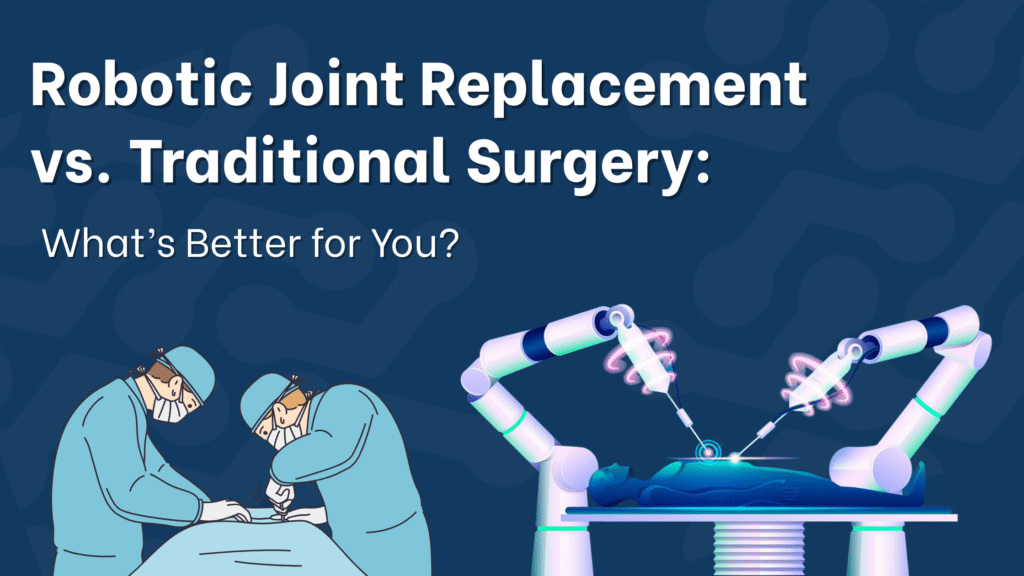
Robotic Joint Replacement vs. Traditional Surgery: What’s Better for You?

Home About Services Robotic Joint Replacement Surgery Hip Replacement Surgery Knee Replacement Surgery Shoulder Arthroscopy Sports Injury Treatment Trauma & Fracture Care Pain Management Physiotherapy & Rehabilitation TUKSplasty Teleconsultation Success Stories Testimonials Patient Stories Contact Us Appointment Robotic Joint Replacement vs. Traditional Surgery: What’s Better for You? Joint replacement surgeries have helped millions across the globe regain mobility, reduce pain, and return to an active life. But not all joint replacement surgeries are the same. With the rise of robot-assisted technology, patients now have access to a more advanced, precise, and minimally invasive option — Robotic Joint Replacement Surgery. But how does it differ from the traditional approach? And which one is better for your condition?Let’s break it down. What is Traditional Joint Replacement Surgery? In conventional joint replacement, the surgeon uses manual instruments to remove damaged bone and cartilage, and replaces it with an artificial joint (implant).While effective, this method depends heavily on the surgeon’s skill, judgment, and visual accuracy during surgery. Slight misalignments may affect the long-term performance of the implant. What is Robotic Joint Replacement Surgery? Robotic joint replacement uses a robotic arm controlled by the surgeon. It is not an automated procedure — the robot assists the surgeon in planning and performing the surgery with pinpoint precision. The system uses 3D imaging, pre-surgical planning, and real-time feedback to ensure the implant is placed in the most optimal position. Dr. Abhishek Bhalotia is a pioneer of robotic joint replacement in Gondia, bringing metro-level precision to a semi-urban region. Key Differences: Robotic vs. Traditional Surgery Feature Traditional Surgery Robotic Surgery Precision Manual, visual-based 3D-mapped, sub-millimeter accuracy Invasiveness More tissue disruption Minimally invasive Implant Positioning Based on surgeon’s estimate Based on computer-assisted planning Pain & Recovery More post-op discomfort Less pain, faster healing Hospital Stay Longer (4–7 days) Shorter (2–3 days) Risk of Error Higher in complex cases Significantly reduced Outcome Consistency Varies by case/surgeon Highly predictable outcomes Why Robotic Surgery is the Future of Joint Care Higher Implant Longevity Perfect alignment reduces implant wear, increasing its life by several years. Better Joint Functionality Patients regain more natural movement and better range of motion. Less Pain & Faster Recovery With less tissue damage and precision cutting, recovery is smoother and quicker. Lower Risk of Complications Reduced chances of misalignment, blood loss, and surgical trauma. Confidence in Results Patients feel more secure knowing the procedure is guided by both expertise and advanced tech. Is Robotic Surgery Right for You? Robotic joint replacement is ideal for: Patients with severe knee or hip arthritis Failed previous joint surgeries Complex deformities Patients looking for a long-term solution with faster recovery At United Super Speciality Hospital, Gondia, Dr. Abhishek Bhalotia personally assesses each case to decide whether robotic or traditional is best — based on your health, age, activity level, and bone condition. Patient Story: Real Results, Real Change “I was told I’d need to travel to Mumbai or Nagpur for robotic surgery. But Dr. Bhalotia made it possible right here in Gondia. My pain vanished, and I was walking within a few days.” – Mrs. Neeta S., 64, Gondia Why Choose Dr. Abhishek Bhalotia for Robotic Joint Replacement? Trained in London, UK in advanced joint surgery Over 2,000+ successful joint replacements One of India’s earliest adopters of robotic technology in Tier 2 cities State-of-the-art OT with robotic arm setup Customised rehabilitation & physiotherapy programs “With robotic precision and human compassion, we help you reclaim your life — pain-free and confident.” Final Thoughts Both traditional and robotic joint replacement surgeries have their place in orthopedic care. However, if you’re looking for: ✅ Maximum precision ✅ Less pain ✅ Quicker recovery ✅ Longer-lasting results Then robotic joint replacement is the way forward. Revolutionizing Joint Replacement with Robotic Precision Quick Links Privacy Policy Terms & Conditions Cookies Policy Patient Confidentiality Agreement Blogs Treatments Robotic Joint Replacement Hip Replacement Knee Replacement Pain Management Physiotherapy & Rehabilitation Shoulder Arthroscopy Sports Injury Treatment Trauma & Fracture Care TUKSplasty Social Media Facebook Instagram Youtube DISCLAIMER *This website is for providing general information only and should not be considered as medical advice or soliciting patients.**An in-person consultation with the Doctor is adviced before practicing any remedies / recommendations mentioned on this website Website Designed & Developed by

Blogs

7 Signs You Might Need a Joint Replacement (And What to Do About It)

7 Signs You Might Need a Joint Replacement (And What to Do About It) Joint pain is something many people ignore for years. Whether it’s a creaky knee, a stiff hip, or a shoulder that hurts every time you raise your hand — it often starts small and gradually becomes a part of daily life. But here’s the truth: living with pain is not normal, and in many cases, it’s avoidable. As India’s leading Robotic Joint Replacement Surgeon, Dr. Abhishek Bhalotia has seen hundreds of patients who waited too long before considering surgery. So let’s break the silence. If you experience any of the following signs, it might be time to consider joint replacement — and more importantly, take the right steps early. 1. Persistent Pain That Doesn’t Go Away If joint pain remains even after medications, physiotherapy, or rest — and it’s affecting your daily life — it could be a red flag. Especially if the pain: Wakes you up at night Lingers for months Affects your ability to walk, stand, or sit comfortably ✅ Time to consult an orthopedic specialist. 2. Joint Stiffness that Limits Movement Struggling to bend your knee? Is it hard to raise your arm or rotate your shoulder? Stiffness that restricts basic movement — despite treatment — can indicate joint damage. Robotic Joint Replacement can restore your joint’s range of motion and help you move freely again. 3. Trouble Walking or Climbing Stairs Do you rely on a stick or someone’s support to walk? Limping, imbalance, or a fear of falling are signs that your joint may no longer be supporting your body well. Joint replacement can help restore stability and confidence. 4. Your X-Ray or MRI Shows Joint Degeneration If diagnostic tests reveal that cartilage has worn out or bone is rubbing against bone — it’s a clinical indication that non-surgical options are running out. This is where robot-assisted surgery ensures precision and faster healing. 5. You’ve Already Had a Joint Surgery, but It Didn’t Help Many patients undergo traditional procedures or partial treatments that don’t solve the core problem. A proper evaluation can determine whether a robotic joint replacement is now the best way forward. 6. You’ve Put Life on Hold Because of Joint Pain Do you avoid outings, social events, or travel due to fear of pain or mobility issues? Joint pain shouldn’t force you to give up the things you love. With modern treatments, you can get back to living — pain-free and active. 7. You’ve Tried Everything Else (And Nothing Works) Physiotherapy, painkillers, injections — if nothing provides long-term relief, it’s time for a permanent solution. Robotic joint replacement offers that with: Minimal pain Quick recovery Improved quality of life What Should You Do Next? Consult a specialist – Meet a trained joint replacement expert like Dr. Abhishek Bhalotia. Get a proper diagnosis – Physical examination, X-rays, or MRIs will help assess the damage. Explore treatment options – Understand whether a partial, total, or robotic replacement is best. Plan the recovery – The right guidance helps you prepare mentally and physically. Why Choose Dr. Abhishek Bhalotia for Your Joint Replacement? 2000+ successful joint replacement surgeries Among India’s pioneers in robotic knee & hip surgery Trained in London, UK Personalised rehabilitation plans Trusted by patients across Nagpur, MP, Chhattisgarh & Maharashtra “You don’t need to suffer or travel to metros for world-class treatment. You deserve it here, in Gondia.” Hear from a Patient “I couldn’t walk more than a few steps without pain. After robotic surgery by Dr. Bhalotia, I was on my feet in 2 days. It felt like getting my life back.” – Mr. Khatri, Gondia Final Thoughts Ignoring joint pain may delay your progress, career, happiness, and independence. If these 7 signs resonate with you or someone you love, it’s time to take action. Joint replacement is no longer a scary word — it’s a path to freedom, movement, and relief.

Blogs

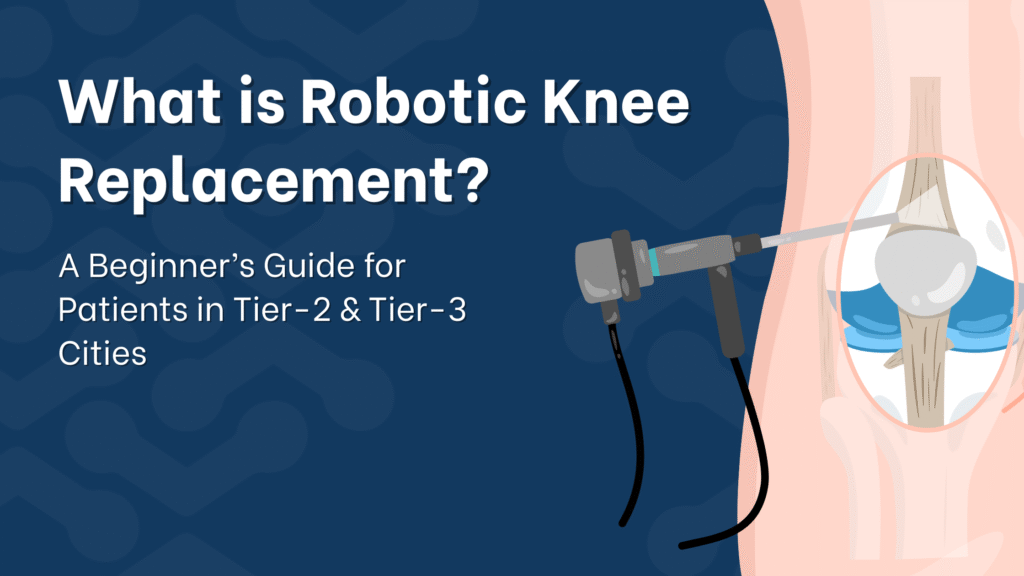
What is Robotic Knee Replacement? A Beginner’s Guide for Patients in Tier-2 & Tier-3 Cities

What is Robotic Knee Replacement? A Beginner’s Guide for Patients in Tier-2 & Tier-3 Cities Are you or your loved one struggling with knee pain that just won’t go away? Has walking, climbing stairs, or even standing for long periods become difficult? You’re not alone. Knee problems are one of the most common orthopedic issues in India — especially among people aged 50 and above. But here’s the good news: Robotic Knee Replacement is changing lives — and it’s now available right here in Gondia, without the need to travel to Mumbai, Pune, or Nagpur.In this guide, let’s break down what Robotic Knee Replacement is, how it works, and why Dr. Abhishek Bhalotia, a UK-trained robotic joint replacement surgeon, is the trusted name in Central India for this advanced surgery. What is Robotic Knee Replacement? Robotic Knee Replacement is an advanced form of knee surgery where a robotic arm assists the surgeon in replacing only the damaged part of your knee with pinpoint precision. The surgeon is still in full control — the robot simply makes the procedure more accurate. Unlike traditional knee replacement, robotic surgery ensures: ✅ Minimal damage to healthy tissue ✅ Better implant alignment ✅ Faster recovery ✅ Less blood loss and pain ✅ Long-lasting joint performance Who Needs a Robotic Knee Replacement? You may be an ideal candidate for Robotic Knee Replacement if: You have severe osteoarthritis or joint degeneration Medications and physiotherapy are no longer helping You experience pain while walking, standing, or climbing stairs You have bow legs or knock knees Your quality of life is getting affected due to knee stiffness or instability Early diagnosis is key. Many patients wait too long, causing more damage and complex surgeries later. Benefits of Robotic Knee Replacement Traditional Surgery Robotic Surgery Manual cuts, less accuracy Precision-guided robotic arm More blood loss Minimal blood loss Longer hospital stay Shorter hospital stay Pain for several weeks Reduced post-op pain Takes time to regain movement Faster mobility and recovery With Dr. Abhishek Bhalotia, many patients walk within 24–48 hours of surgery and return to daily activities in just a few weeks! Why Choose Robotic Surgery in Gondia? You no longer need to visit metro cities to access high-end treatment. Here’s why United Super Speciality Hospital, Gondia is your best choice: 2000+ successful robotic surgeries Operated patients from Nagpur, Chhattisgarh, MP & rural Maharashtra International expertise from London, UK Affordable packages with world-class technology Personalised physiotherapy programs post-surgery Clean, modern hospital with excellent care and follow-ups FAQs Is robotic surgery safe?  Absolutely! It’s FDA-approved, widely used globally, and improves surgical outcomes. How long does it take to recover?  Most patients start walking in 1–2 days and resume normal life in 4–6 weeks. Is it expensive? At Dr. Bhalotia’s centre in Gondia, robotic surgery is made affordable while maintaining global standards. Will I get back to a normal life? Yes! With proper care and physiotherapy, most patients return to walking, traveling, and even light exercise. Patient Testimonial “My mother couldn’t walk for more than a few steps due to knee pain. We thought we’d have to go to Pune for surgery. But thanks to Dr. Bhalotia, she had robotic surgery here in Gondia and was walking within 2 days!” – Rajesh P., Gondia Final Thoughts Joint pain is not just about discomfort — it limits your freedom. But you don’t have to suffer anymore. Robotic Knee Replacement offers you a second chance at an active life, and you can now access it without leaving your hometown.

Muscle-Sparing Joint Replacement Surgery: A New Era in Orthopedic Care
Blogs

Muscle-Sparing Joint Replacement Surgery: A New Era in Orthopedic Care

Muscle-Sparing Joint Replacement Surgery: A New Era in Orthopedic Care Joint replacement surgeries have evolved tremendously in the last few decades. Today, patients no longer have to fear long hospital stays, prolonged recovery, or significant post-surgical pain. The latest advancement making a huge difference in outcomes is muscle-sparing surgery—a breakthrough approach that offers faster healing and superior results, especially for knee and hip replacements. What is Muscle-Sparing Surgery? Muscle-sparing surgery refers to a surgical technique where the surgeon avoids cutting through major muscles during joint replacement. Instead of detaching or cutting the surrounding muscle tissues, the surgeon carefully navigates through natural gaps between the muscles to access the joint. This is different from traditional surgery, where muscle fibers are often cut or detached to reach the affected joint. By sparing the muscles, the surgery becomes less traumatic for the body, leading to a host of benefits. Who Can Benefit from Muscle-Sparing Surgery? Muscle-sparing techniques are particularly beneficial for patients undergoing: Knee Replacement Surgery (including partial and total knee replacement) Hip Replacement Surgery Revision Joint Replacement Sports Injury Repair These procedures are suitable for both young, active individuals and elderly patients looking for better mobility with less downtime. Key Benefits of Muscle-Sparing Surgery 1. Less Pain After Surgery Since the muscles are preserved and not cut during the procedure, there is significantly less post-operative pain. Patients report lower pain levels both immediately after the surgery and in the weeks that follow. 2. Faster Recovery & Early Mobility One of the standout benefits is the speed of recovery. Patients who undergo muscle-sparing joint replacements are often able to: Walk the same day or next day after surgery Resume daily activities much sooner Spend less time in the hospital Early mobility also reduces the risk of blood clots and other complications. 3. Improved Muscle Function Cutting through muscles can lead to weakness or limited motion even after healing. Muscle-sparing surgery preserves muscle strength and function, leading to better stability and movement in the long term. 4. Smaller Incision, Better Aesthetics These surgeries often require smaller incisions, resulting in: Less scarring Reduced risk of infection Better cosmetic outcomes Smaller incisions also mean less blood loss and shorter operative times. 5. Shorter Hospital Stay Many patients undergoing muscle-sparing knee or hip replacements go home within 24–48 hours, and in some cases, on the same day. This lowers healthcare costs and improves patient comfort. Expertise Matters Muscle-sparing joint replacement requires high-level surgical skill and advanced technology like robotic assistance. Surgeons like Dr. Abhishek Bhalotia, trained in the UK and experienced in over 2,000+ joint replacements, combine cutting-edge technology with precision-based techniques to offer the best possible outcomes. Dr. Bhalotia specializes in robotic, muscle-sparing knee and hip replacements, offering personalized care plans for every patient. His approach ensures high precision, quicker recovery, and minimal disruption to your daily life. Muscle-sparing surgery represents a significant leap forward in orthopedic care. For those suffering from arthritis, chronic joint pain, or mobility issues, this approach offers a less invasive, more efficient path to recovery. With faster rehabilitation, reduced pain, and better functional outcomes, muscle-sparing joint replacements are truly redefining modern-day orthopedics. If you or your loved one is considering joint replacement, explore the benefits of muscle-sparing surgery. Book a consultation with an expert like Dr. Abhishek Bhalotia and take your first step toward pain-free movement and a better quality of life.

How to Maintain Joint Health As You Age
Blogs

How to Maintain Joint Health As You Age: Tips for Lifelong Mobility

How to Maintain Joint Health As You Age: Tips for Lifelong Mobility As we grow older, our bodies go through several changes, and our joints often bear the brunt of aging. The wear and tear of daily movements, reduced bone density, and slower tissue repair can lead to stiffness, pain, and even conditions like arthritis. But aging doesn’t have to mean joint pain or limited mobility. With the right habits, you can keep your joints healthy, strong, and mobile for years to come. Here are expert-backed ways to maintain joint health as you age—so you can stay active, independent, and pain-free. 1. Stay Physically Active – But Smartly Regular exercise keeps your joints lubricated and strengthens the muscles that support them. As we age, staying active is crucial to prevent stiffness and weakness. Best exercises for joint health: Low-impact activities like walking, cycling, and swimming Stretching exercises for flexibility Strength training to support bone and joint stability Yoga or Pilates to improve balance and joint alignment Tip: Avoid high-impact sports that may stress the joints—especially knees and hips—as you get older. 2. Maintain a Healthy Weight Excess weight is one of the biggest risk factors for joint problems, especially in the knees, hips, and lower back. Even a small reduction in weight can significantly lower the pressure on your joints. Every 1 kg of extra body weight adds about 4 kg of pressure on the knees. Shedding 5–10% of your body weight can greatly reduce joint strain and inflammation. 3. Eat for Your Joints A balanced diet rich in joint-friendly nutrients helps reduce inflammation and supports cartilage health. Nutrients that support joint health: Omega-3 fatty acids: Found in fish, flaxseeds, walnuts—help reduce joint inflammation. Calcium & Vitamin D: For bone strength. Found in dairy, leafy greens, eggs, and fortified foods. Vitamin C: Helps in collagen production. Citrus fruits, berries, and bell peppers are great sources. Antioxidants: Found in colorful vegetables and fruits—they protect joints from wear and tear. Tip: Reduce intake of processed foods, sugar, and red meats which can increase inflammation. 4. Stay Hydrated Cartilage—the cushioning tissue in joints—is made mostly of water. Dehydration can lead to reduced joint lubrication, increasing the risk of friction and pain. Aim for 8–10 glasses of water daily. Limit caffeinated and sugary drinks that may cause dehydration. 5. Protect Your Joints in Daily Life Simple actions in your everyday routine can either protect or harm your joints. Be mindful of your movements. Joint protection tips: Use supportive footwear Avoid slouching or staying in the same position for long periods Lift with your knees, not your back Use ergonomic tools if you work at a desk 6. Don’t Ignore Pain or Stiffness Persistent joint pain, swelling, or stiffness should never be ignored. Early intervention can prevent conditions from worsening. Conditions like osteoarthritis, rheumatoid arthritis, and tendonitis are manageable with the right medical care. Delaying diagnosis can lead to irreversible joint damage. If you notice pain during movement or stiffness that lasts longer than 30 minutes in the morning, consult a specialist. 7. Consider Preventive Health Checkups As you age, schedule regular orthopedic checkups—especially if you have a family history of joint issues, or previous injuries. Advanced diagnostics and preventive screenings can catch joint degeneration early, allowing timely intervention. With experts like Dr. Abhishek Bhalotia, you can receive guidance tailored to your joint health, lifestyle, and risk factors. 8. Take Care After Injuries Previous injuries increase the risk of future joint issues, especially in sports or accident-related trauma. Always follow up properly and complete rehabilitation. Incomplete healing can lead to chronic instability, early arthritis, or joint deformities. With modern orthopedic care, including muscle-sparing surgical techniques and personalized physiotherapy, full recovery is possible—even in older adults. Final Thoughts Aging is inevitable—but joint pain doesn’t have to be. By incorporating these healthy habits into your lifestyle, you can enjoy flexible, pain-free movement well into your golden years. The key lies in early awareness, active prevention, and expert care when needed. At United Super Specialty Hospital, Gondia, Dr. Abhishek Bhalotia offers state-of-the-art orthopedic care, from preventive guidance to advanced robotic joint replacements. Whether you’re facing early signs of joint pain or want to maintain lifelong joint health, expert help is just a step away. Your joints support you every day—return the favor by taking care of them!

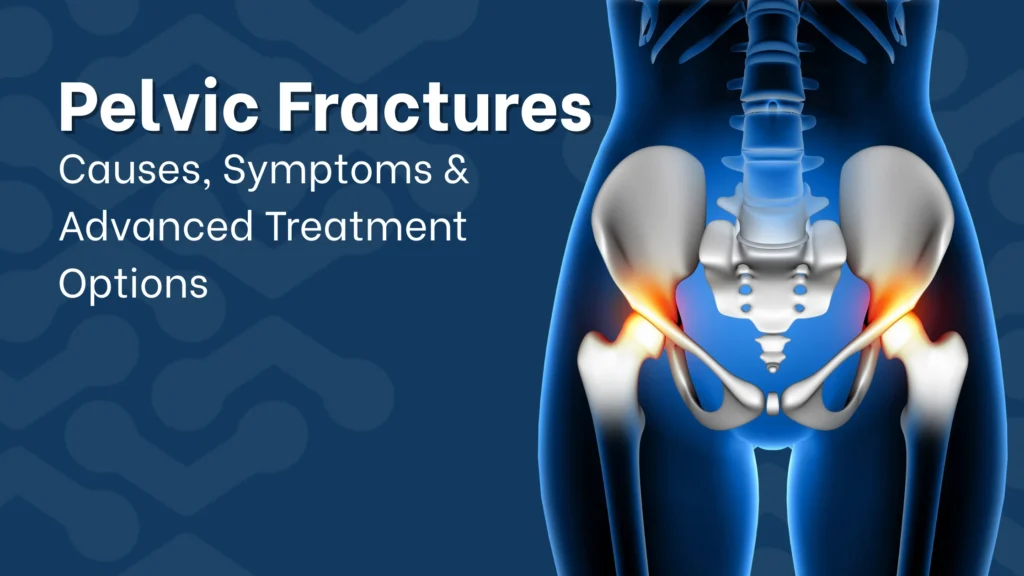
Pelvic Fractures
Blogs

Pelvic Fractures: Causes, Symptoms & Advanced Treatment Options

Pelvic Fractures: Causes, Symptoms & Advanced Treatment Options Pelvic fractures are serious injuries that can greatly impact mobility, daily life, and even organ function if not treated appropriately. The pelvis is a ring-like structure of bones that supports the spine and houses critical organs like the bladder, intestines, and reproductive organs. A fracture in this area—whether due to high-impact trauma or underlying medical conditions—requires immediate attention and expert orthopedic care. What Is a Pelvic Fracture? A pelvic fracture refers to a break in any of the bones that make up the pelvic ring, which includes the ilium, ischium, pubis, and sacrum. These fractures can range from minor, stable injuries to complex, life-threatening conditions depending on the force and area of impact. Common Causes of Pelvic Fractures Pelvic fractures can result from a variety of situations: High-impact trauma: Road accidents, falls from heights, or crush injuries are common causes in younger individuals. Sports injuries: Intense impact during contact sports or extreme physical exertion can cause stress fractures in the pelvic bones. Osteoporosis: In older adults, weakened bones due to osteoporosis can fracture even with low-impact falls or pressure. Pathological fractures: Conditions like bone cancer or infections can weaken the pelvic bones and lead to fractures. Types of Pelvic Fractures Stable Fractures: Only one break in the pelvic ring, bones remain aligned. These often heal without surgery. Unstable Fractures: Two or more breaks with bone displacement. These typically require surgical intervention. Open Fractures: The broken bone pierces through the skin—these are serious and carry a high risk of infection. Acetabular Fractures: Involves the socket of the hip joint, which may affect mobility and require advanced surgical care. Symptoms of a Pelvic Fracture Depending on the severity of the injury, symptoms may vary. Common signs include: Severe pain in the hip, groin, or lower back Inability to walk or stand Swelling or bruising around the pelvic area Difficulty urinating or blood in the urine (if organs are affected) Numbness or tingling in the groin or legs Visible deformity or leg length difference in severe cases If you suspect a pelvic fracture, do not attempt to move the patient—call emergency medical services immediately. Diagnosis Diagnosis typically involves: X-rays: To identify the type and location of the fracture. CT scans: Provide a more detailed view, especially for complex or acetabular fractures. MRI: In cases where soft tissue damage or internal organ involvement is suspected. Treatment Options Treatment depends on the severity, type of fracture, and the patient’s overall health. Non-Surgical Treatment (For Stable Fractures): Bed rest and limited movement Pain management Physical therapy after initial healing Use of walking aids like crutches or walkers Surgical Treatment (For Unstable or Complex Fractures): Internal fixation: Metal plates and screws are used to stabilize the bones. External fixation: Metal rods outside the body are connected to bones to keep them aligned during healing. Joint reconstruction: For acetabular fractures affecting the hip joint, advanced joint reconstruction or even hip replacement may be required. Dr. Abhishek Bhalotia, a UK-trained orthopedic and joint replacement surgeon, specializes in complex trauma surgeries including pelvic and acetabular fracture management. His use of advanced techniques and precision-based interventions ensures reduced complications and faster recovery. Recovery and Rehabilitation Recovery time for pelvic fractures can range from 8 to 12 weeks for stable fractures to several months for more severe injuries. Rehabilitation includes: Gradual weight-bearing exercises Physiotherapy for restoring joint mobility Muscle strengthening to regain balance and coordination Lifestyle modifications and fall prevention tips, especially for elderly patients Prevention Tips While not all pelvic fractures can be prevented, especially in cases of trauma, the following steps can reduce risk: Maintain good bone health with calcium and vitamin D Regular weight-bearing exercises to improve bone density Prevent falls at home—use handrails, remove slippery rugs Wear protective gear during high-risk sports or activities Manage conditions like osteoporosis under medical guidance Final Thoughts Pelvic fractures are serious injuries that demand expert orthopedic attention and timely intervention. From diagnosis to rehabilitation, a patient-centric approach is essential for successful outcomes. With advanced care from specialists like Dr. Abhishek Bhalotia, patients can look forward to safe recovery and restored mobility. If you or a loved one experiences signs of a pelvic injury, don’t delay—consult an orthopedic expert immediately.

Scroll to Top