Blogs

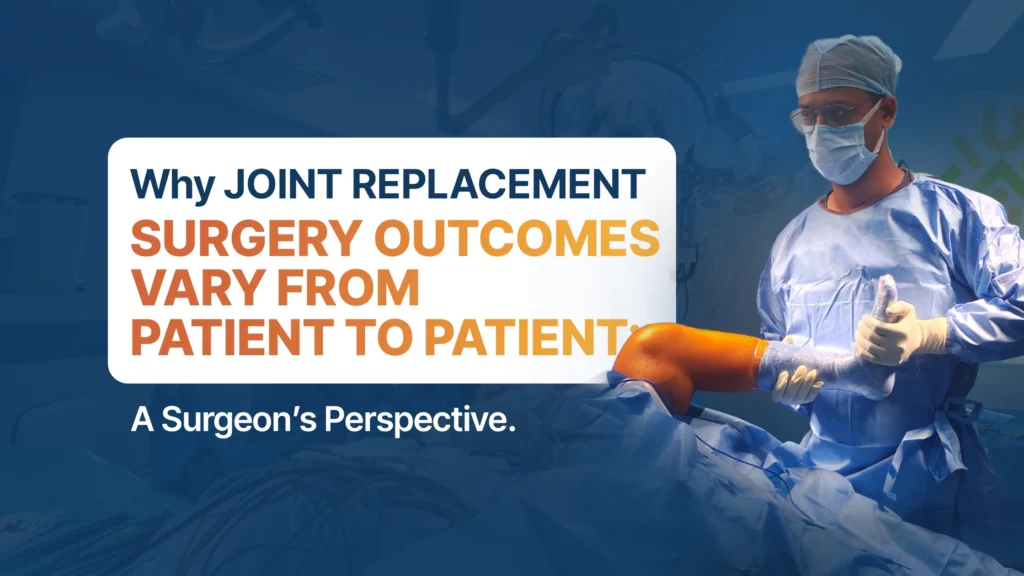
Why Joint Replacement Surgery Outcomes Vary from Patient to Patient: A Surgeon’s Perspective
Blogs

Why Joint Replacement Surgery Outcomes Vary from Patient to Patient: A Surgeon’s Perspective

Why Joint Replacement Surgery Outcomes Vary from Patient to Patient: A Surgeon’s Perspective Joint replacement surgery—whether knee or hip—is considered one of the most successful procedures in orthopaedics. Thousands of patients undergo these surgeries every year and experience significant improvement in mobility, pain relief, and overall quality of life. However, one common question many patients ask is:“If two people undergo the same joint replacement surgery, why are their results sometimes different?” According to Dr. Abhishek Bhalotia, the outcome of a joint replacement surgery depends on several factors that go beyond the surgical procedure itself. Even when the same implant and technique are used, individual patient characteristics can influence recovery and long-term results. Understanding these factors helps patients set realistic expectations and actively participate in their recovery process. Joint Replacement Is Not a One-Size-Fits-All Procedure Every patient presenting for knee or hip replacement has a unique combination of: Age and activity level Severity of arthritis Bone quality Joint alignment Muscle strength Because of these variations, surgeons often customise surgical planning and rehabilitation strategies for each patient. Even with similar surgeries, recovery experiences may differ depending on how the body responds to treatment. Key Factors That Influence Surgical Outcomes 1. Severity of Joint Damage Patients undergoing surgery at different stages of arthritis may experience varying outcomes. For example: A patient with moderate arthritis and good mobility may recover faster. A patient with severe deformity or long-standing stiffness may require longer rehabilitation. Earlier intervention in selected cases can sometimes help preserve joint function and improve recovery.   2. Muscle Strength Before Surgery Muscles around the knee or hip play a crucial role in stabilising the joint. Patients who maintain good muscle strength before surgery often experience: Better early mobility Improved balance Faster rehabilitation progress Conversely, weak muscles may require longer physiotherapy to rebuild strength after surgery.   3. Overall Health and Medical Conditions Certain medical conditions can affect healing and recovery speed. Examples include: Diabetes Obesity Osteoporosis Cardiovascular conditions Optimising overall health before surgery often improves surgical outcomes.   4. Surgical Planning and Implant Selection Successful joint replacement involves more than simply replacing the joint surfaces. Important elements include: Accurate implant positioning Restoration of joint alignment Appropriate implant size and design Soft tissue balancing Careful pre-operative planning allows surgeons to tailor the procedure to the patient’s anatomy.   5. Post-Operative Rehabilitation Rehabilitation is a critical part of joint replacement recovery. Patients who follow a structured physiotherapy program usually experience: Better joint movement Improved strength Faster return to daily activities Skipping physiotherapy sessions or delaying exercises can slow recovery.   6. Patient Expectations and Motivation Psychological factors also influence recovery. Patients who are well-informed and motivated often: Participate actively in rehabilitation Maintain regular follow-ups Follow activity precautions carefully Positive engagement with the recovery process can significantly improve outcomes. Example: Two Patients, Different Recovery Paths Consider two patients undergoing knee replacement: Patient A maintains regular exercise and has good muscle strength before surgery. Patient B has long-standing arthritis with significant muscle weakness. Even if the surgery itself is technically identical, Patient A may regain mobility more quickly due to stronger pre-operative conditioning. Why Surgeon Guidance Still Matters While patient factors play a role, surgical expertise remains crucial. An experienced surgeon focuses on: Accurate pre-operative planning Proper implant positioning Balanced soft tissue handling Clear post-operative rehabilitation guidance These elements help maximise the chances of a smooth recovery. Final Thoughts Joint replacement surgery can dramatically improve quality of life, but it is important for patients to understand that outcomes may vary. Factors such as joint condition, overall health, muscle strength, rehabilitation commitment, and surgical planning all contribute to recovery and long-term success. As Dr. Abhishek Bhalotia emphasises, joint replacement is a partnership between the surgeon and the patient. When both sides work together—with proper preparation and realistic expectations—the results are often highly rewarding.


Joint Replacement Marketing Gimmicks Every Patient Should Know Before Choosing a Surgeon
Blogs

Joint Replacement Marketing Gimmicks Every Patient Should Know Before Choosing a Surgeon

Joint Replacement Marketing Gimmicks Every Patient Should Know Before Choosing a Surgeon Joint replacement surgery has become one of the most successful procedures in modern orthopaedics. With advances in implants, surgical techniques, and rehabilitation protocols, thousands of patients regain mobility every year. However, the growing demand for knee and hip replacement surgery has also led to aggressive marketing claims in the healthcare industry. According to Dr. Abhishek Bhalotia, patients must be aware that not every claim they see in advertisements reflects medical reality. Understanding common marketing gimmicks can help patients make informed and confident decisions about their treatment. Why Marketing Around Joint Replacement Has Increased Joint replacement procedures have become more common due to: Increasing life expectancy Higher rates of arthritis Sedentary lifestyle and obesity Greater awareness about surgical treatment options With more patients seeking surgery, hospitals and clinics often compete by highlighting attractive-sounding claims.While many centres provide excellent care, patients should evaluate claims critically rather than relying solely on marketing language. Common Joint Replacement Marketing Gimmicks 1. “Guaranteed Pain-Free Life After Surgery”   Some advertisements promise complete elimination of pain. In reality: Most patients experience significant pain relief Mild discomfort may still occur occasionally Recovery depends on physiotherapy and muscle strengthA responsible surgeon focuses on realistic expectations, not guarantees. 2. “Scarless or Painless Surgery” Joint replacement involves replacing damaged joint surfaces with implants. Even with minimally invasive techniques: A surgical incision is necessary Temporary post-operative pain is expected Rehabilitation plays a key role in recoveryClaims of completely painless surgery are often exaggerated marketing language. 3. “One Technique Is Perfect for Everyone” Some promotions suggest that a single technique (robotic, minimally invasive, or otherwise) is the best option for every patient. In reality: Each patient’s knee anatomy is different Arthritis severity varies Bone quality and alignment influence surgical planningA good surgeon selects the most appropriate approach for the individual patient. 4. “Same-Day Walking Means Instant Recovery” Early mobilisation after surgery is beneficial and commonly practiced. However: Walking within hours of surgery does not mean full recovery Strength, balance, and confidence take time to rebuild Physiotherapy remains essential for long-term outcomesPatients should view early walking as one step in recovery, not the final outcome. 5. “Latest Technology Automatically Means Better Results” Robotic systems, navigation tools, and advanced implants have improved surgical precision. However, technology alone does not determine success. Outcomes also depend on: Surgical planning Implant selection Soft tissue balance Post-operative rehabilitationTechnology works best in experienced hands. How Patients Can Make Better Decisions Patients considering knee or hip replacement should focus on the following factors: Surgeon’s experience and expertise Clear explanation of treatment options Realistic discussion of risks and benefits Transparent recovery expectations Structured rehabilitation supportRather than being influenced by slogans, patients should prioritise clinical judgment and patient outcomes. Questions Patients Should Ask Before Surgery Some useful questions include: Do I truly need joint replacement now? Are there alternative treatment options? What type of implant is recommended for me? What is the expected recovery timeline? What complications should I be aware of?Open communication helps patients feel more confident about their decision. Final Thoughts Joint replacement surgery can significantly improve mobility and quality of life. However, patients should approach marketing claims with caution and focus on evidence-based medical advice. As Dr. Abhishek Bhalotia often emphasises, the goal of joint replacement is not simply to perform surgery, but to restore function, comfort, and long-term joint stability. Patients who make decisions based on clear information and professional guidance are more likely to experience satisfying outcomes.

What Can Go Wrong in Robotic Knee Replacement Surgery? Risks, Complications & Surgeon Insights
Blogs

What Can Go Wrong in Robotic Knee Replacement Surgery? Risks, Complications & Surgeon Insights

What Can Go Wrong in Robotic Knee Replacement Surgery? Risks, Complications & Surgeon Insights Robotic Knee Replacement Surgery is often described as one of the most advanced developments in modern orthopaedics. With improved precision and implant positioning, it has significantly enhanced surgical accuracy. However, according to Dr. Abhishek Bhalotia, no surgery — robotic or conventional — is completely risk-free. He believes that informed patients recover better. Understanding what can go wrong, and how those risks are minimised, helps patients approach surgery with clarity rather than fear. Does Robotic Knee Replacement Ever Fail? While success rates for knee replacement are very high, complications can occur. Robotic assistance improves precision, but it does not eliminate all variables. Potential issues may include: Infection Blood clots Implant loosening over time Stiffness or limited range of motion Persistent pain Instability in rare cases Most of these risks are uncommon but important to understand. 1. Infection Infection is one of the most discussed complications in any joint replacement surgery. It may occur due to: Poor wound healing Underlying medical conditions (like diabetes) Rare bacterial contamination Modern protocols such as: Strict operating room sterilisation Antibiotic prophylaxis Optimised patient preparation have significantly reduced infection rates. 2. Implant Misalignment One of the advantages of robotic knee replacement is accurate implant positioning. However, robotic systems still depend on: Proper preoperative planning Accurate registration during surgery Surgeon judgment If alignment is not ideal, it may lead to: Uneven wear Discomfort Reduced implant longevity This is why surgeon expertise remains critical even with robotics. 3. Stiffness After Surgery Some patients may experience stiffness post-surgery. Common contributing factors include: Delayed physiotherapy Pre-existing limited knee movement Scar tissue formation Early mobilisation and structured rehabilitation help minimise this risk. 4. Blood Clots (Deep Vein Thrombosis) Blood clot formation is a known risk in lower limb surgeries. Preventive strategies typically include: Early walking Blood-thinning medications Leg exercises Compression stockings With proper precautions, serious complications are rare. 5. Persistent Pain While most patients experience significant pain relief, a small percentage may continue to have discomfort. Possible reasons include: Soft tissue imbalance Implant-related factors Pre-existing pain sensitivity Incomplete rehabilitation Robotic precision reduces mechanical causes, but pain perception varies among individuals. 6. Implant Wear or Loosening Over Time Knee implants are designed to last many years. However, long-term wear may occur due to: High activity levels Poor alignment Excess body weight Natural material fatigue Robotic assistance improves alignment accuracy, which can support implant longevity. Example: When Technology Alone Is Not the Solution Two surgeries may use the same robotic system, but outcomes differ depending on: Surgical planning Soft tissue balancing Patient selection Post-operative care Dr. Bhalotia often explains that robotics enhances precision, but it does not replace surgical decision-making. How Surgeons Minimise Risks To reduce complications, responsible surgeons focus on: Thorough patient evaluation Optimising medical conditions before surgery Careful surgical planning Muscle-sparing approaches when suitable Early mobilisation protocols Close follow-up monitoring Complication prevention begins well before entering the operating room. Why Transparency Builds Trust Some patients hesitate to ask about risks, assuming it may indicate lack of confidence. In reality, transparent discussions: Improve patient understanding Reduce unrealistic expectations Strengthen trust Prepare patients for smoother recovery Dr. Bhalotia believes that informed consent is not just a formality — it is part of ethical practice. Final Thoughts Robotic Knee Replacement Surgery offers improved precision and reliable outcomes. However, like all surgeries, it carries potential risks. The key is not to fear complications — but to: Understand them Choose an experienced surgeon Follow rehabilitation protocols Maintain long-term follow-up With proper planning and execution, robotic knee replacement remains one of the most successful procedures in modern orthopaedics. When patients combine advanced technology with informed decision-making, outcomes are generally predictable, safe, and life-enhancing.

Robotic Knee Replacement Surgery: 7 Critical Factors to Consider Before Choosing Your Surgeon
Blogs

Robotic Knee Replacement Surgery: 7 Critical Factors to Consider Before Choosing Your Surgeon

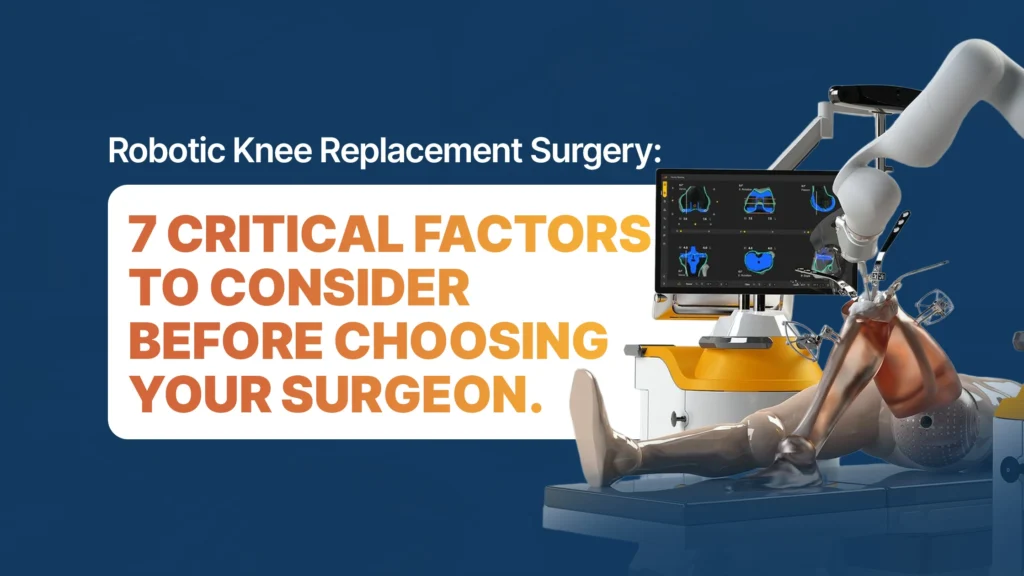
Robotic Knee Replacement Surgery: 7 Critical Factors to Consider Before Choosing Your Surgeon Robotic Knee Replacement Surgery has transformed the field of orthopaedics. With improved precision, better implant alignment, and enhanced surgical planning, robotic assistance has made knee replacement more predictable than ever. However, according to Dr. Abhishek Bhalotia, robotic technology alone does not guarantee success. He often explains that “Robotics is a powerful tool — but the outcome still depends on who is using it.” For patients considering robotic knee replacement, choosing the right surgeon is as important as choosing the technology itself. Here are seven critical factors patients should evaluate before making their decision. 1. Surgeon’s Experience in Knee Replacement Surgery Robotic systems assist, but they do not replace surgical judgment. Patients should consider: How many knee replacements the surgeon performs annually Experience with both robotic and conventional techniques Ability to manage unexpected intraoperative situations Experience ensures that if technology requires adjustment, the surgeon can respond effectively. 2. Understanding of Knee Anatomy and Alignment Principles Robotics improves precision, but alignment decisions still depend on the surgeon. Proper alignment affects: Implant longevity Knee balance Walking comfort Long-term satisfaction A surgeon who understands alignment deeply will use robotics to enhance outcomes — not simply follow default settings. 3. Patient Selection Criteria Not every patient automatically requires robotic surgery. A responsible surgeon evaluates: Extent of arthritis Bone quality Ligament stability Overall health condition Dr. Bhalotia emphasises that robotic surgery should be recommended when it adds value — not as a marketing feature. 4. Approach to Soft Tissue and Muscle Preservation Technology focuses on bone preparation, but recovery often depends on soft tissue handling. Patients should ask: Is the surgeon using muscle-sparing techniques where appropriate? Is soft tissue balance prioritised? How is post-operative pain minimised? Less tissue trauma can significantly influence early mobility. 5. Transparency About Risks and Expectations Robotic surgery reduces certain technical errors, but it does not eliminate all risks. Patients should receive clear explanations about: Infection risk Blood clots Implant wear over time Rehabilitation requirements Realistic recovery timeline Surgeons who openly discuss limitations often build greater trust. 6. Post-Surgery Rehabilitation Protocol Robotic precision improves implant placement, but long-term success depends on rehabilitation. Patients should understand: When walking begins Physiotherapy duration Pain management plan Follow-up schedule A structured recovery plan ensures that surgical precision translates into functional improvement. 7. Surgeon’s Willingness to Offer a Second Opinion Confidence in expertise often reflects in openness. Surgeons who: Encourage questions Review previous reports Explain alternatives Discuss partial vs total options demonstrate patient-centered decision-making. Dr. Bhalotia believes that robotic surgery should be chosen for its clinical value, not because it sounds advanced. Example: Technology Alone Is Not Enough Two surgeons may use the same robotic platform. Yet outcomes can differ because of: Variation in implant positioning decisions Differences in ligament balancing Soft tissue handling techniques Recovery planning Robotics enhances accuracy — but surgical judgment defines quality. Final Thoughts Robotic Knee Replacement Surgery represents a significant advancement in orthopaedic care. However, patients should remember that technology is a tool, not a substitute for expertise. Before choosing a surgeon, patients should evaluate: Experience Judgment Patient selection approach Recovery protocols Transparency According to Dr. Abhishek Bhalotia, the best robotic knee replacement outcomes occur when precision technology meets thoughtful surgical planning. Choosing wisely ensures that robotic assistance truly translates into better movement, stability, and long-term satisfaction.

Advised Knee Replacement? Why Dr. Abhishek Bhalotia Recommends Taking a Second Opinion Before Surgery
Blogs

Advised Knee Replacement? Why Dr. Abhishek Bhalotia Recommends Taking a Second Opinion Before Surgery

Advised Knee Replacement? Why Dr. Abhishek Bhalotia Recommends Taking a Second Opinion Before Surgery Being told that you need a knee replacement can immediately trigger two reactions: relief that a solution exists — and anxiety about undergoing major surgery. In many cases, patients accept the first recommendation they receive. However, according to Dr. Abhishek Bhalotia, taking a second opinion before knee replacement surgery is not a sign of distrust — it is a step toward informed decision-making. Knee replacement surgery is highly successful when properly indicated. But its success depends heavily on choosing the right procedure, at the right time, for the right patient. Why Knee Replacement Recommendations May Differ Patients are often surprised when two surgeons offer different opinions. This happens because knee replacement decisions are influenced by multiple factors: Extent of arthritis Compartment involvement Ligament stability Knee alignment Pain severity Patient activity level Age and overall health Two doctors may weigh these factors differently. A second opinion helps clarify which recommendation aligns best with your specific situation. Common Situations Where a Second Opinion Helps Dr. Abhishek Bhalotia often advises patients to seek clarification when: They are unsure whether surgery is urgent They have been advised total knee replacement but wonder about partial replacement They are confused about robotic vs conventional surgery They have been advised both knees to be operated together They want clarity about recovery timelines In many cases, better explanation alone helps patients feel more confident. Example: When Partial Replacement Is an Option A 62-year-old patient may be advised total knee replacement due to persistent knee pain. However, detailed evaluation may reveal that arthritis is limited to a single compartment. In such cases: Partial knee replacement may be sufficient Healthy ligaments can be preserved Recovery may be faster Knee movement may feel more natural Without reassessment, the patient may undergo a more extensive procedure than required. Example: When Surgery May Not Be Immediately Necessary Sometimes X-rays show arthritis, but the patient’s symptoms remain manageable.If the patient: Can walk reasonable distances Has tolerable pain Maintains functional mobility Immediate surgery may not always be mandatory. In such cases, non-surgical management or delayed surgery could be reasonable. Dr. Bhalotia believes that surgery should be based on functional limitation and quality of life, not just imaging findings. What Dr. Abhishek Bhalotia Evaluates During a Second Opinion A structured second opinion typically includes: Detailed history of symptoms Physical examination of knee stability Compartment-wise damage assessment Review of previous X-rays or MRI Alignment evaluation Discussion of lifestyle expectations This comprehensive review ensures that the decision is tailored to the patient, not just the diagnosis. Does a Second Opinion Undermine the First Doctor? Not at all. A second opinion: Confirms or refines the diagnosis Enhances patient understanding Builds confidence before surgery Reduces pre-surgery anxiety In many cases, Dr. Bhalotia confirms the need for total knee replacement. The difference is that patients proceed with clarity and reassurance. Why Confidence Before Surgery Matters Research and experience both suggest that patients who feel confident about their surgical decision often: Recover with better mental preparedness Participate more actively in rehabilitation Experience lower anxiety Report higher satisfaction post-surgery Confidence is not created by speed — it is created by clarity. Final Thoughts Knee replacement surgery can significantly improve quality of life when correctly indicated. However, because it is a major decision, it deserves careful consideration. Dr. Abhishek Bhalotia recommends taking a second opinion not to delay treatment, but to ensure: The right procedure is selected The timing is appropriate Expectations are realistic The patient feels fully informed When patients understand why surgery is being recommended — and why a specific technique is chosen — outcomes are often smoother, both physically and emotionally.

Before Finalising Your Knee Replacement, Here’s Why a Second Opinion with Dr. Abhishek Bhalotia Can Change Your Outcome
Blogs

Before Finalising Your Knee Replacement, Here’s Why a Second Opinion with Dr. Abhishek Bhalotia Can Change Your Outcome

Before Finalising Your Knee Replacement, Here’s Why a Second Opinion with Dr. Abhishek Bhalotia Can Change Your Outcome Being advised a knee replacement can feel overwhelming. For many patients, the recommendation comes after months or years of knee pain, medications, injections, and physiotherapy. When surgery is finally suggested, the natural reaction is either fear — or urgency to get it done quickly. However, according to Dr. Abhishek Bhalotia, taking a second opinion before finalising knee replacement surgery can significantly influence not just the surgery itself, but the long-term outcome. A second opinion is not about doubting your first doctor. It is about ensuring that the type, timing, and technique of surgery are right for your specific knee condition. Why a Second Opinion Matters in Knee Replacement Knee arthritis is not identical in every patient. Two patients with similar X-rays may require completely different approaches. A second opinion can help clarify: Whether surgery is truly necessary at this stage Whether it should be partial or total knee replacement Whether robotic assistance is beneficial Whether both knees need surgery together Whether non-surgical options are still viable Dr. Bhalotia often sees patients who were advised immediate total knee replacement, but upon detailed evaluation, were better suited for a partial knee replacement instead. Example Scenario 1: When Surgery Type Changes A 58-year-old patient may be advised total knee replacement based on pain severity. However, upon compartment-wise assessment, it may be found that arthritis is limited to the inner side of the knee. In such cases: Partial knee replacement may preserve healthy structures Recovery may be faster Movement may feel more natural Without a second evaluation, the patient might undergo a more extensive procedure than required. Example Scenario 2: When Surgery Timing Changes Some patients are advised surgery based primarily on X-ray findings. However, Dr. Bhalotia emphasises that treatment should match symptoms, not images alone. A patient with: Moderate arthritis on X-ray Manageable pain Good mobility may not require immediate surgery. Delaying surgery until symptoms justify it can sometimes lead to better overall satisfaction. Key Benefits of Taking a Second Opinion Taking a second opinion before knee replacement surgery provides: Confirmation of diagnosis Clarity about the extent of joint damage Understanding of alternative surgical options Better expectation setting about recovery Confidence in the final decision Many patients report that even when the second opinion confirms total knee replacement, they feel more mentally prepared and reassured. What Dr. Abhishek Bhalotia Evaluates During a Second Opinion Dr. Bhalotia’s second opinion process typically includes: Detailed clinical examination Compartment-wise arthritis assessment Ligament stability evaluation Alignment analysis Review of previous imaging Discussion about patient lifestyle and expectations This comprehensive evaluation ensures that the surgery plan is tailored, not standardised. Common Reasons Patients Seek a Second Opinion Patients usually seek a second opinion when: They receive conflicting surgical recommendations They are unsure about robotic vs conventional surgery They are confused between partial and total replacement They want clarity about recovery timelines They feel rushed into making a decision In many such cases, clearer communication alone reduces anxiety. Does a Second Opinion Delay Treatment? One common concern is whether seeking another opinion will delay surgery and worsen outcomes. In most cases: A second opinion can be obtained quickly It does not significantly delay surgery It may actually prevent inappropriate or premature intervention Dr. Bhalotia believes that confidence in the decision is as important as the surgery itself. Final Thoughts Knee replacement surgery is not a minor decision. It affects mobility, independence, and long-term quality of life. Taking a second opinion with Dr. Abhishek Bhalotia allows patients to: Reconfirm necessity Re-evaluate options Refine surgical planning Proceed with clarity Even when the final recommendation remains the same, the reassurance gained can meaningfully influence recovery confidence and overall satisfaction.

The Best Surgery Is the One That Helps You Recover Faster: Dr. Abhishek Bhalotia’s Perspective on Modern Knee Replacement Choices
Blogs

The Best Surgery Is the One That Helps You Recover Faster: Dr. Abhishek Bhalotia’s Perspective on Modern Knee Replacement Choices

The Best Surgery Is the One That Helps You Recover Faster: Dr. Abhishek Bhalotia’s Perspective on Modern Knee Replacement Choices For most patients considering knee replacement surgery, the biggest concern is not the operation itself — it is life after surgery.How soon will walking begin?How painful will recovery be?How dependent will one be on family members? According to Dr. Abhishek Bhalotia, these are exactly the questions that should guide the choice of surgery. His opinion is clear and consistent:“The best knee replacement surgery is not the biggest or the most aggressive one — it is the one that helps the patient recover faster and return to normal life sooner.” This recovery-first mindset defines how modern knee replacement decisions should be made. Why Recovery Speed Matters More Than Ever Today’s patients are different from those of previous decades. They are: More informed More active More independent Less willing to accept prolonged dependency Focused on quality of life, not just pain relief Dr. Bhalotia believes that knee replacement surgery should be planned not only around joint correction, but also around how the patient will live, move, and function after surgery. The Shift from “Fixing the Knee” to “Restoring Life” Traditional thinking around knee replacement focused on: Removing damaged joint surfaces Replacing them with implants Gradually rebuilding strength over time Modern knee replacement, according to Dr. Bhalotia, focuses on: Preserving healthy structures Minimising surgical trauma Supporting early movement Reducing rehabilitation burden Restoring confidence quickly This shift has led to the adoption of recovery-oriented surgical choices, including partial knee replacement and muscle-sparing techniques where appropriate. Why Bigger Surgery Can Slow Recovery Dr. Bhalotia often explains to patients that larger surgery means more healing. Total Knee Replacement, while highly effective, involves: Removal of more bone Alteration of natural ligaments Greater soft tissue disturbance Longer rehabilitation timelines In patients where arthritis is limited or localised, this level of surgery may: Delay walking confidence Increase stiffness Prolong physiotherapy Extend dependency on caregivers In such cases, recovery may take longer than necessary. How Modern Techniques Improve Recovery Dr. Bhalotia’s approach to knee replacement focuses on choosing techniques that support early functional recovery. These include: Partial Knee Replacement for localised arthritis Muscle-sparing approaches where feasible Patient-specific surgical planning Structured rehabilitation protocols Early mobilisation strategies The objective is not speed for the sake of speed —it is safe, confident, and sustainable recovery. What Faster Recovery Actually Means for Patients According to Dr. Bhalotia, faster recovery is not just about timelines. It is about outcomes that matter in daily life. Faster recovery translates into: Earlier walking with confidence Reduced pain and stiffness Less dependence on walkers or support Shorter physiotherapy duration Quicker return to daily activities Better emotional and psychological well-being Patients who recover faster often feel more in control of their healing journey. Choosing Surgery Based on Recovery Potential Dr. Bhalotia believes that every knee replacement decision should answer one key question: “Which option will help this patient recover better?” This involves evaluating: Extent of arthritis Stability of ligaments Knee alignment Range of motion Patient age and activity level Home support and lifestyle needs A surgery that looks perfect on X-ray but delays functional recovery may not be the best choice for that patient. When Slower Recovery Is Still Acceptable Dr. Bhalotia is clear that recovery speed should not override medical necessity. He prioritises total knee replacement when: Arthritis is widespread Deformity is significant Stability is compromised Pain severely affects quality of life In these cases, a longer recovery is justified because it delivers durable, long-term relief. The key is honesty — explaining to patients why recovery may take longer and why it is still the right decision. Why This Perspective Helps Confused Patients Patients often receive conflicting advice: One doctor recommends total replacement immediately Another suggests waiting Online information creates more confusion Dr. Bhalotia’s recovery-focused opinion gives patients clarity by shifting the conversation from:“Which surgery is bigger?”to“Which surgery helps me get back to life sooner?” Final Thoughts Knee replacement surgery has evolved — and so should the way decisions are made. Dr. Abhishek Bhalotia’s perspective reflects modern orthopaedics: Preserve what is healthy Replace only what is damaged Respect recovery as much as surgery Prioritise patient independence Because in the end, the success of knee replacement is not measured in implants or incisions — it is measured in how quickly and confidently a patient returns to living their life.

Why Dr. Abhishek Bhalotia Often Advises Patients to Reconsider Total Knee Replacement — And When He Doesn’t
Blogs

Why Dr. Abhishek Bhalotia Often Advises Patients to Reconsider Total Knee Replacement, And When He Doesn’t

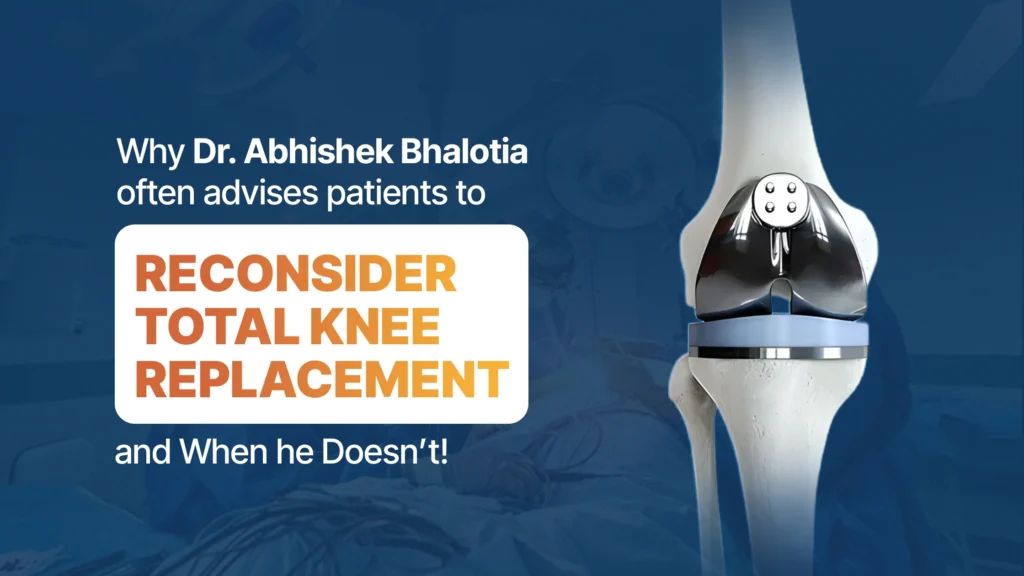
Why Dr. Abhishek Bhalotia Often Advises Patients to Reconsider Total Knee Replacement, And When He Doesn’t Total Knee Replacement (TKR) has long been considered the definitive solution for chronic knee arthritis. For many patients, it truly is life-changing. However, according to Dr. Abhishek Bhalotia, one of the most important parts of modern orthopaedic practice is knowing when to pause, reassess, and sometimes reconsider total knee replacement. This opinion is not about avoiding surgery. It is about avoiding unnecessary surgery. Dr. Bhalotia’s approach has helped many patients who were advised immediate total knee replacement elsewhere, but who actually benefited from a more tailored or staged treatment plan. Why Total Knee Replacement Is Often Advised Quickly Patients commonly arrive with: Severe knee pain X-rays showing arthritis Difficulty walking or climbing stairs Frustration after failed medications or physiotherapy In such situations, Total Knee Replacement is frequently recommended as a standard next step. While this is appropriate in many cases, Dr. Bhalotia believes that pain alone should not dictate the extent of surgery. Why Dr. Bhalotia Asks Patients to Reconsider in Some Cases Dr. Abhishek Bhalotia often reassesses the need for total knee replacement when: Arthritis is limited to one compartment of the knee Knee ligaments are still strong and functional Knee alignment is acceptable Knee movement is reasonably preserved Pain is localised rather than diffuse In such cases, replacing the entire knee joint may mean: Removing healthy bone unnecessarily Sacrificing natural ligament balance Increasing surgical trauma Prolonging recovery time This is where partial knee replacement or alternative treatment strategies may offer equally good pain relief with better recovery outcomes. The Importance of Matching Surgery to the Disease One of Dr. Bhalotia’s strongest opinions is that the extent of surgery must match the extent of damage. His evaluation focuses on: Which compartments of the knee are affected Ligament stability Degree of deformity Range of motion Patient lifestyle and activity goals He believes that performing a total knee replacement on a knee that does not truly need it may compromise long-term satisfaction. The Importance of Proportionate Surgery One of the core principles Dr. Bhalotia follows is proportionate intervention. His decision-making is guided by: Extent of arthritis, not just pain intensity Compartment-wise knee damage Ligament stability Patient lifestyle and activity expectations Long-term functional goals This ensures that surgery is customised, not standardised. Common Situations Where He Advises Reconsideration Dr. Bhalotia often advises patients to reconsider immediate total knee replacement when: Arthritis is confined to the inner (medial) compartment Pain is activity-related rather than constant Knee feels stable despite discomfort Patient is active and values natural movement Recovery speed is a major concern In such scenarios, partial knee replacement or a more conservative surgical approach may be more appropriate. When Dr. Bhalotia Strongly Recommends Total Knee Replacement Equally important is knowing when not to delay or downgrade surgery. Dr. Bhalotia does not hesitate to recommend total knee replacement when: Arthritis affects multiple compartments Knee deformity is advanced Ligaments are damaged or unstable Knee stiffness is severe Pain is widespread and disabling Quality of life is significantly compromised In these cases, partial procedures may not provide durable relief, and total knee replacement offers more predictable and lasting outcomes. Why Patients Seek Him for Second Opinions Many patients consult Dr. Bhalotia after receiving conflicting advice from different doctors. This confusion often arises because: One opinion is based mainly on X-rays Another focuses only on symptoms Recovery expectations are not discussed Long-term implications are unclear Dr. Bhalotia’s approach helps patients understand why a particular surgery is being recommended  or why it may be reconsidered. A Recovery-Focused Perspective Another key reason Dr. Bhalotia reassesses total knee replacement is recovery impact. Larger surgeries often involve: Longer rehabilitation Higher early dependency Increased physiotherapy demands Slower return to independence If a smaller, well-indicated procedure can achieve pain relief with faster recovery, he believes it deserves serious consideration. What Patients Gain from This Balanced Opinion This approach helps patients: Avoid overtreatment Make confident, informed decisions Align surgery with their lifestyle goals Reduce fear around knee replacement Understand that “bigger” is not always “better” Patients feel reassured knowing that surgery is being recommended only when truly necessary. Final Thoughts Total Knee Replacement remains one of the most successful surgeries in orthopaedics.But success lies not just in performing it — it lies in performing it for the right knee, at the right time. Dr. Abhishek Bhalotia’s opinion reflects a modern, patient-centric mindset: Reconsider when surgery is excessive Proceed decisively when surgery is essential For patients confused by multiple opinions, this balanced perspective provides clarity, confidence, and direction.

More Surgery Is Not Always Better: Dr. Abhishek Bhalotia’s Take on Choosing the Right Knee Replacement Procedure
Blogs

More Surgery Is Not Always Better: Dr. Abhishek Bhalotia’s Take on Choosing the Right Knee Replacement Procedure

More Surgery Is Not Always Better: Dr. Abhishek Bhalotia’s Take on Choosing the Right Knee Replacement Procedure In medical decision-making, there is a common misconception that a bigger procedure automatically leads to better results. When it comes to knee replacement surgery, this assumption often pushes patients toward Total Knee Replacement, even when the knee damage may not require such an extensive intervention. According to Dr. Abhishek Bhalotia, this approach can sometimes do more harm than good. His philosophy is clear and consistent:“The best knee replacement is not the one that replaces the most — it is the one that replaces exactly what is needed.” This opinion has helped many patients navigate confusion caused by multiple opinions, internet research, and fear-driven decision-making. Why the ‘More Surgery’ Mindset Exists Many patients believe that: Replacing the entire knee is safer A bigger surgery means permanent relief Partial procedures may not last long Doing everything at once avoids future problems While these assumptions sound logical, they are not always medically accurate. Dr. Bhalotia explains that knee arthritis behaves differently in different patients, and treatment should be proportional to the disease, not driven by fear or generalisation. Understanding Knee Replacement Options Before deciding on the extent of surgery, it is important to understand the options available. Common knee replacement procedures include: Partial Knee Replacement – replaces only the damaged compartment Total Knee Replacement – replaces the entire knee joint Bilateral Knee Replacement – both knees replaced in one or staged procedures Each has its place. The key lies in choosing the right one for the right knee. Why Dr. Bhalotia Believes Bigger Is Not Always Better Dr. Abhishek Bhalotia often sees patients who have been advised Total Knee Replacement even though: Arthritis is limited to one compartment Ligaments are still healthy Knee alignment is reasonably maintained Knee movement is fairly preserved In such cases, he believes that replacing the entire knee may: Remove healthy bone unnecessarily Disturb natural ligament balance Prolong recovery time Increase post-operative stiffness Delay return to daily activities Partial Knee Replacement, when appropriate, avoids these issues by preserving what is healthy. The Importance of Proportionate Surgery One of the core principles Dr. Bhalotia follows is proportionate intervention. His decision-making is guided by: Extent of arthritis, not just pain intensity Compartment-wise knee damage Ligament stability Patient lifestyle and activity expectations Long-term functional goals This ensures that surgery is customised, not standardised. When More Surgery Is Actually the Right Choice Being balanced is central to Dr. Bhalotia’s approach. He is equally clear that Total Knee Replacement is absolutely necessary in many cases. He recommends total replacement when: Arthritis affects multiple compartments Knee deformity is significant Ligaments are compromised Knee stiffness is severe Pain is widespread and disabling In these situations, partial procedures may fail to provide long-term relief, making total knee replacement the more reliable option. Why Patients Get Confused Between Opinions Patients often consult multiple doctors and receive different recommendations. This confusion usually arises because: One opinion focuses only on X-rays Another focuses only on pain severity Lifestyle factors are not discussed Recovery expectations are not explained clearly Dr. Bhalotia believes that patients deserve context, not just conclusions. A Recovery-Centric Perspective Another reason Dr. Bhalotia avoids unnecessary extensive surgery is recovery. Larger surgeries often mean: Longer rehabilitation Higher dependency in early weeks Increased physiotherapy burden Slower return to independence When a smaller, well-indicated procedure can achieve the same pain relief with faster recovery, choosing the larger option may not serve the patient well. How This Opinion Helps Patients Make Better Decisions Dr. Abhishek Bhalotia’s approach helps patients: Avoid overtreatment Understand why a particular surgery is advised Align expectations with realistic outcomes Feel confident about the decision they make Many patients seeking second opinions find clarity through this balanced, logic-driven evaluation. Final Thoughts More surgery does not always mean better results.Better surgery means appropriate surgery. By focusing on: Disease extent Structural preservation Recovery outcomes Long-term quality of life Dr. Abhishek Bhalotia ensures that patients receive the right level of surgical intervention — no more, no less. For patients confused between partial and total knee replacement, this opinion offers reassurance:the goal is not to replace the knee aggressively, but to restore movement intelligently.

Here’s Why Dr. Abhishek Bhalotia Believes Partial Knee Replacement Is the Better Option in Select Knee Arthritis Cases
Blogs

Here’s Why Dr. Abhishek Bhalotia Believes Partial Knee Replacement Is the Better Option in Select Knee Arthritis Cases

Here’s Why Dr. Abhishek Bhalotia Believes Partial Knee Replacement Is the Better Option in Select Knee Arthritis Cases When patients hear the words knee replacement, most immediately assume that the entire knee joint must be replaced. This belief has been shaped over decades, largely because Total Knee Replacement has been the most commonly discussed surgical option. However, modern orthopaedics has evolved, and so has the way knee arthritis is treated.According to Dr. Abhishek Bhalotia, Partial Knee Replacement is often a better, smarter, and more patient-friendly option in carefully selected cases of knee arthritis.This perspective is not about promoting a particular surgery, but about matching the extent of surgery with the extent of disease. Not All Knee Arthritis Is the Same One of the most important points Dr. Bhalotia highlights is that knee arthritis does not affect every knee in the same way. The knee has three compartments: Medial (inner side) Lateral (outer side) Patellofemoral (front, behind the kneecap) In many patients, arthritis is limited to just one compartment, most commonly the inner side of the knee. In such situations, replacing the entire knee joint may not always be necessary. This is where Partial Knee Replacement (PKR) becomes a strong and logical option. Why Dr. Bhalotia Prefers Partial Knee Replacement in Select Cases Dr. Abhishek Bhalotia believes that doing more surgery than required does not automatically lead to better results. His reasoning is simple: If only one part of the knee is damaged, treat only that part Preserve healthy bone, cartilage, and ligaments Maintain the knee’s natural movement as much as possible Partial Knee Replacement allows surgeons to replace only the diseased compartment, while leaving the rest of the knee untouched. Key Advantages of Partial Knee Replacement (When Appropriately Chosen) When recommended for the right patient, Partial Knee Replacement offers several advantages: Smaller surgical area Less bone removal Preservation of natural ligaments More natural knee movement Faster recovery compared to total knee replacement Less post-operative pain in many patients Better confidence while walking early after surgery Patients often describe the knee as feeling less artificial and more like their own. Who According to Dr. Bhalotia Is a Good Candidate? Dr. Bhalotia is very clear that Partial Knee Replacement is not suitable for everyone. He typically considers it when: Arthritis is limited to a single compartment Knee pain is localized rather than widespread Ligaments are intact and stable Knee alignment is reasonably maintained Knee bending is preserved Non-surgical treatments have stopped working A thorough clinical examination and imaging assessment are essential before making this decision. Why Partial Knee Replacement Is Not “Cutting Corners” One common misconception Dr. Bhalotia often addresses is that partial knee replacement is a lesser or temporary solution. In reality: It is a precision-based surgery It requires accurate patient selection Surgical technique and alignment are critical When done correctly, outcomes are long-lasting Partial knee replacement is not about avoiding surgery —it is about avoiding unnecessary surgery. Why Total Knee Replacement Is Still Necessary in Many Cases Dr. Bhalotia also strongly believes in being balanced and honest. He does not recommend partial knee replacement when: Arthritis affects multiple compartments Knee deformity is significant Ligaments are damaged Knee stiffness is severe Pain is generalized across the knee In such cases, Total Knee Replacement provides better long-term relief and predictability. This balanced approach is why many patients seek him for second opinions, especially when confused between different surgical recommendations. A Patient-Centric Philosophy Dr. Abhishek Bhalotia’s opinion is rooted in a simple philosophy: “The goal of knee replacement is not to replace the knee —it is to restore function, confidence, and quality of life.” By preserving healthy structures whenever possible, Partial Knee Replacement aligns well with this philosophy. Why This Opinion Matters for Patients Patients today often consult multiple doctors, search online, and hear conflicting advice. This can lead to confusion, anxiety, and delayed decision-making. Dr. Bhalotia’s approach helps patients: Understand whether full replacement is truly needed Avoid overtreatment Choose a surgery aligned with their condition and lifestyle Recover faster when eligible for partial replacement Final Thoughts Partial Knee Replacement is not a universal solution —but in select knee arthritis cases, it can be the better option. By carefully evaluating the knee and recommending surgery only when appropriate, Dr. Abhishek Bhalotia ensures that: Patients receive the right level of intervention Healthy knee structures are preserved Recovery is smoother and more natural For patients with localized knee arthritis, partial knee replacement can offer excellent outcomes without unnecessary surgical trauma.

Scroll to Top